Read before you sell / Renunciation and vacant houses

Does renouncing the inheritance free you of the family home?

Renouncing does not make the house disappear. Whoever was occupying it keeps a duty to preserve it, and State acquisition is not available while a building stands. Renunciation, State acquisition, donation and sale to us, compared by cost, time and liability.

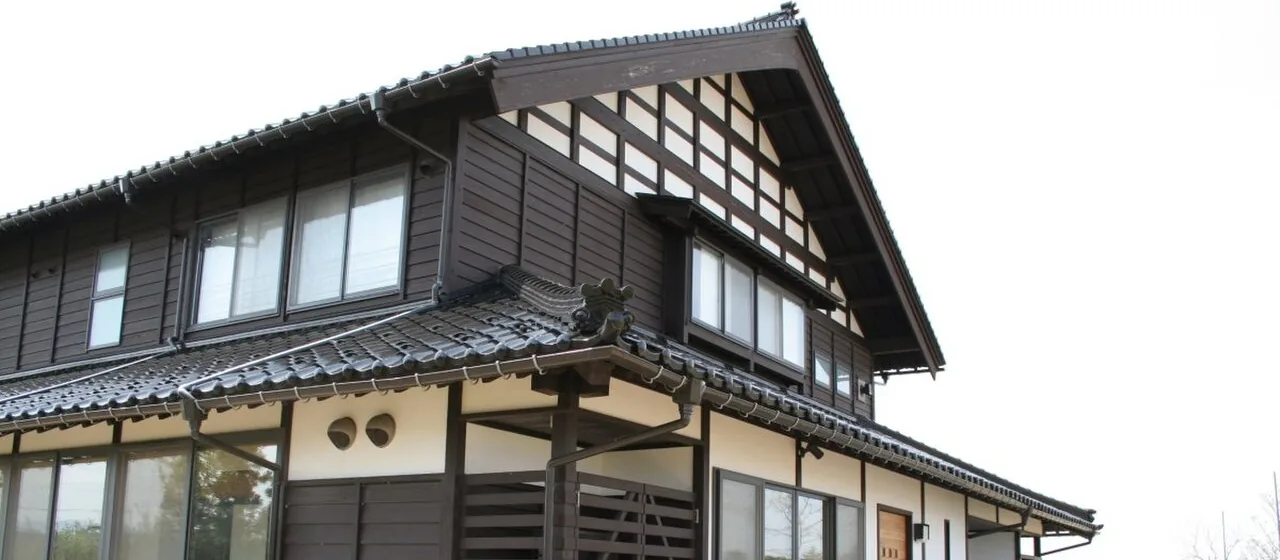
A Toyama farmhouse (Azumadachi)An Azumadachi building, the traditional farmhouse style of the Tonami area: a large gable roof with lattice-like tie beams exposed on the gable end (Tonami Scattered Village Museum)
Photo: SilverHaze "となみ散居村ミュージアム"(CC BY-SA 3.0), cropped
1 Before deciding whether to renounce, at least know what the house is worthFree appraisal on LINE 2 9:00–17:00, Japanese only / after 17:00: Call us
1970Founded / Yatsuo, Toyama City
Real estate + constructionA builder with both a real estate licence and a construction permit
Appraisal and survey: ¥0No charge if you decline
Toyama, Ishikawa and HidaOwners living elsewhere welcome

"Renounce and it's over" is only half right

Person "actually occupying" the house at renunciation Lived there Held the key, arranged snow removal etc. Duty to preserve continues after renouncing Until handed to the next heir or estate liquidator Person not occupying it Lives elsewhere, not back for years Holds neither key nor upkeep No duty once renounced Freed of the house, as a rule Civil Code Art. 940 (in force 1 April 2023). The line differs case by case: check with a judicial scrivener or lawyer
What renunciation removes is your "status as heir", not the house. Anyone occupying the house at the time keeps a duty to preserve it until handover.

When you renounce, you are treated as never having been an heir. But the house itself does not disappear. It stays standing there until someone looks after it and someone disposes of it.

Renouncing an inheritance, once filed with and accepted by the family court, means you take on neither the debts nor the property. If the family home seems worthless, wanting to renounce and cut ties is natural. But what happens to the house afterwards is rarely explained, and that is where the misunderstanding lies.

The revised Civil Code art. 940, in force from 1 April 2023, provides: “A person who has renounced an inheritance, if they are actually in possession of property belonging to the estate at the time of renunciation, must preserve that property with the same care as their own property until it is handed over to the heirs or to the estate administrator.” In other words, even someone who has renounced the inheritance keeps this duty if they were actually using or looking after the family home at the time. They must look after it as carefully as their own home until they hand it to the next person — another heir, or an “administrator” chosen by the court. Before this revision, the article simply said “must continue to manage it,” leaving it unclear who was responsible, and for how long. The revision clarified the scope, according to the Ministry of Justice's explanation.

There are two ways to read this. One: a person who was not occupying the house owes nothing once they renounce. An heir who lives outside the prefecture, has not been back for years and holds neither key nor responsibility is, as a rule, freed of the house by renouncing. The other: a person who lived in the house, or came and went with a key and arranged the mowing and snow removal, keeps the duty to preserve it after renouncing, until it is handed over. The line differs case by case, so check with a judicial scrivener or lawyer.

The duty to preserve is a duty to keep the house from being lost or damaged, not a duty to repair it and raise its value. Even so, houses in Hokuriku carry snow. For anyone with that duty, a winter comes every year in which "I renounced, so it's not my problem" will not do.

What to do while the duty to preserve continues (who to ask for snow removal, draining the pipes and mowing) is in our year-round calendar for managing a vacant house in Toyama from outside the prefecture.
The deadline to renounce is three months. Before then, there is something you can learn for free

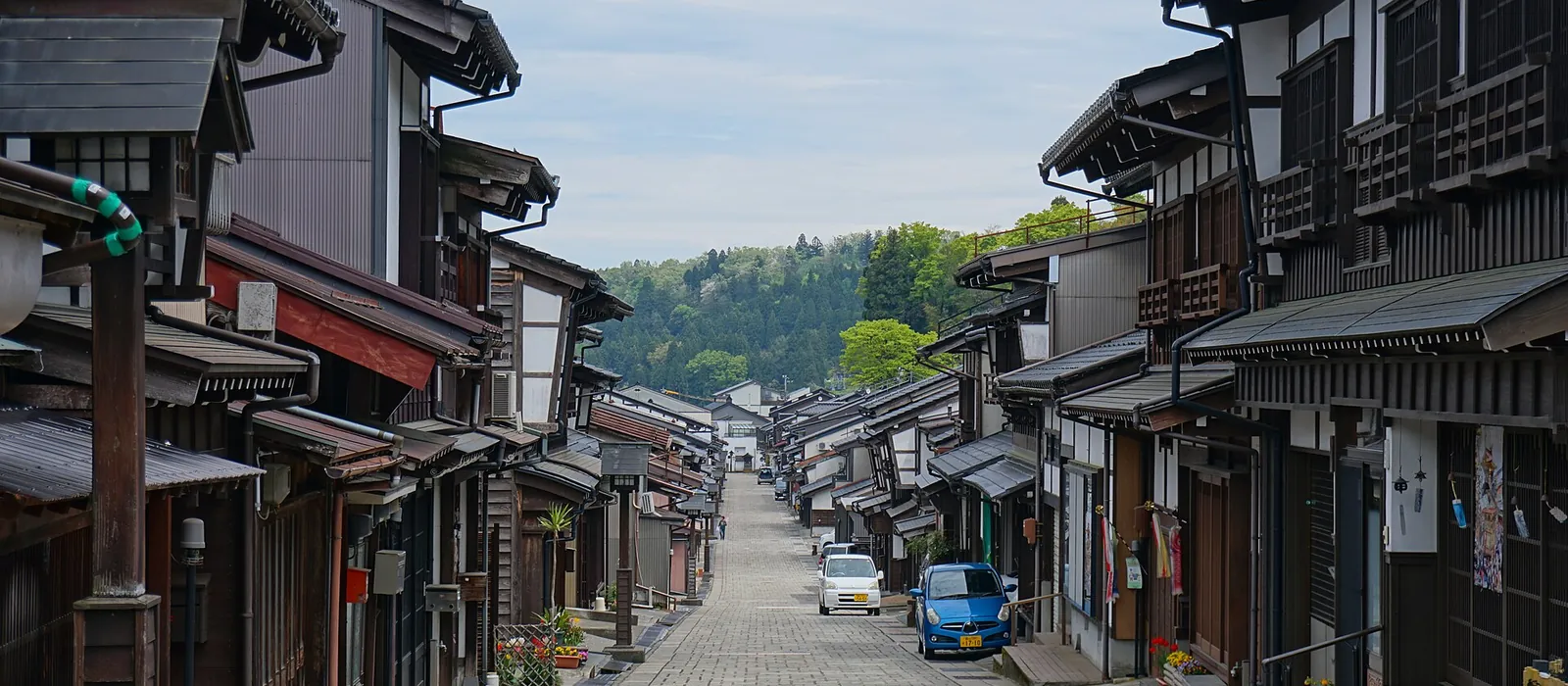
The streetscape of Yatsuo, Toyama CitySuwamachi Hondori in Yatsuo, Toyama City, with deep-eaved machiya lining both sides of the sloping street
Photo: 掬茶 "Suwamachi hondori street in Yatsuo"(CC BY-SA 4.0), cropped

A renunciation is filed within three months of learning that an inheritance has begun for you, at the family court with jurisdiction over the deceased's last address. The filing carries ¥800 in revenue stamps and postage stamps for correspondence, plus documents such as the family register extract recording the death (per the court's guidance).

Three months pass quickly once you have held the 49th-day memorial, looked through the house and talked to your siblings. If you cannot get a full picture of the estate, there is a procedure to apply to the family court, within the same three months, for an extension of the period for accepting or renouncing the inheritance. Once the deadline passes you are deemed to have accepted outright and can as a rule no longer renounce, so if you are undecided, ask a judicial scrivener about applying for an extension first.

There is something you can learn within those three months at no cost: what the house is worth. Our appraisal and on-site survey are free, and can be done with the contents still inside and before the inheritance registration. Whether "can it be sold or not" is among the things you weigh is what separates a decision you regret later from one you don't.

After everyone renounces, who deals with the house?

What happens to the house after everyone renounces ① Everyone renounces Down to the next relatives in line Becomes an estate with no heir ② Application to the family court Interested party or prosecutor Advance deposit paid first ③ Liquidator appointed Official Gazette notice, 6 months+ House stays empty ④ Liquidator disposes of it Sold if a buyer appears Remainder goes to the treasury The family court sets the deposit case by case; it is not refunded unless the estate covers the costs Estate liquidator system (revision in force 1 April 2023)
It is not "renounce and it's over": someone pays the deposit, and a liquidator spends six months or more trying to dispose of the house. If no buyer appears, the house stays empty all that time.

If all the siblings renounce, and the relatives next in line renounce too, the house becomes an estate with no heir. The State does not take it automatically. Someone must apply to the family court to appoint an estate liquidator (called an estate administrator before the April 2023 revision); the liquidator manages the house, tries to sell or dispose of it, and whatever is left in the end passes to the national treasury.

The filing can be made by an interested party, such as a creditor, or by a public prosecutor. Someone who renounced the inheritance but still has the duty to preserve the property can also file, to be released from that duty. Filing requires a deposit — money the person filing pays in advance, held in case the estate's assets can't cover the administrator's fee and actual costs. The family court sets the amount case by case. For a vacant-house case with little or no cash in the estate, it's not unusual to run into the hundreds of thousands of yen, and it isn't refunded if the estate can't cover it. Check the amount with the family court where you file.

Once appointed, a notice of the liquidator's appointment and a search for heirs is published in the Official Gazette. This notice period is six months or more, and a notice calling on creditors to file claims runs in parallel. All that time the house stays empty. Even if the liquidator tries to sell it, nothing moves unless a buyer appears.

If the house can be sold, inheriting and selling is faster than renouncing, and leaves you with something.

State acquisition cannot be used while a building stands

What you pay before the land reaches the State ① Demolish the building About ¥30,000–50,000 per tsubo 40 tsubo: from about ¥1.5–2 million ② Property tax rises From the year after clearing Residential-land relief ends ③ Apply to the Legal Affairs Bureau Examination fee ¥14,000 per parcel Not refunded if rejected or refused ④ Contribution after approval ¥200,000 as a rule Varies with land type and area Land that will not be accepted × Land with a building × Land with unclear boundaries × Land taking excessive cost or effort to manage Inherited-land State acquisition scheme (from 27 April 2023)
State acquisition is not a path that brings money in; you pay to let go. You cannot apply while a building stands, so demolition is the first cost.

Many people have heard that "there is now a scheme for returning unwanted land to the State". This is the inherited-land State acquisition scheme. It started on 27 April 2023: a person who acquired land by inheritance, or by bequest as an heir, can apply to the Legal Affairs Bureau and, if approved, have the State take the land. But for anyone stuck with a family home, there is one decisive condition.

Land with a building on it will not be accepted. The first item on the Ministry of Justice's list of "land that cannot be accepted" is land on which a building stands. Land with unclear boundaries, and land that would take excessive cost or effort to manage, are also excluded. To return the family home's land to the State, you first demolish the building at your own expense, clear the lot, and then apply.

As set out in our demolition cost guide, demolishing a wooden house in Toyama costs roughly ¥30,000–50,000 per tsubo (3.3 ㎡), so from about ¥1.5–2 million for a 40-tsubo (about 132 ㎡) house. For a farmhouse with a kura, barn and windbreak grove, a total above ¥3 million is not unusual. And once the lot is cleared, the residential-land property tax relief ends from the following year and the tax on the land rises. The application carries an examination fee of ¥14,000 per parcel, and if approved you pay a contribution. The contribution is ¥200,000 as a rule, but for building lots in urbanisation promotion areas, farmland, forest and so on it varies with the area. The examination fee is not refunded if the application is rejected or refused.

In short, State acquisition means paying the demolition cost, accepting the higher tax, paying the fee and the contribution, and handing the land to the State. In Toyama the Toyama District Legal Affairs Bureau handles applications and prior consultation, which is by appointment. The figures are as at the time of writing; check the latest amounts on the Ministry of Justice page and the Toyama District Legal Affairs Bureau page.

If the family home comes with farmland or forest, one combination is to sell the house lot and hand only the unusable forest to the State. The options for farmland and forest are covered separately in how to sell a family home with rice fields or forest.

Renunciation, State acquisition, donation, sale: four paths side by side

Renunciation State acquisition Donation / ¥0 transfer As-is sale to us Cost ¥800 revenue stamp + postage If everyone renounces: liquidator's deposit Demolition ¥30,000–50,000/tsubo Examination fee ¥14,000 per parcel Contribution ¥200,000 as a rule Demolition or survey may be required (depends on the recipient) ¥0 No brokerage fee Appraisal and survey free too Time File within 3 months If everyone renounces: notice of 6 months+ Demolition time + Legal Affairs Bureau review Depends on the recipient Often not accepted From on-site survey Handover in as little as 2 weeks Effort Gather registers, file Contents stay behind Demolition, boundary check Application papers Find a taker, negotiate Contract and registration yourself No clearing out Registration by our scrivener Liability Occupier keeps duty to preserve until handover None (after the land is handed over) None (if accepted) ¥0 transfer: trouble after handover is yours too None No liability for defects after handover
The four routes measured the same way: cost, time, effort and the liability that remains.

Renouncing isn't the only way to let go of a family home. We line up four options on the same scale — that is, we compare ways of letting go by whether you're paid or you pay. The scale is cost, time, effort, and the responsibility left over.

1. RenunciationCost: the ¥800 revenue stamp and postage for the filing, plus the fees for family register copies. Deadline: three months. But the house does not disappear, anyone occupying it keeps a duty to preserve it until handover, and if everyone renounces, someone pays the liquidator's deposit. Nothing is left in your hand.
2. State acquisitionYou cannot apply until the building is demolished. Demolition (about ¥30,000–50,000 per tsubo in Toyama), higher property tax once the lot is cleared, an examination fee of ¥14,000 per parcel, and a contribution (¥200,000 as a rule). You can hand over the land, but money only flows out.
3. Donation / ¥0 transferMunicipalities rarely accept a vacant house as a donation, and may make demolition or a survey a condition. Giving it to an individual for ¥0 means finding the person, the contract and the registration are all your own work, and any trouble after handover is yours too. See what happens when you give a house away for ¥0 (the recipient's tax, leftover contents, liability for defects).
4. As-is sale to usA direct sale to us as the buyer: no brokerage fee, contents and altar can stay, handover as little as two weeks after the on-site survey. No liability for defects after handover. The price is lower than through an agent, but this is a path where you receive money rather than pay it (full terms: Selling a vacant house or kominka in Toyama).

Renunciation and State acquisition are useful paths for land no one will buy. But use them on a house that has a buyer, and you pay to give away money you could have received. The order is: first find out whether it can be sold. Only once you know it cannot, consider renunciation or State acquisition. That still fits within the three-month deadline.

Which houses can choose "sell" instead of renouncing

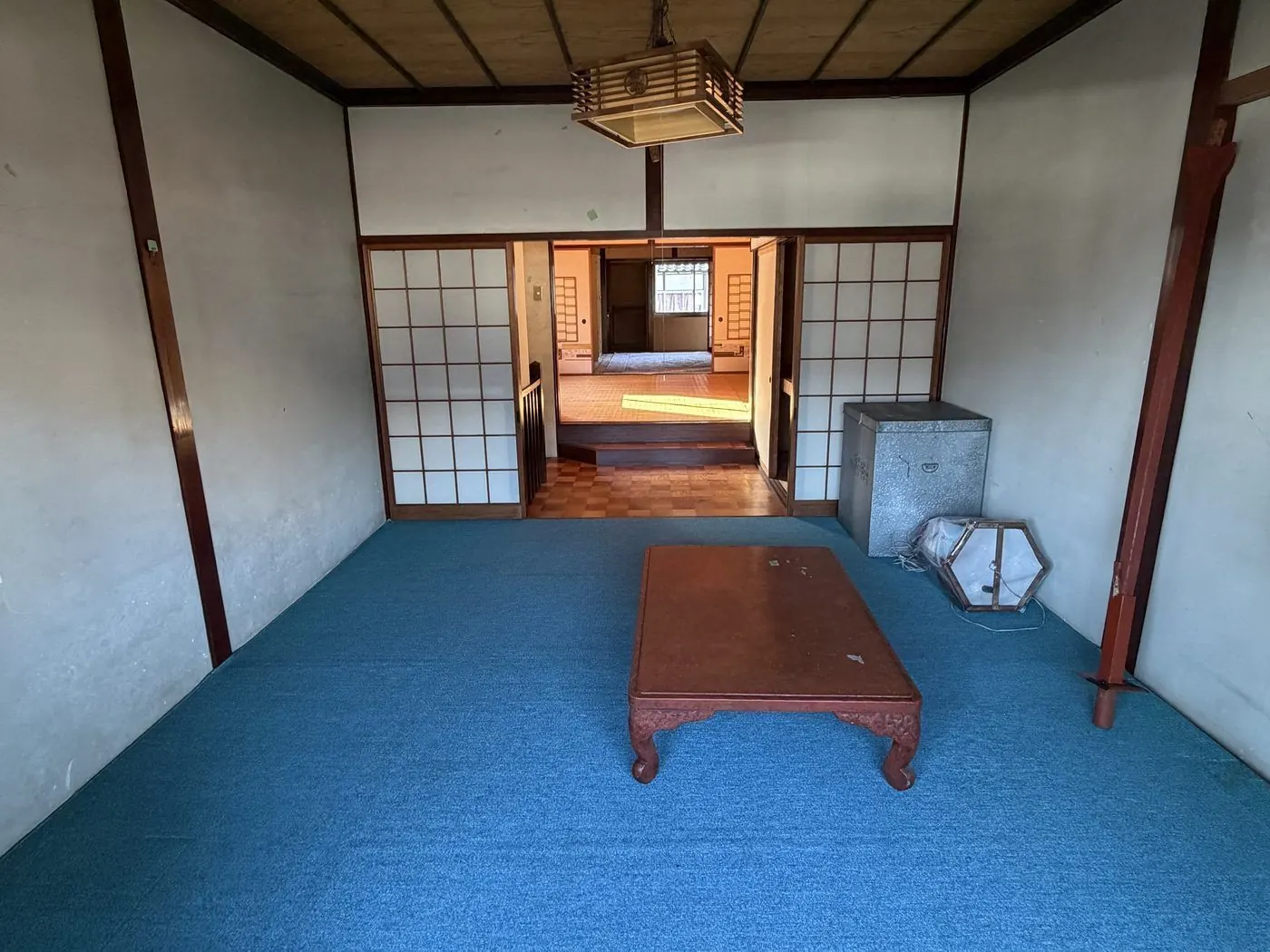
Tatami room before renovation (our project)Kominka turned into a guesthouse: the tatami room before renovation
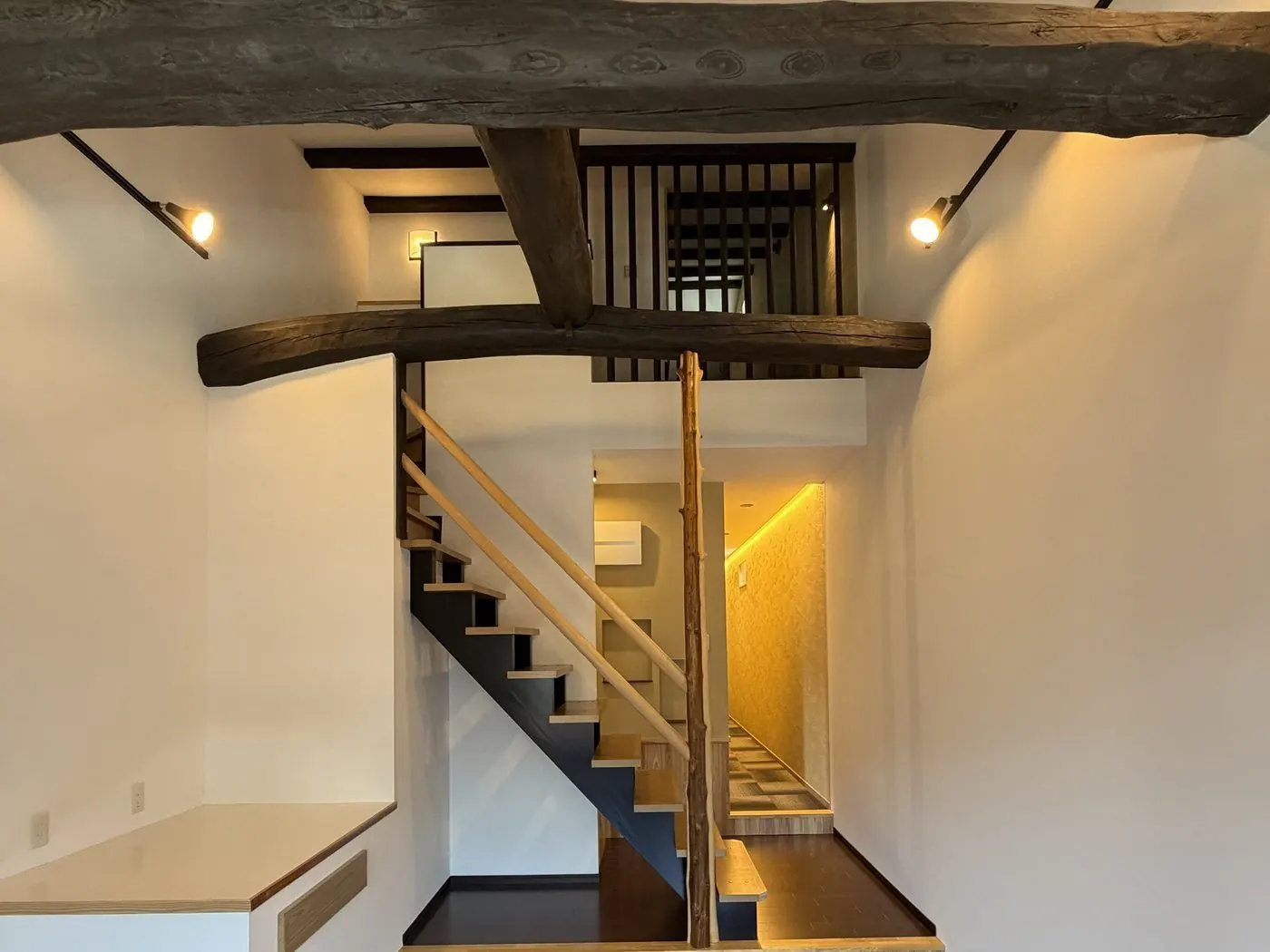
Repaired and passed to the next residentKominka opened as a minpaku guesthouse: the stairwell with exposed beams (after)

One of our kominka restorations. Even a tired Japanese-style room can go to the next user if the frame of posts and beams is sound. We removed the ceiling to expose the beams as a stairwell and opened it as a minpaku (private lodging). Four months of work, construction cost ¥9 million. → See this project in detail

Many family homes thought to be "worthless" are hard to sell through an agent, not unsellable. Brokerage assumes the buyer will live there, so the contents, a leak or a title still in a parent's name stop the deal. We buy directly as the buyer ourselves, so the premise is different. You can consult us as-is in any of the following states.

  • Contents and the family altar still inside. We buy without clearing out and dispose of the contents ourselves. For the Buddhist or Shinto altar we may ask you to arrange the closing rite; if you don't know how, ask us
  • Inheritance registration not done. We can appraise before registration. It must be completed by handover, so we introduce a judicial scrivener we work with
  • Farmland or forest attached. Ask us about it together with the main house. Farmland needs the agricultural committee's permission, and sometimes we cannot take it
  • Non-rebuildable, no road frontage. It cannot be rebuilt, but it can be repaired and used. Details in selling a non-rebuildable house
  • Leaks, tilting, termites, or co-owners who cannot agree. If the frame is sound we can buy it, and having a figure moves the conversation between siblings along
  • You live outside the prefecture and cannot come back. We hold the key and check the house ourselves, and the contract can be exchanged by post. See how to sell without coming back

Our purchase price is lower than what a sale through an agent would bring, because we as the buyer take on the repair costs, the risk of not reselling, and the work of clearing out. In return, we do not assume demolition, so we do not deduct demolition from the price. Our policy is to repair the houses we buy and hand them to the next resident, not to demolish them. Choose renunciation or State acquisition and the house is demolished or left to rot; choose to sell and the house survives.

When only one sibling wants to renounce. What about clearing?

Two questions come up often: "My brother says he doesn't want it, but I want to inherit and sell", and "I intend to renounce, but can I clear out the house first?"

One heir alone can renounce. Each heir files their own renunciation with the family court. If your brother renounces, the remaining heirs divide the estate and whoever inherits the house sells it. But someone who renounces receives nothing at all, not only the house but savings and every other asset too. If the wish is "I don't want the house but I want my share of the savings", the answer is not renunciation but an estate division agreement under which you simply do not take the house. The difference is large, so check with a judicial scrivener before deciding.

Don't clear the house before renouncing. “Disposing” of estate property is treated as accepting the inheritance unconditionally, which means you can no longer renounce it (Civil Code art. 921). Typical examples are selling the contents, handing them to a disposal company, or drawing on and spending a bank balance. Keeping a house or its contents from damage, on the other hand, doesn't count as “disposing.” Dividing up keepsakes of little value is also usually considered fine. But where preservation ends and disposal begins is a case-by-case judgment, and it isn't something we can draw the line on. Leave the contents untouched while you're considering renouncing, and talk to a judicial scrivener first — that's the safe order. Our appraisal can be done with the contents left as they are, so there's no need to clear the house before showing us. → What to stop and think about before clearing out (valuables, fittings, the family altar)

The order to consult: judicial scrivener, appraisal, then decide

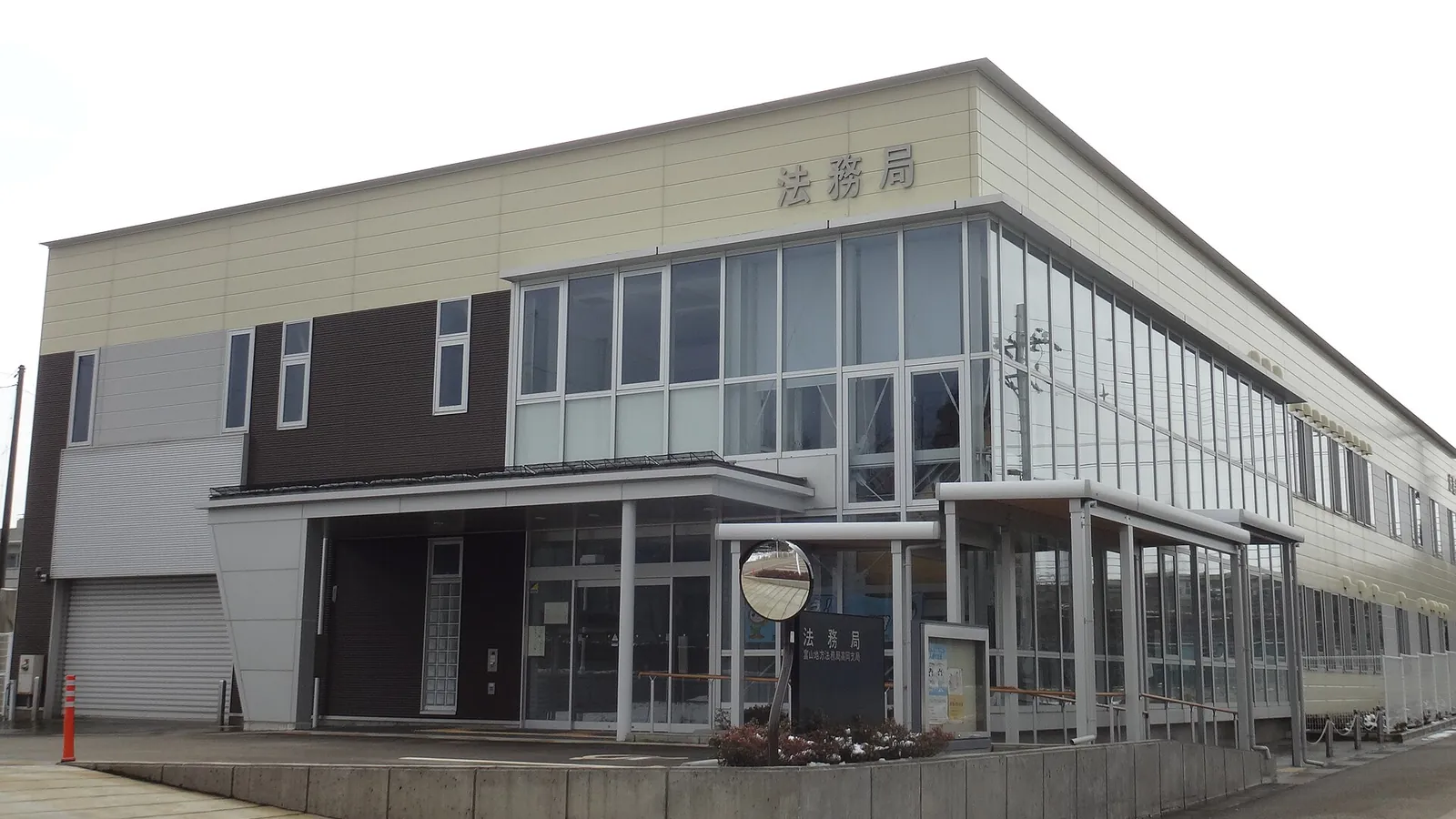
Legal Affairs Bureau (Takaoka Branch, Toyama District Legal Affairs Bureau)The Takaoka Branch of the Toyama District Legal Affairs Bureau, with its "Legal Affairs Bureau" sign
Photo: Hohoho "Takaoka Branch Bureau, MOJ"(CC BY-SA 4.0), cropped

Renounce, or inherit and sell? The decision needs two things: a legal opinion and the value of the house. This is the order.

1. Confirm with a judicial scrivener whether you can renounce, and by whenWhether you count as "actually occupying", whether you need an extension, and whether renunciation or estate division better fits what you want. We do not give legal judgements, so we introduce a judicial scrivener we work with. If inheritance registration is later needed, the same office can handle it.
2. Learn the value of the house with our free appraisalSend photos of the house and its location on LINE and we reply with a rough price range. We come for the on-site survey; contents can stay, and registration need not be done. If you decline, there is no charge.
3. Put the two side by side and decideIf the house can be sold, inherit it and sell. Complete the inheritance registration, and handover comes as little as two weeks after the on-site survey. The whole procedure is set out in our guide to selling an inherited home. If it cannot be sold, consider renunciation or State acquisition with a judicial scrivener.

All three steps fit comfortably within the three-month deadline. If the house truly cannot be sold, we tell you so honestly.

FAQ

If I renounce the inheritance, am I completely free of looking after the family home?+−

If you were not "actually occupying" the house at the time of renunciation, you have no duty to preserve it. As a rule, an heir who lives outside the prefecture and does not use the house is freed of its upkeep by renouncing. But anyone who lived in the house, or held the key and looked after it, keeps the duty to preserve it until it is handed over to the next heir or the estate liquidator. Ask a judicial scrivener or lawyer which applies to you.

What is the deadline for renouncing? What happens if I miss it?+−

You file at the family court for the deceased's last address within three months of learning that the inheritance has begun. If you cannot finish reviewing the estate in time, you can apply within the same three months for an extension. Once the deadline passes you are deemed to have accepted the inheritance outright, and renouncing is as a rule no longer possible.

Can the State take the family home under the inherited-land State acquisition scheme while the building is still standing?+−

No. Land with a building on it is on the Ministry of Justice's list of "land that cannot be accepted". You must first demolish the building and clear the lot; demolishing a wooden house in Toyama costs roughly ¥30,000–50,000 per tsubo (3.3 ㎡). If approved, you also pay a contribution (¥200,000 as a rule). Check the details in the guidance from the Ministry of Justice and the Toyama District Legal Affairs Bureau.

What happens to the house after every heir has renounced?+−

For a house nobody inherits, the family court appoints an estate liquidator on the application of an interested party or a public prosecutor, and the liquidator manages and disposes of it. The application needs an advance deposit set by the family court, and the public notice takes six months or more. If the house can be sold, selling it as it is before renouncing is faster and costs you nothing out of pocket, unlike the deposit.

If I clear out the contents or hand out keepsakes, do I lose the right to renounce?+−

“Disposing” of estate property is treated as accepting the inheritance unconditionally, which means you can no longer renounce it (Civil Code art. 921). Keeping a house or its contents from damage doesn't count as “disposing.” Dividing up keepsakes of little value is also usually considered fine. But where the line falls has to be judged case by case. While you're considering renouncing, leave the contents untouched and talk to a judicial scrivener first. Our appraisal can be done with the contents left as they are.

If I renounce the inheritance, do I not have to pay property tax?+−

Once the family court accepts the renunciation, you are treated as never having been an heir. You do not become the owner of the house, and you do not take over the deceased's tax obligations. However, if you were actually using or looking after the house at the time of renunciation, a duty to protect it remains until you hand it over to the next person. For details, see Property tax on an inherited vacant house.

→ All 49 questions on selling and renovation
→ Check inheritance and registration terms in the glossary

This page is a general explanation of the system. Whether you can renounce, whether you owe a duty to preserve, and whether an act counts as outright acceptance depend on your individual circumstances. Confirm the final decision with a judicial scrivener or lawyer. The rules and amounts are as at September 2026; the official guidance of the Ministry of Justice and the courts takes precedence.

Before renouncing, at least know the price.

Photos of the house and its location are enough. Contents still inside, before registration, from outside the prefecture. The appraisal is free, and declining costs nothing.

Send photos on LINE Contact us by form
By phone (Japanese only) 9:00 - 17:00 After 17:00, site manager (Japanese only)

If you have decided to inherit.

Registration, tax, deductions, deadlines. The order of steps to sell an inherited house, and what to know before demolishing.

Guide to selling an inherited home → The ¥30 million special deduction for vacant houses → Demolition costs, and before you demolish → What to do with the family home: three paths →

Written by Kota Makimura, Hokuriku Homes Updated

Phone9:00–17:00 LINEAppraisal from photos Free appraisalTakes 1 minute
LINEChat