Read before you sell / Vacant-house notices and recommendations

A letter about your vacant house has come from the city. Which stage is it, and what must you do by when?

Most letters are a "request" with no legal force. Ignored, it moves on to advice and guidance, recommendation, order and enforced demolition. There is a procedure.

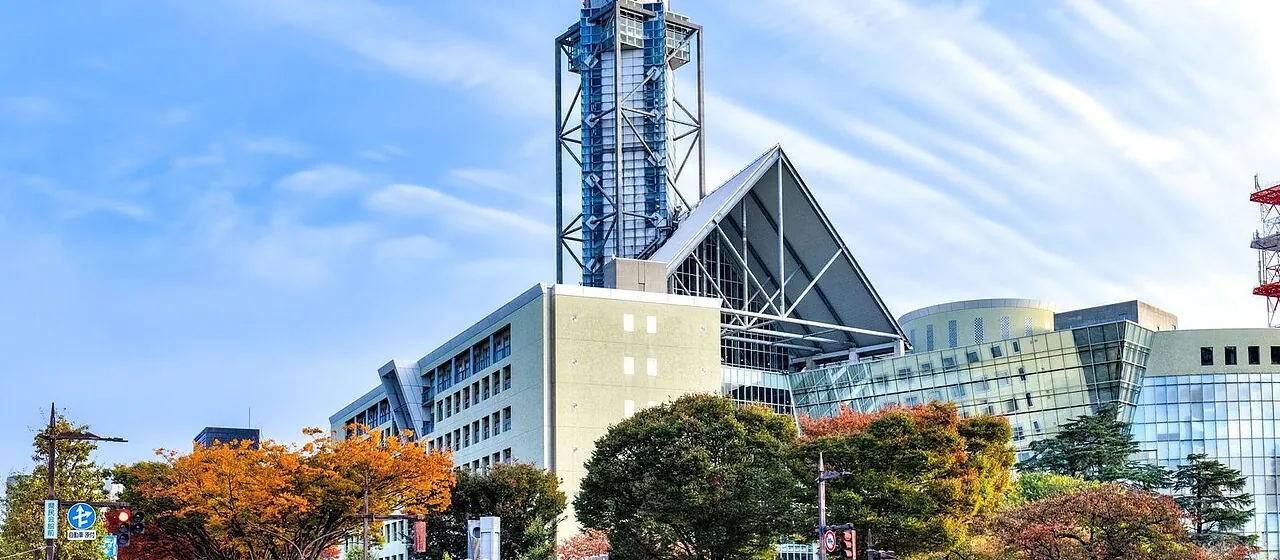
Toyama City HallToyama City Hall with its observation tower, and the tree-lined avenue in front
Photo: くろふね "富山市役所20221105-IMG 4656"(CC BY 4.0), cropped
1 Send a photo of the letter and of the house, and we reply with the way forward for that stageFree consultation on LINE 2 9:00–17:00, Japanese only / after 17:00: Call us
1970Founded / Yatsuo, Toyama City
Real estate + constructionA builder with both a real estate licence and a construction permit
Appraisal and survey: ¥0No charge if you decline
Toyama, Ishikawa and HidaOwners living elsewhere welcome

Which stage is the letter? The five stages and how to tell them apart

As a rule, we can take the house as it stands up to here ① Request Request letter, information After a neighbour's complaint the city traces the owner No legal force ② Advice and guidance Poorly managed: guidance Hazardous: advice and guidance Remedy and deadline given Cites the Act's article ③ Recommendation No penalty, but from the next fiscal year residential-land relief is lost ④ Order Hazardous houses only Breaching it means a fine of up to ¥500,000 ⑤ Enforced demolition The city demolishes and bills the owner Owner unknown: summary enforcement Poorly managed houses: up to guidance and recommendation Hazardous houses: on to order and enforced demolition Vacant Houses Special Measures Act (amended December 2023)
The wording of the letter tells you the stage. "Request" means ①; an article of the Act and a deadline means ②; a "recommendation" is ③; an "order" is ④. As a rule we can take the house as it stands up to ③, the recommendation.

A letter from the city is not just one kind of letter. There are five stages — request, advice and guidance, recommendation, order, enforced demolition — and which one you have received changes how much time is left and which paths are still open.

The law behind this is the Act on Special Measures for Promoting Countermeasures against Vacant Houses (the Vacant Houses Act).

1. Request for proper management (request letter, information)The most common letter. A neighbour tells the city that tiles look about to fall or weeds are spilling onto the road; the city checks the site from outside, traces the owner through the property and family registers, and writes. Toyama City's own guidance states that this request letter has no legal force. Reply at this point and in most cases it stops here.
2. Advice and guidanceIf the city inspects the site and judges the house to be a "poorly managed vacant house" or a "designated hazardous vacant house" under the Act, it moves to statutory guidance (poorly managed) or advice and guidance (hazardous). If the letter cites an article such as Article 13 or Article 22 of the Act, this is the stage. It states what must be remedied and by when.
3. RecommendationIf the guidance is not followed and nothing improves, the city issues a recommendation. The recommendation itself carries no penalty, but from the next fiscal year the lot loses the residential-land relief on its property tax. This applies to poorly managed and hazardous houses alike. The figures are in the next section.
4. OrderDesignated hazardous vacant houses only. If there is no good reason for not following the recommendation, the city orders measures by a set deadline. Breaching an order carries a fine of up to ¥500,000. Before the order, you are given the chance to submit a written statement or be heard at a public hearing.
5. Enforced demolitionIf the order's deadline passes without compliance, the city carries out the removal in the owner's place and bills the owner. There is also summary enforcement when the owner is unknown, and emergency enforcement that skips the order when collapse is imminent.

If the letter is worded in a way that makes the stage hard to tell, send us a photo and we will give you our reading of it. The text of the law is at Act on Special Measures for Promoting Countermeasures against Vacant Houses (e-Gov), and MLIT's Vacant Houses Act information gathers the outline of the amendment and the guidelines.

The "poorly managed vacant house", added by the December 2023 amendment

The Vacant House Act (Akiya Law) came into force in 2015. Since then it has targeted designated hazardous vacant houses — vacant houses at serious risk of, say, collapsing if left alone. These are already dangerous houses. The December 2023 revision (in force from 13 December 2023) added an earlier category, vacant houses at risk of mismanagement: houses “in a state that, if left as they are, risks becoming a designated hazardous vacant house.”

The difference is when the city acts. Since the amendment, a house that is "not yet collapsing but deteriorating" — broken window glass, a gutter hanging off, garden trees overhanging the neighbour's land — can receive guidance, and a recommendation if nothing improves. And a recommendation for a poorly managed vacant house also removes the residential-land tax relief. "Ours isn't about to fall down, so we're fine" no longer holds since the amendment.

On the other hand, a poorly managed vacant house has no order or enforcement stage; it goes only as far as guidance and recommendation. When you receive the notice you are still one step short of the tax rising.

The amendment made one more change: for a house whose owner is unknown, or where every heir has renounced, the mayor can now ask the court to appoint a property administrator. The days when "nobody knows the owner, so nothing happens" are over. For the full picture of the amendment, see MLIT's information on the Vacant Houses Act and the guidelines on measures against poorly managed and designated hazardous vacant houses (December 2023). In Toyama City the ordinance on the proper management and use of vacant houses supplements the Act, setting out owners' duties and the city's measures.

First, reply. A phone call is enough, even from outside the prefecture

Do not ignore it. At every stage, that is what works best. One phone call to the department named on the letter changes the story from "an owner we cannot reach" to "an owner who is dealing with it".

What troubles the city official is less the damaged house itself than being unable to reach the owner. A letter finally sent after tracing the family registers gets no reply; if that continues, the city has no choice but to move to the next stage. If there is a reply and a plan, the official records it and can tell the neighbours the owner is dealing with it. Even from outside the prefecture there is no need to visit; a phone call is enough.

There are four things to say: ① that you are the owner (or an heir); ② whether you know the house's current state, and if not, when you will check; ③ what you intend to do and by when; ④ your contact details. Even without a firm plan, "we are considering whether to sell or demolish and will decide by next month" is enough.

Sample reply (phone)"I am calling about the vacant-house notice dated [date]. I am [name], an heir of the owner [name]. I live outside the prefecture and have not seen the house for some time. I plan to go back and check it during [month], or have a contractor look at it. I will decide what to do, including whether to sell or demolish, and contact you by the end of [month]. You can reach me on this number on weekdays after [time]."
Sample reply (letter or email)"I have received your letter dated [date], 'Request regarding the proper management of a vacant house'. As one of the heirs to the property, I will check its current state and inform you of our course of action (repair, removal or sale) by the end of [month]. If there is any immediate danger (loose tiles, encroachment onto the road), I will arrange a contractor first. Contact: name, address, telephone."

When the letter names something specific, such as tiles about to fall onto the road or a garden tree touching the power lines, the right order is to deal with that one point first, before deciding the overall plan. We can arrange removal of loose parts or cutting back of branches, and if you wish we will contact the city's department on your behalf. This need not be on the basis of a sale. Simply letting the city know that a contractor is scheduled removes its reason to move to the next stage.

Note that the city may enter the lot to inspect it to the extent necessary, and refusing without good reason carries a fine of up to ¥200,000. There is no reason to refuse. If you know the date, we can attend in your place.
After a recommendation, the property tax on the land rises from the next fiscal year

If 1 January arrives with the recommendation still standing Guidance Tax not yet affected Recommendation No penalty 1/1 Assessment date Next FY Fiscal year from April residential-land relief is lost The 1/6 relief on the first 200 m² and 1/3 above is lost; land tax rises several times over Every year, as long as you own it If, before 1 January, Remedied, recommendation withdrawn Relief stays in place Ownership changes Measures pass to the new owner A recommendation in autumn with nothing done by year end means the tax rises from the next fiscal year. At the guidance stage the tax has not yet changed.
Whether it rises depends on the state of things on 1 January. If the problem has been remedied and the recommendation withdrawn, the relief stays. If ownership has changed, the city decides afresh what measures to take against the new owner.

Land with a house standing on it gets a rule that lowers property tax (the residential land exception). The assessed value used to calculate the tax is cut to one-sixth for the part up to 200 ㎡, and one-third for anything beyond that. This exception keeps applying to a vacant house as long as the building still stands. That is why people say “tax goes up if you demolish” — details are in Demolition costs.

A recommendation brings the same result without any demolition. It is laid down that a lot that has received a recommendation is excluded from the residential-land tax relief (MLIT: vacant-house measures relating to the residential-land relief on property tax). The taxable base returns from as little as one-sixth to the full amount, so the tax on the land is multiplied several times over. The actual figure depends on the land's assessed value, so ask the city's tax department for an estimate.

When it rises is decided by 1 January, the property tax assessment date. If the recommendation still stands on 1 January, the relief is removed from the fiscal year beginning that April. Receive a recommendation in autumn and do nothing by the year's end, and the tax rises from the next fiscal year. Conversely, if you remedy the problem and the recommendation is withdrawn by 1 January, the relief stays. At the guidance stage the tax has not yet changed.

This tax continues every year for as long as you keep the house. Even a vacant house where nothing has happened costs around ¥150,000–400,000 a year in property tax, fire insurance, grass cutting and snow clearing (breakdown in What to do with the family home), and on top of that comes the land tax multiplied several times over. Deciding what to do before a recommendation is issued is not a threat; it is simple subtraction.

Ignore an order and the city demolishes; summary enforcement even when the owner is unknown

If the recommendation for a designated hazardous vacant house is ignored and the order is ignored too, the city carries out the removal in the owner's place. This is administrative enforcement. The city pays up front, bills the owner afterwards, and if unpaid collects it from the owner's assets by the same procedure as tax arrears. Demolition of a wooden house in Toyama costs around ¥30,000–50,000 per tsubo, from ¥1.5–2 million for 40 tsubo (about 132 m²) of floor area, and a farmhouse with a kura and windbreak grove commonly exceeds ¥3 million in total (demolition cost guide). Under enforcement the city places the order, so there is no room to compare quotes.

“No notice has reached any of the heirs, so the city won’t demolish it” does not hold. Even when the city cannot identify the owner, it can still tear the house down. The city issues an official public notice and then demolishes — this is called summary vicarious execution. In this case there is no advisory or order first; it starts straight from the notice. Under the 2023 revision, if the owner is later identified, the cost can be collected from them using the same procedure as for unpaid national taxes.

There are real cases in Toyama Prefecture. In June 2026 Kamiichi Town issued a public notice of summary enforced demolition for a designated hazardous vacant house (a shop-house with a warehouse and shed) whose heirs could not be determined and whose owner could not be identified, stating that the town would demolish it if it was not removed by the deadline (Kamiichi Town: public notice of summary enforced demolition of a designated hazardous vacant house). The notice is posted on the town's official website, with the address and floor area made public. Kamiichi's vacant-house situation is covered in We buy kominka and vacant houses in Kamiichi.

The 2023 amendment also added emergency enforced demolition: where collapse is imminent and there is no time for the order procedure, the city can act without issuing an order. A house whose roof is about to fall, or one leaning towards the road, can qualify. Emergency measures and options for a collapsed roof are in What to do with a house whose roof has fallen or that is about to collapse, and repairing a leaning house is in Can a leaning house or kominka be repaired?.

Toyama City's criteria for a "dangerous" house. Apply them to your own

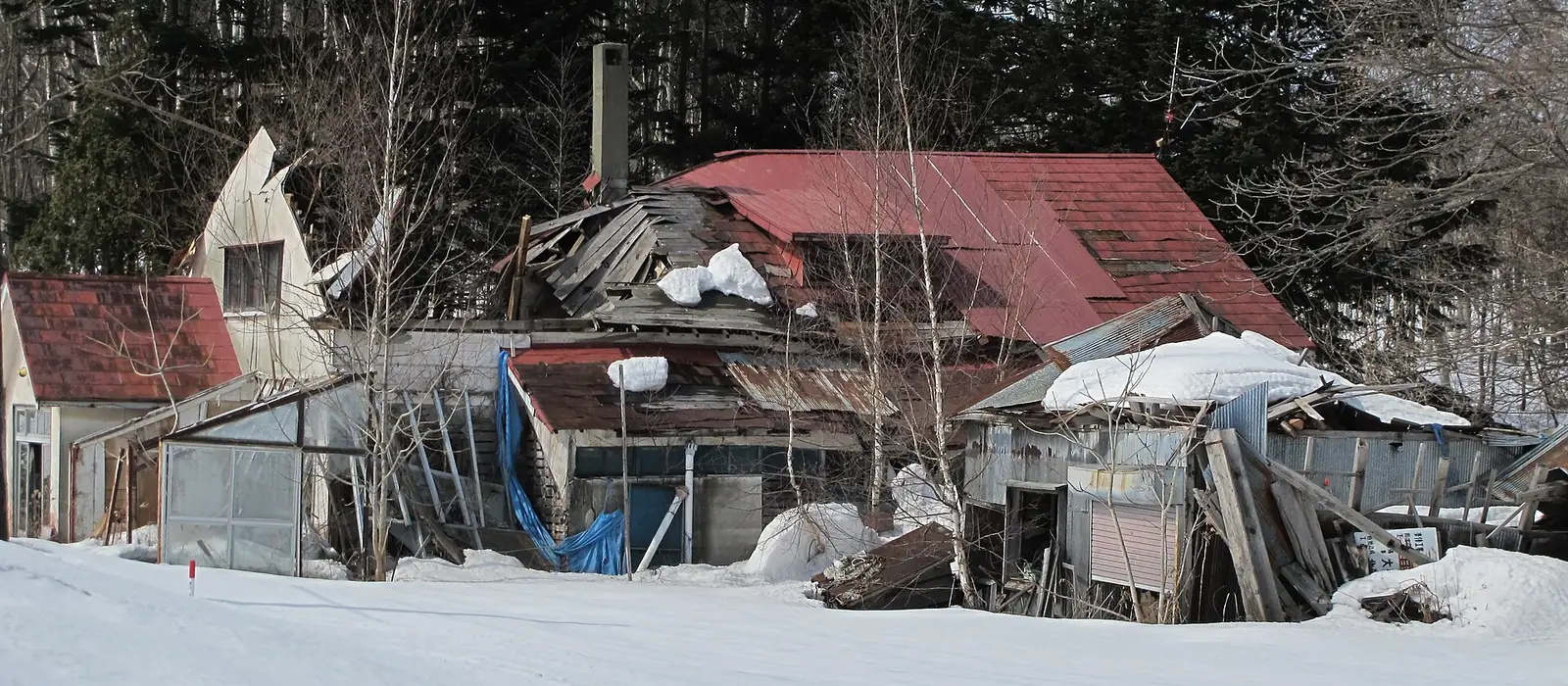
A vacant house with a collapsed roof (Hokkaido)A vacant house whose roof fell under the weight of snow, with the outer walls and shed left collapsed (Hokkaido)
Photo: Sgroey "Abandoned House Collapsed from snow"(CC BY-SA 4.0), cropped

Each municipality sets its own criteria for which houses it treats as “dangerous.” Toyama City publishes the criteria it uses to decide eligibility for its subsidy for demolishing dilapidated dangerous vacant houses, and that is, in effect, the yardstick for which houses the city sees as dangerous. Under the Toyama City subsidy for demolishing dilapidated dangerous vacant houses, a house is judged “dangerous enough” when both of the following apply: two or more of the building leaning, the outer walls being damaged, or the roof being damaged; and the outer wall is within 3 m at the first floor or 5 m at the second floor of the boundary with the neighbouring land.

  • Part of the building leans through age or is close to collapse. Posts lean, the roof ridge undulates, the eaves have dropped
  • Outer wall cladding is damaged with the substrate exposed, or there are holes. Corrugated metal has peeled back to show the boards, earthen wall has fallen away to show the bamboo lath
  • Roofing is damaged and the roof leaks, or the eaves sag. Tiles have slipped and the roof boards show, stains are spreading across the ceiling
  • The outer wall is within 3 m (ground floor) or 5 m (first floor) of the neighbouring boundary or the road. Almost every house in Toyama's towns and villages falls within this distance

If two of the three above — tilting, outer walls, roof — ring true and a neighbour or road is close, then by Toyama City's measure the house is on the "dangerous" side and likely to move past the request letter to advice and guidance. If the walls and roof are intact and nothing leans, the complaint is most likely about vegetation or falling objects, and dealing with just that is enough. The criteria are reviewed each fiscal year, so check Toyama City's guidance for the latest. Other municipalities differ in the details.

The important point is that these are the criteria for a house the city regards as dangerous, not for a house that ought to be demolished. Even with fallen outer walls or a torn roof, many houses can be repaired if the frame of posts and beams is sound. As a builder with a construction permit we look on site and judge whether it can be repaired or must come down. The city's verdict being "dangerous" while ours is "repairable" is not unusual. How to tell a damaged house apart is in A damaged house (a so-called wreck) can be sold without demolishing, and examples of conditions we can take on are in We buy kominka and vacant houses.

The three paths after a notice, compared by cost and time

Three paths ① Repair or demolish yourself ② Demolish with a subsidy ③ Sell as it stands Cost Repairs from a few ¥100,000, per item Demolition ¥30–50,000 per tsubo 40 tsubo: from ¥1.5–2 million Demolition cost minus the subsidy Amount and terms change yearly You still pay part ¥0 (no brokerage fee) Appraisal and survey also free Time Only the quote and the work From afar: one step per trip home Apply and await approval first Demolish early and you lose it From the site survey, Handover in as little as 2 weeks Effort Find contractors, attend on site, clear the contents yourself Paperwork, city assessment, choosing a contractor No clearing out Scrivener introduced if unregistered Contract by post Outcome Repair and the house stays Demolish: empty lot, and from next FY the land tax rises Empty lot; from next FY the land tax rises You find the buyer yourself Owner's liability passes to us Repairable houses go to the next occupant No liability for defects after handover ① if you will return to the house one day; ② if you want to keep the land; ③ if you live away and want the notice dealt with. Subsidy amounts and terms change each fiscal year, so they are not given here
Set on the same scale, ① and ② are ways of paying to let go, and ③ is a way of being paid to let go. Whichever you choose, our free appraisal can serve as material for the decision.

Once you know the stage and have replied, the next thing is a plan. For a house that has received a notice there are broadly three paths: repair or demolish it yourself, remove it with a subsidy, or sell it as it stands. We set them side by side on the same scale.

1. Repair or demolish yourselfIf you fix only what was pointed out, removing loose tiles or cutting back branches is often a repair from a few hundred thousand yen, and the house stays. Repairing the whole house for use is on the scale of ¥2–4.5 million for the roof and ¥2.5–7 million for seismic work (costs and going rates). Demolition runs around ¥30,000–50,000 per tsubo, from ¥1.5–2 million for 40 tsubo (about 132 m²), and with a kura or windbreak grove it is not unusual to exceed ¥3 million. The property tax on the land rises from the year after demolition, and you find a buyer for the empty lot yourself. Finding contractors, attending on site and clearing the contents, from outside the prefecture, means one step on each trip home.
2. Demolish with a subsidyToyama City has a subsidy for removing dilapidated and dangerous vacant houses, covering houses the city has rated above a certain level of danger. Kamiichi Town also has a dangerous dilapidated vacant house scheme (subsidy). Amounts and conditions change each fiscal year, so we do not give them here; check Toyama City's guidance and each municipality's desk. What they share: the application and approval must come before work starts, and demolishing before approval disqualifies you. Even after the subsidy you still pay part, and the land tax and sale after demolition are the same as in 1.
3. Sell as it standsA direct purchase, with us as the buyer. We take the house with its contents and its damage, there is no brokerage fee, and the appraisal and site survey are free. Handover can be as little as two weeks after the site survey, with no liability for defects after handover. Dealing with the city and deciding between repair and demolition pass to us. The price is lower than a sale through an agent, but this is the path where you are paid rather than paying. Houses that can be repaired are repaired and passed to the next occupant.

If you plan to return to the house one day, choose 1. If you want to keep the land, or have a use for an empty lot, 2 suits you. If you live outside the prefecture with no plan to return and want the whole matter of the notice closed, 3 is the fit. Our appraisal is free to use as material for the decision, and there is no charge if you decide not to sell.

Selling is possible up until an order is issued. The owner's liability itself passes on

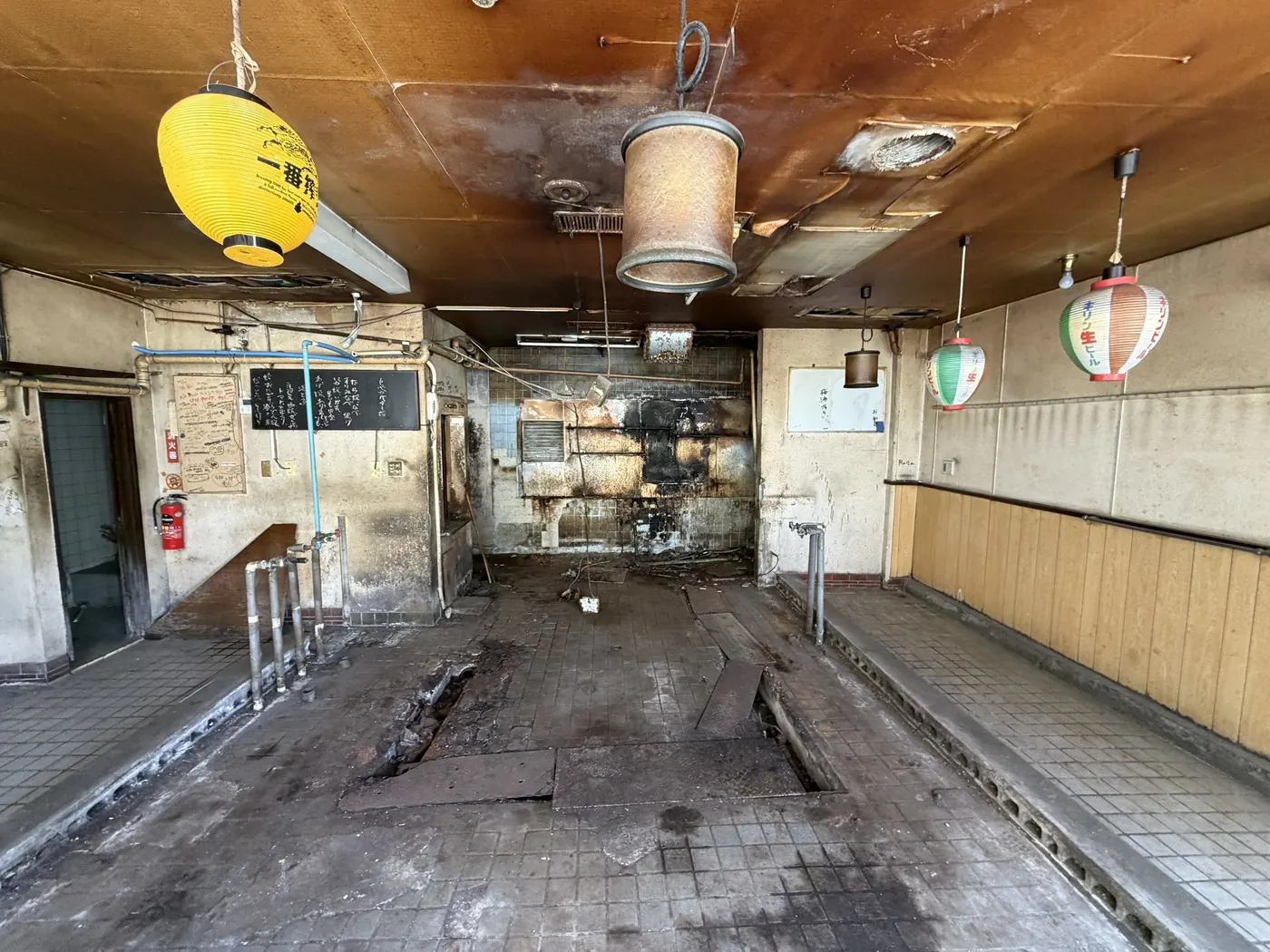
Before renovation (our project)The disused, worn shop interior (before)
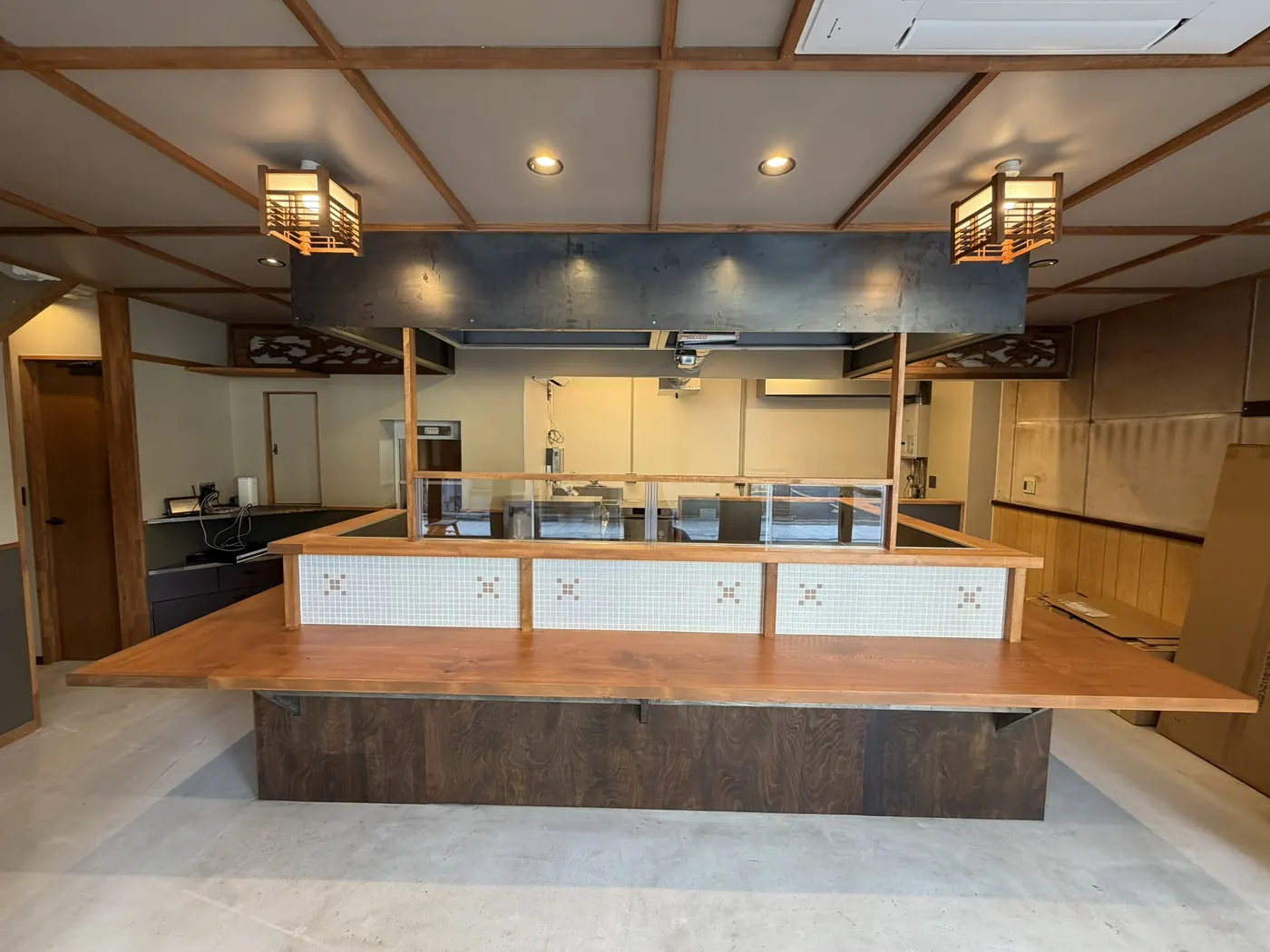
Repaired for the next userThe yakitori bar rebuilt around a solid cypress counter (after)

A shop that had stood closed and deteriorating, which we repaired and brought back as a yakitori bar. Even a building no longer in use can be passed to the next user if the frame is sound. → See this case in detail

Advice, guidance and recommendations under the Vacant Houses Act are addressed to the owner, not to the house. If we take the house as it stands before a recommendation, the residential-land tax relief stays in place, and dealing with the notice, deciding between repair and demolition, and explaining to the neighbours all pass to us. You do not need to repair or demolish first.

As a rule we can take a house up until an order is issued. At the guidance or recommendation stage, telling the city that ownership changes on a given date means the city waits for that date. If an order has been issued and enforced demolition is under way, please ask us individually. The process runs in this order.

1. Send photos of the letter and the house on LINEA photo of the letter, the outside of the house, and the address if you know it. We reply with our reading of the stage and a rough price range. Contents still inside and registration not yet done are both fine.
2. Site survey (free)We check the roof, outer walls, posts and beams, foundations, distance to the neighbouring lot and any encroachment. If you leave us the key you need not attend. There is no charge if you decline.
3. Our offer, and contacting the cityWe give you the price and handover date in writing. If you wish, at this point we inform the city's department that a sale is under way.
4. Inheritance registration and contractInheritance registration must be done before handover (compulsory since April 2024). If it is not, we introduce a judicial scrivener we work with, and the contract can be exchanged by post. If the house is co-owned with siblings, everyone's signature is needed.
5. HandoverAs little as two weeks from the site survey. No liability for defects after handover; disposing of the contents and dealing with the city pass to us.

The practical steps for selling without going back are in How to sell your Toyama family home without going back, and the order of registration and tax when selling an inherited house is in Guide to selling an inherited family home. For a house in Toyama City, see also We buy kominka and vacant houses in Toyama City.

When a notice arrives naming you as an heir you knew nothing about

A letter may come from the city saying "you are one of the heirs" to a house in your grandfather's name, or an uncle's you never met. The registered owner died decades ago, and the city has traced the family registers to every current heir. However unfamiliar it is, in law you are an heir.

The first thing to know is that renouncing an inheritance has a deadline. You file with the family court within three months of learning that an inheritance has opened for you. If the city's letter is how you first learned of it, the rule is that the count starts on that day, but the starting point is judged case by case, so note the date on the letter and the date you received it and consult a judicial scrivener or lawyer early. If three months is not enough, you can apply for an extension within the same period.

Second, a duty to preserve the house can remain even after renouncing. Under the amended Article 940 of the Civil Code, a person who was actually in possession of the house at the time of renouncing must preserve it until it is handed to the next heir or an estate administrator. If you live outside the prefecture, hold no key and do not use the house, the rule is that renouncing leaves you with no such duty. How renouncing compares with selling is covered in Renouncing the inheritance does not make the vacant house disappear.

Even when there are many heirs and agreement is hard to reach, knowing first whether the house is worth anything changes how the conversation goes. If it is, a representative has a reason to push ahead with registration and sale. If it is not, the decision to renounce can be made sooner. We can appraise on a request from a single heir, before registration, with the contents still inside.

Advice desks in Toyama Prefecture. You may go to a public desk first

You can come to us directly or go to a public advice desk first. The public desks are neutral and free, and they set out the paths other than selling too: subsidy schemes, the vacant-house bank, management services.

Toyama City vacant-house advice deskA single free desk for every vacant-house question: inheritance and registration, proper management, clearing contents, sale or reuse, and demolition. Check the location and opening hours at Toyama City vacant-house advice desk. For the department that sent your letter, use the contact details printed on the letter.
Toyama Prefecture: list of municipal vacant-house advice desksA list of the department in charge in each municipality of the prefecture. The department's name differs from town to town, so check it against the sender named on your letter. See Toyama Prefecture: list of municipal vacant-house advice desks.
MLIT: Vacant Houses Act informationAn outline of the amendment, the guidelines and the treatment of the residential-land tax relief, all in one place. If a municipality's explanation seems to differ, this is the reference. MLIT: information on the Vacant Houses Special Measures Act

When the talk at a public advice desk turns to selling, a house that can be sold through an agent gets referred to an estate agency. A damaged house that buyers shy away from, a house still full of contents, or one whose inheritance registration is not done is where a direct buyer like us comes in. Who to ask to look after a vacant house from outside the prefecture is set out in A year-round calendar for managing a Toyama vacant house from afar.

FAQ

What happens if I don't reply to the city's letter?+−

The first "request for proper management" has no legal force, but if there is no reply and neighbours keep complaining, the city inspects the site and moves on to advice and guidance, then a recommendation. After a recommendation the residential-land tax relief on the lot is removed from the next fiscal year, and a designated hazardous vacant house can go on to an order and enforced demolition. Simply phoning the department in charge to tell them the current state and your plans usually stops things at the request stage.

The house is co-owned with my siblings. Who receives the notice, and who should deal with it?+−

The city traces the owners and heirs through the property register and family registers and writes to everyone it can identify, or to a representative. Even if only one person received it, every co-owner bears the owner's duties. One representative can handle the reply: tell the department you are contacting them on behalf of the heirs, and share the letter with the other co-owners. A sale needs every co-owner's agreement and signature, so we recommend starting that conversation early.

If I sell after receiving a recommendation, what happens to the property tax?+−

Property tax for a fiscal year is charged to whoever owns the property on 1 January. If 1 January passes with the recommendation still standing, the owner on that date pays that year's tax without the relief. If ownership changes before 1 January, the recommendation was addressed to the previous owner, and the city decides afresh what measures to take against the new one. If you sell to us, we explain how the handover date relates to the tax assessment date.

Will you buy a house that has already received advice and guidance?+−

Yes. At the guidance or recommendation stage you can talk to us as the house stands, contents included, with no repair or demolition on your side. Once ownership changes, we take over all further dealings with the city. If an order has been issued and enforced demolition is under way, the demolition deadline is already fixed, so please ask us about that case individually. The purchase price depends on the condition of the house; where the frame is too damaged to repair, the price allows for demolition cost.

If the city has judged the house "dangerous", is demolition the only option?+−

Not necessarily. Toyama City's criteria decide which houses the city regards as dangerous, based on two or more of tilting, damaged outer walls and damaged roof, plus the distance to the neighbouring lot; they are not a judgement of whether the house can be repaired. Even with damaged walls and roof, many houses can be repaired if the frame of posts and beams is sound. As a builder with a construction permit we judge on site, and our policy is to repair what can be repaired and pass it on to the next occupant.

Is there still time to apply for a demolition subsidy after the notice arrives?+−

It depends on the scheme. Toyama City's subsidy for removing dilapidated and dangerous vacant houses covers houses the city has rated above a certain level of danger, and requires an application and approval before work starts. The amount and conditions change each fiscal year, and applications close once the budget runs out. When an order or enforced demolition is close there may not be enough time to apply, so if you intend to apply, consult the department as soon as the notice arrives. Even with a subsidy you still pay part of the demolition cost, and once the lot is cleared the property tax on the land rises from the next fiscal year.

→ All 49 questions on selling and renovation

This page is a general explanation of the system. The stage of a notice, tax amounts and subsidy conditions vary by municipality and fiscal year. For final confirmation, ask the department named on your letter and check the official guidance from MLIT and each municipality. The rules described are as of September 2026.

Send us a photo of the letter.

A photo of the letter and of the house is all we need. We reply with the stage, what to do by when, and whether the house can be sold. From outside the prefecture, with the contents still inside, before registration — all fine. The appraisal is free, and there is no charge if you decline.

Send photos on LINE Ask us by form
By phone (Japanese only) 9:00 - 17:00 After 17:00, site manager (Japanese only)

Reading by the condition of the house.

For each kind of damage that prompts a notice: whether it can be repaired, whether demolition is the only option, and whether it can be sold as it stands.

A collapsed roof or a house about to fall → Complaints about overgrown trees and groves → Who is liable if the house damages a neighbour → A damaged house can be sold without demolishing → Demolition costs, and what to know first →

Written by Kota Makimura, Hokuriku Homes Updated

Phone9:00–17:00 LINEAppraisal from photos Free appraisalTakes 1 minute
LINEChat