Before you sell / non-rebuildable

"Non-rebuildable, so it can't be sold" is only half true.

Houses that cannot be rebuilt still have buyers. The road-frontage rule and the ways to sell other than an agent, as they apply to Toyama's many narrow-laned villages.

"They told me it can't be sold because it's non-rebuildable" — the commonest thing we hear from the narrow-laned old villages: the fishing town of Himi, the Uchikawa in Imizu, the old streets of Toyama. The short answer: it can be sold. Only the buyer and the method differ from an ordinary house.

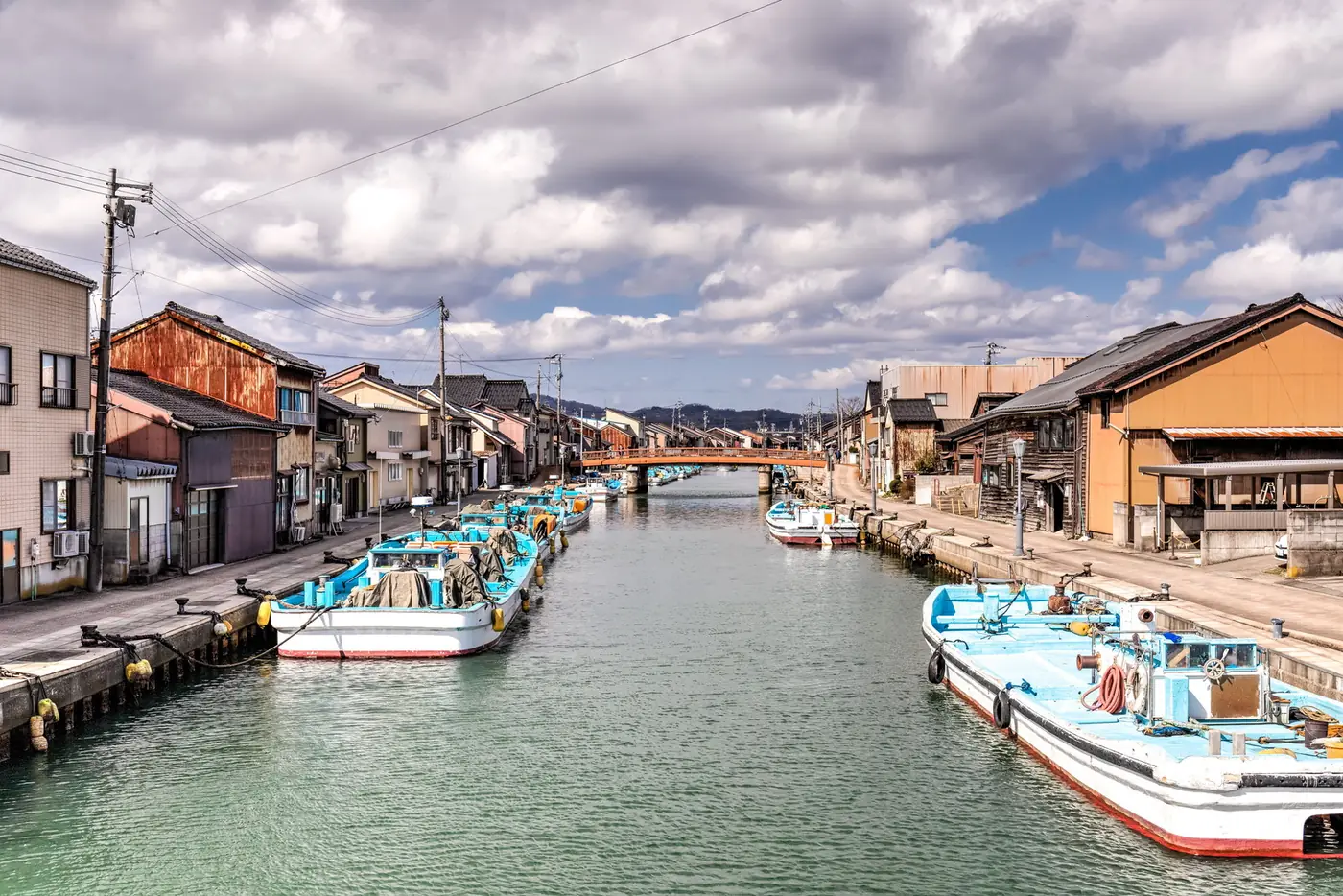
Houses along the UchikawaHouses and fishing boats along the Uchikawa, Imizu
Photo: くろふね "内川の風景20210227-IMG 1605"(CC BY 4.0), cropped

What "non-rebuildable" means

Lot living in it and repairing are allowed 2 m or more of frontage road 4 m or wider Without both no rebuilding (frontage rule = non-rebuildable)

As a rule, you can build a new house only on land with at least 2 m of frontage on a road at least 4 m wide. This is a Building Standards Act rule called the “road frontage obligation.” Old settlements had houses standing before the law existed, so many lots don't meet this condition. You can keep living in the house, and you can repair it, but you can't “rebuild” it — that's what non-rebuildable means. Toyama Prefecture's coastal areas and the townscapes along the old highways have a concentration of lots like this.

"Can't be sold" isn't accurate

  • Mortgages are hard to get, so it is hard to sell to an ordinary buyer — that much is true
  • But to the neighbour it is the one chance to enlarge their lot, and has value
  • To a buyer that repairs and uses rather than rebuilds, it is ordinary stock
  • Some lots can be opened up for rebuilding with a municipal permit (Article 43)

It's true that listing through an agent tends to find few buyers. But with a purchase like ours, built on “repair and use, don't demolish,” being non-rebuildable isn't a downside. Since we're not going to rebuild it, not being able to rebuild isn't a minus. If the building's damage has progressed, also see How to tell whether a damaged house can be repaired.

We appraise the frame, not the road

When we appraise a non-rebuildable house, we look at the posts, beams and roof more than the frontage. If the structure is sound, it can be restored as a home with insulation and seismic work — and a fishing-village or old-town streetscape is an asset for a shop or guesthouse. The value as real estate and the value as a building are different things; a house an agent could not price is routinely worth something to us. → Why a "zero" house is worth something

FAQ

Another firm valued it at zero and wouldn't even take it. Is there still a chance?+−

Yes. A demolition-based appraisal easily comes to zero or below once demolition exceeds the land value; we value the building on a no-demolition basis. Send photos and the location first — we never turn a house away without seeing it.

I don't know whether the frontage is 2 m.+−

That is fine. We check the cadastral map and the site as part of the appraisal. You don't need to arrange a survey, and there is no cost.

There is an unregistered extension. Is that a problem?+−

Common in old houses, and we can still buy. Whether registration is needed differs by house, so we check at the survey and make the steps and who pays clear before the contract.

This page is a general explanation. Whether a tax rule applies, and the amounts, depend on your situation; confirm with the tax office or a tax adviser. The rules are as of August 2026.

We do the paperwork with you

Before deciding whether to sell, just know the price.

Appraisal is free, with no charge if you decline. The contents can stay.

Request a free appraisal Message us on LINE

See also.

Demolition costs, and how to think about selling as it is.

Demolition costs → We buy non-rebuildable houses as they are: selling a vacant house in Toyama →

Written by Kota Makimura, Hokuriku Homes Updated

Phone9:00–17:00 LINEAppraisal from photos Free appraisalTakes 1 minute
LINEChat