Read before selling / A house with farmland or forest

The house could sell. The rice field is holding it up.

The family home comes with rice fields or forest, and you were told "we don't handle farmland". Can the house lot alone be sold? Who can take the fields? Article 3 permission, blue-zone land, forest and a guide to timing.

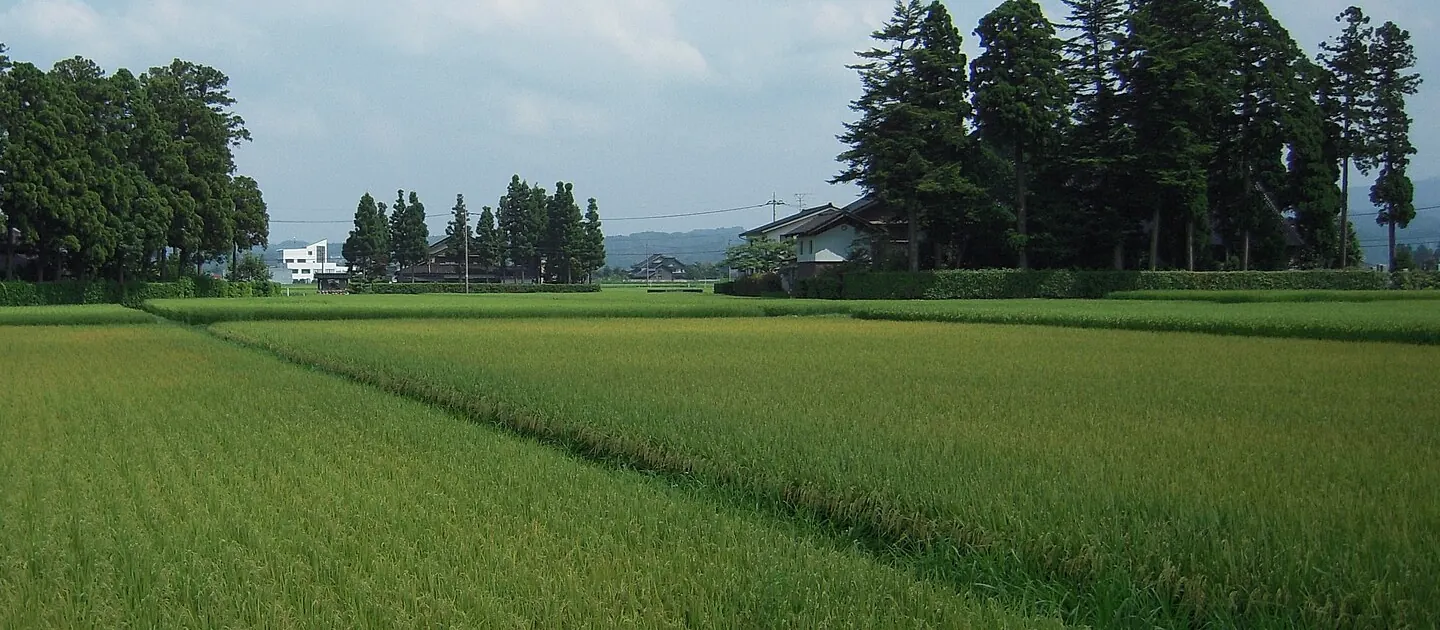
The scattered villages of the Tonami plainA farmhouse surrounded by its windbreak grove, with rice fields in front (the scattered villages of Tonami)
Photo: fitm "Sankyoson"(CC BY 3.0), cropped
1 Send a photo of your tax statement and we reply with the land categories and a view of the way outFree consultation by LINE 2 9:00–17:00, Japanese only / after 17:00: Call us
1970Founded / Yatsuo, Toyama City
Real estate + constructionA builder with both a real estate licence and a construction permit
Appraisal ¥0No charge if you decline
Toyama, Ishikawa and HidaAll of Toyama and the neighbouring prefectures

The real reason you are told "we don't handle farmland"

Same site, different law and office House lot and building Real Estate Brokerage Act Sale contract → registration Ownership transfers We can be the buyer Rice and dry fields Agricultural Land Act Agricultural committee permission (Art. 3) No permission, no transfer of ownership Buyer must be a farmer Estate agents cannot, as a rule
A house lot moves by sale contract and registration; farmland does not move without the agricultural committee's Article 3 permission. We can be the buyer only on the left.

On the same site, the house lot comes under the Real Estate Brokerage Act, the farmland under the Agricultural Land Act. Different laws, different offices.

For a house lot and building, ownership changes hands through a sales contract and registration. Rice fields and farmland, though, live in the world of the Agricultural Land Act (a law restricting the sale and purchase of farmland). Any transfer of rights over farmland — selling, leasing, giving it away — needs the municipal agricultural committee's permission (Agricultural Land Act art. 3). A sale without that permission has no legal effect. And this permission turns on who is buying: in principle, only someone who will farm the land themselves can buy farmland. A real estate company like us cannot, in principle, buy farmland.

When an estate agent turns down a farmhouse, it is not laziness. Buyers of farmland are limited to farmers, and whether permission is granted is unknown until you apply. The effort does not match the return, so they do not handle it. That is the real reason.

Our answer is a split: we buy the house and its lot, and look for the way out for the farmland and forest together with you. Insist on one company buying everything and the sale stalls. Split it and it moves. For the procedure itself, see Toyama City: Article 3 procedures and permission criteria. Forms and dates differ by municipality.

Three routes for letting farmland go

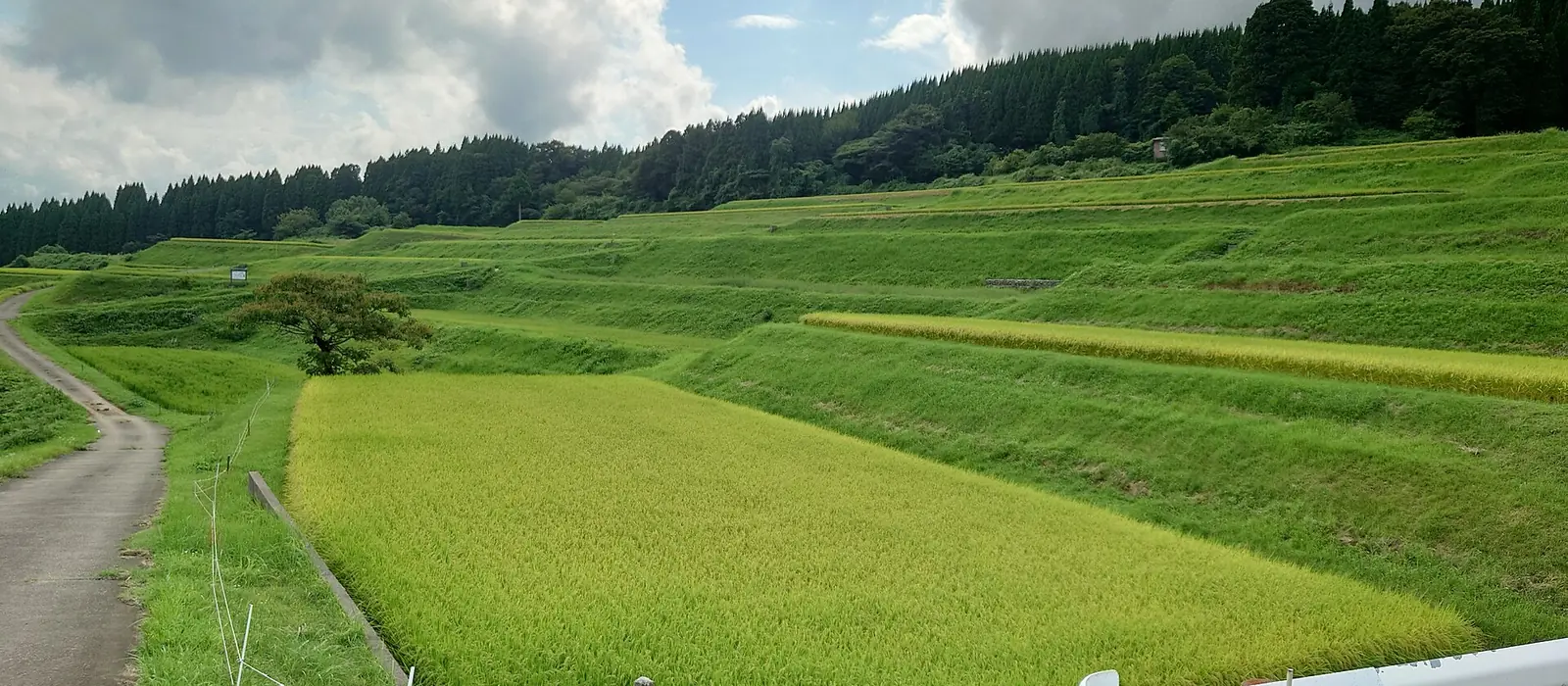
Terraced rice fields in HimiTerraced rice fields at Nagasaka, Himi: fields of growing rice step down the hillside, with cedar forest behind
Photo: ナイトキャビン "Nagasaka-rice-terrace(2)"(CC BY 4.0), cropped

There are three ways out for farmland. Which you can use depends on the land's zoning and whether there is someone nearby to farm it.

A. Pass it to a farmer (Article 3 permission)Sell or lease it to a neighbouring farmer, a community farming organisation or an agricultural corporation. In Toyama's paddy country there is often a farm operator nearby who already works the surrounding fields, and the agricultural committee knows who. The price is an order of magnitude below a house lot, but it is the most realistic way out.
B. House and farmland together to an incoming resident (vacant house with farmland)The house and farmland are listed together on the vacant house bank and, in coordination with the agricultural committee, passed to an incoming resident who wants to farm on a small scale. MLIT sets it out in its guide to "vacant houses with farmland" (revised October 2024). Whether it is run depends on the municipality.
C. Stop it being farmland (conversion under Articles 4 and 5)Change the use to a house lot or car park, then sell. Converting it yourself is Article 4; the buyer converting it is Article 5. In Toyama City the office is the agricultural committee, and the steps are at "when you want to convert farmland". For blue-zone paddy, though, this route is all but closed.

We can take farmland only where conversion under C is a realistic prospect. For A and B we cannot be the buyer, but we go through the preliminary consultation with the agricultural committee and the paperwork with you. The prefecture's system as a whole is at Toyama Prefecture: when you want to convert farmland.

What changed in April 2023: the end of the minimum-area requirement

For a long time, anyone acquiring farmland had to end up farming at least a certain area: the minimum-area requirement. Someone who only wanted a field the size of a kitchen garden was refused permission at this wall.

This requirement was abolished on 1 April 2023 when the amended Agricultural Land Act came into force. Within the prefecture, the Kamiichi agricultural committee's notice explains it clearly, and MLIT's guide was revised to match the amendment. Passing a small field on to an incoming resident together with the house became a broader route under the system.

But only the area condition changed. The following requirements remain.

  • Full efficient use requirement. Farming all the land they hold, including the land acquired, efficiently
  • Full-time farming requirement. The acquirer (or their household) must work the land full-time
  • Local harmony requirement. Not hindering the use of surrounding farmland

What the agricultural committee looks at has changed from area to "will you really farm it after buying?" Someone who will not farm cannot be the buyer, however small the plot. When we say "there are cases we cannot take", it is because this requirement applies to us too.

What is different in a blue zone or urbanisation control area

The same "rice field" has more or fewer ways out depending on the zone Designated agricultural-use zone (blue zone) Land designated to be kept as farmland × Conversion not allowed as a rule; "exclusion from the agricultural-use zone" needed first Applications a few times a year, taking a year or more. The fields go to a farmer (A) or as a vacant house with farmland (B) White zone Farmland outside the agricultural-use zone ○ Can apply for permission to convert The main category of farmland we can take Farmland in an urbanisation promotion area Property tax at house-lot rates ○ Conversion needs only a notification to the agricultural committee, not permission The sooner you decide to let it go, the easier * An urbanisation control area is a zoning under the City Planning Act. New buildings and uses are restricted (repairing and living in the existing house is still possible)
This zoning is the first thing we check. In a blue zone the conversion route is all but closed, and the way out for the fields narrows to a farmer or a vacant house with farmland.

The same "rice field" has more or fewer ways out depending on which zone it is in. This zoning is the first thing we check.

Designated agricultural-use zone (blue zone). Land within an agricultural promotion area that has been designated to be kept as farmland. Conversion is not allowed as a rule; to change its use you must first apply to the municipality for "exclusion from the agricultural-use zone". Applications are taken only a few times a year, many municipalities allow a year or more for the exclusion alone, and approval is not guaranteed. Farmhouses in Tonami and Nyuzen usually have the house lot surrounded by blue-zone paddy, which narrows the way out for the fields to A or B above.

White-zone farmland. Farmland outside the designated agricultural-use zone. You can apply for permission to convert it, and this is the main category of farmland we can take.

Farmland inside an urbanisation promotion area. Conversion needs only a notification to the agricultural committee, not permission. Property tax is at house-lot rates, so the sooner you decide to let it go, the easier.

Urbanisation control area. This one is a zoning under the City Planning Act. New buildings and uses are restricted, so even a house lot is not "land anyone can build a house on". Common for farmhouses in Osawano and Oyama, Toyama City. There is still a route to repairing and living in the existing house, so we appraise on the basis of repairing, not demolishing.

Separating house lot from farmland: land categories and subdivision

There is one thing you can find out yourself before asking: the land category in the register. Residential land, rice field, dry field, forest, wasteland, miscellaneous. The property tax statement that arrives each year also lists the category and area of every parcel. Send us a photo by LINE and we read it for you.

If the main house sits on a parcel registered as "residential land" and the "rice field" is a separate parcel, it is simple. The house and lot move under the Real Estate Brokerage Act, the field under the Agricultural Land Act, each on its own. The difficult cases are these two.

  • The main house and a rice field share one parcel. A land and house surveyor subdivides it. Fixing the boundaries needs the adjoining owners present, so allow time
  • Registered as "rice field", but long since a garden or garage in reality. The agricultural committee can sometimes rule that it is not farmland (a non-farmland determination). Practice varies by municipality, so ask first

The order is: the agricultural committee's decision, subdivision, registration of the change of land category, then the sale. Do it backwards and you redo work. It is fine if you do not know how the land is made up; we start from the cadastral map.

Who takes the forest?

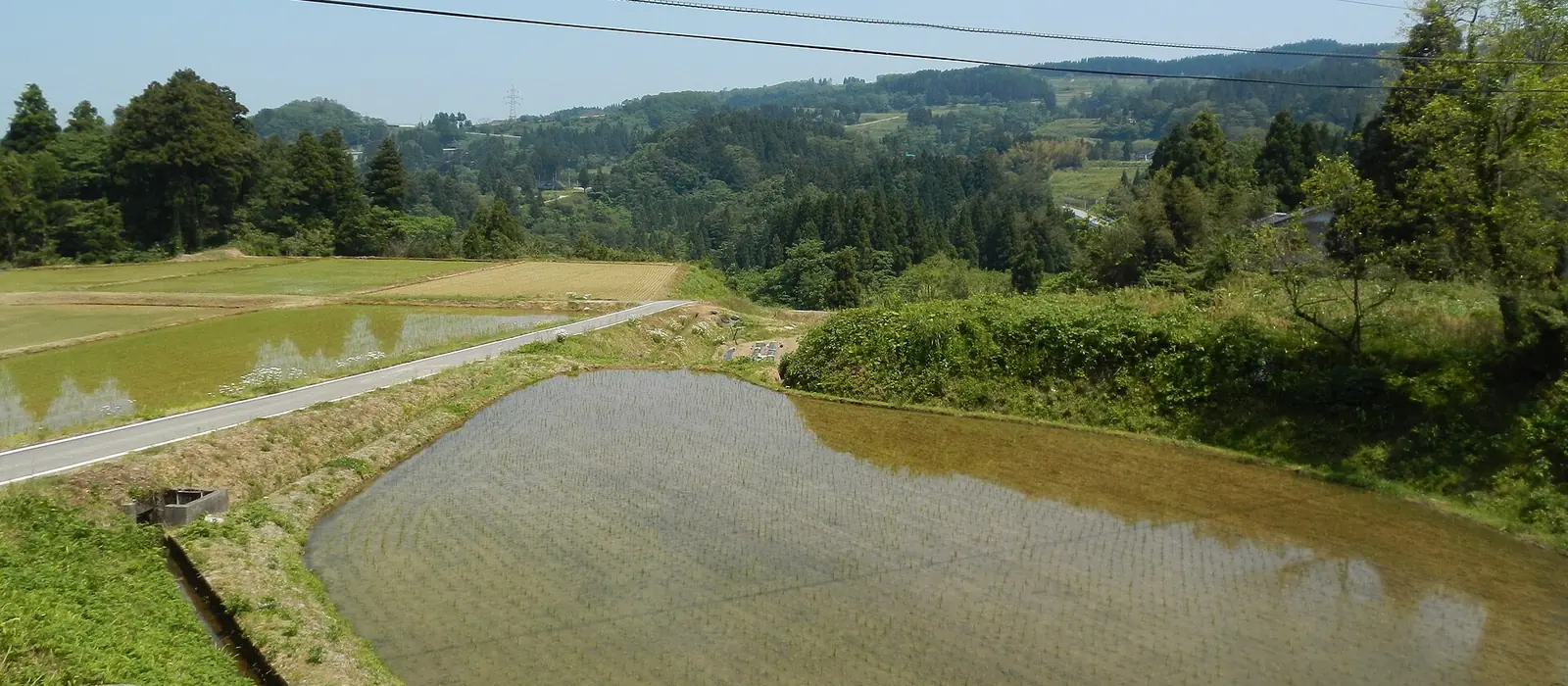
Fields and forest in TonamiHill country in Tonami: beyond flooded rice fields, hills of cedar and mixed woodland
Photo: kiwa dokokano "Untitled (12)"(CC BY-SA 3.0), cropped

Forest is outside the Agricultural Land Act, so it can be bought and sold without permission. The problem is not permission but the lack of anyone to take it. There are four candidates.

  • The owner of the adjoining forest. The most realistic option. Since it adds little to their management, they will sometimes take it for nothing
  • The local forestry cooperative. Not a buyer, but someone to entrust thinning and replanting to. A way to avoid neglect even if you cannot let the forest go
  • The municipality (the forest management scheme). A system for entrusting the management of forest you cannot look after to the municipality. Check the eligibility conditions with the forestry office
  • The state (the system for the state to take over inherited land). A scheme where the state takes inherited land off your hands. The conditions are set out in the Ministry of Justice's outline of the scheme. The land must have no building on it, its boundaries must be clear with no dispute, and it must have no cliffs, structures or trees that would hinder its upkeep, among other conditions. The examination fee is ¥14,000 per parcel, and once approved, the standard contribution is ¥200,000 (calculated by area for forest).

Transfer to the state will almost never be approved for forest with unclear boundaries. Where the scheme is useful, and how the costs compare, is in renouncing the inheritance versus transfer to the state. Forest that only runs up behind the house we can sometimes take together with the house lot. A large forest some distance away is usually outside what we can take; in that case we try the four ways out above with you.

The kura, work shed and barn do not need demolishing

A farmhouse comes with more than the main house: a kura, a barn, a work shed, a garage. Many people have been told "demolish it all before you sell", got a quote, and given up. As set out on demolition cost guide, demolishing a wooden house in Toyama runs around ¥30,000–50,000 per tsubo; a 60-tsubo (about 198 m²) farmhouse or Azumadachi (gable-entry farmhouse) from about ¥2.5–4 million; outbuildings such as a kura, barn or garage from several hundred thousand yen each; and felling and grubbing out the windbreak grove varies widely with the number and size of the trees. Main house to grove, the total not uncommonly exceeds ¥3 million.

Our policy is not to demolish the houses we buy but to repair them and hand them on to the next occupant. The same goes for outbuildings. A barn is valuable to the farmer taking on the fields as a place for machinery, and a kura (storehouse) has a heavy frame that, once repaired, serves as storage or a workshop. We do not start by deducting demolition from the price, so there is no need to get a demolition quote.

An unregistered barn or shed is fine as it is. The farm machinery and household goods left inside can stay too. We have written separately about a house still holding farm machinery, fertiliser, pesticides and a kerosene tank. We handle the disposal, so no clearing out is needed. Where a kura's roof has already given way or a wall is about to fall onto the neighbour's land, see what to do with a collapsing kura or barn.

Houses with farmland we can take, and the harder ones

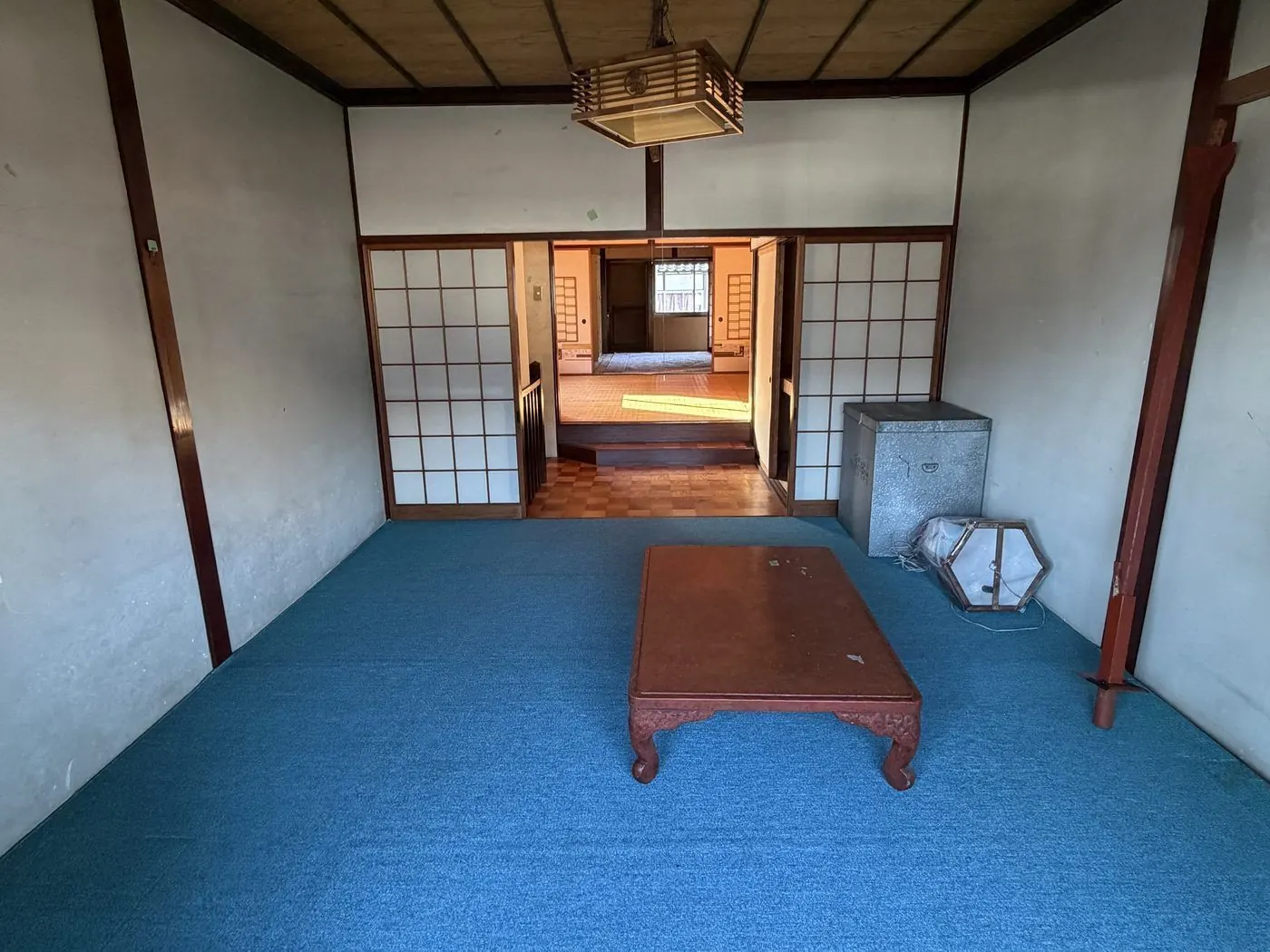
BeforeKominka turned into a guesthouse: the tatami room before renovation
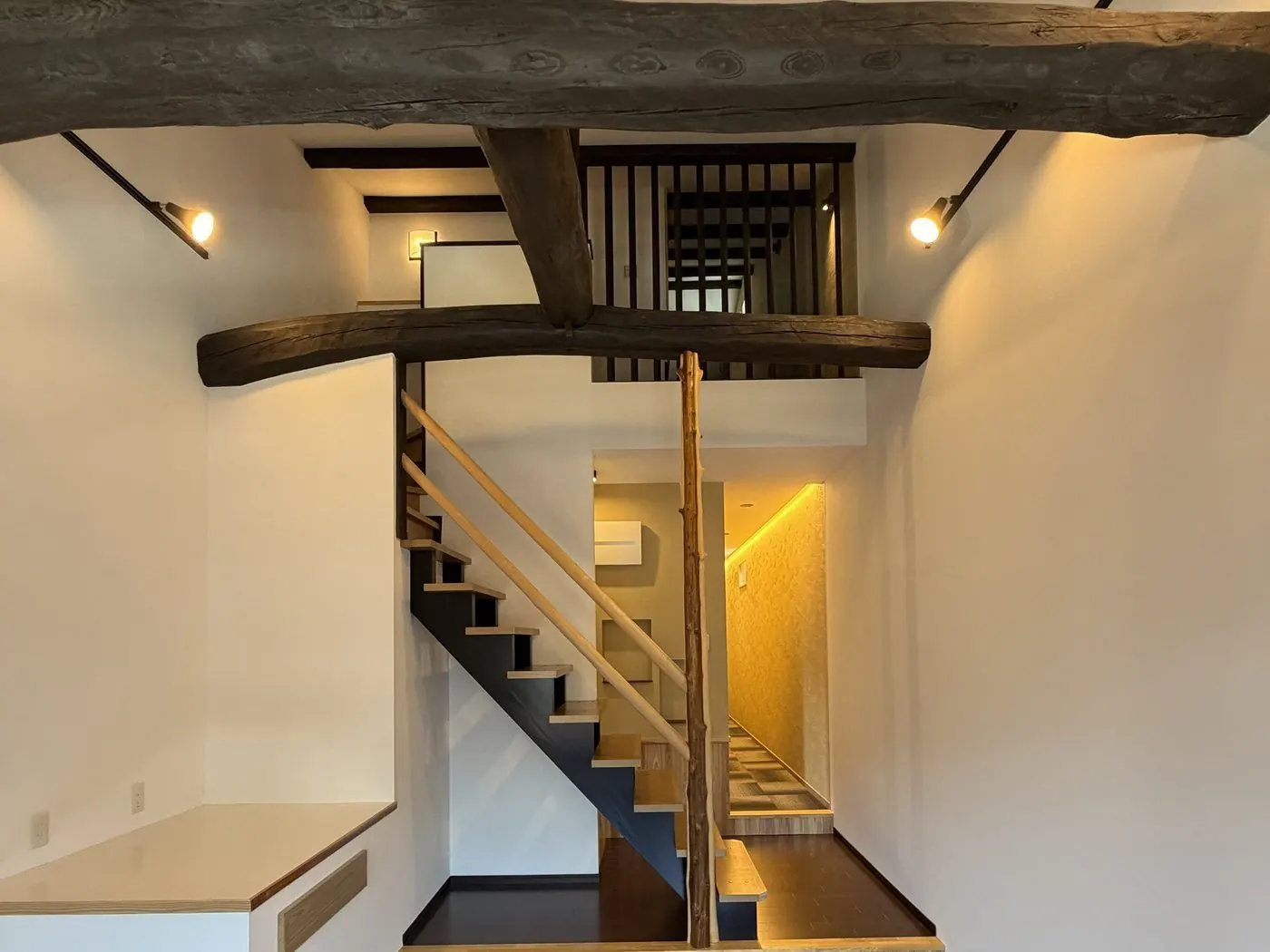
AfterKominka opened as a minpaku guesthouse: the stairwell with exposed beams (after)

This is the kind of restoration the houses we buy go on to. In this case the ceiling of the tatami room was opened up to expose the beams and the house opened as a minpaku (private lodging); four months' work, construction cost ¥9 million. → See this case in detail

We draw the line honestly. We are a builder holding a real estate transaction licence (富山県知事(9)第1812号) and a construction permit, not a farmer.

Houses we can take easily. The house lot is its own parcel, registered as residential land. The farmland is white-zone or inside an urbanisation promotion area with a prospect of conversion, or there is a farm operator nearby so the way out for the fields is already in view. The forest is only what runs up behind the house. The main house's posts and beams are sound. The closer to this, the faster it goes: we take the house and lot as is, contents included. No brokerage fee.

Harder houses. Most of the site is blue-zone paddy and nobody can be found to farm it. House lot and farmland are one parcel, and the adjoining owners will not cooperate with a subdivision. There is a large forest some distance away with unknown boundaries. In these cases we cannot buy everything together. Even so, if we buy just the house and its lot, the fields go to a farm operator, and the forest to an adjoining owner or to the state, a stalled sale starts moving.

Appraisal and site survey are free, and there is no charge if you decline. You can start talking to us before the inheritance registration is done, but it is needed before handover (compulsory since April 2024). We can introduce a judicial scrivener we work with.

From first contact to handover: the agricultural committee's calendar sets the pace

House lot and building only Chat Site survey (free) Our offer Contract and handover As little as 2 weeks With farmland Land category and zoning Talk to the committee first Art. 3 filing by the deadline Subcommittee decision Permit issued on set date Farmland Handover Set by the committee's calendar Miss one deadline and you wait for the next House and lot can be handed over first
The house and lot, the farmland and the forest each run to a different timetable.

When we buy, it is handover in as little as two weeks from the site survey. But that is for the house lot and building only. Once farmland is involved, the timing is set not by us but by the agricultural committee's calendar.

In Toyama City, the Article 3 application goes to the agricultural committee by the submission deadline, the farmland subcommittee decides yes or no, and the permit is issued on or after the scheduled permission date. The deadlines and permission dates are on a yearly timetable, which you can check at Toyama City: Article 3 procedures and permission criteria. Miss one deadline and you wait the whole way to the next. Other municipalities work the same way; only the dates differ.

1. First contact ─ just a photo of the tax statementOnce we know the category and area of each parcel, we give you our view of the way out on the spot.
2. Site survey and zoning check ─ freeWe look at the house's frame, the outbuildings and the current state of the farmland. We confirm the zoning with the municipal office.
3. Designing the way out ─ house, fields and forest separatelyWe make our offer for the house and lot. For the fields we consult the agricultural committee first and decide between a farm operator, a vacant house with farmland, or conversion.
4. Inheritance registration and application ─ with our judicial scrivenerComplete the inheritance registration, and file the Article 3 application for the farmland (Article 5 for conversion) to meet the deadline. When farmland is acquired by inheritance, a notification to the agricultural committee (Article 3-3) is also required.
5. Permission, registration, handoverOnce the permit is issued, the farmland registration is transferred. The house and lot can be handed over first.

Inheritance deadlines and taxes are covered in the guide to selling an inherited family home and the ¥30 million special deduction for vacant houses; upkeep costs and your options in what to do with the family home.

FAQ

Do I have to mow a rice field that is no longer farmed?+−

Farmland owners are responsible for keeping their land in proper condition. The agricultural committee surveys land use every year, and asks the owners of uncultivated land, as idle farmland, what they intend to do with it. Leave the grass and pests and seeds spread to the neighbouring fields, and complaints follow. We factor an overgrown field into our appraisal.

Is property tax on farmland high?+−

Ordinary farmland is assessed as farmland, and its tax is normally lower than for a house lot. Farmland inside an urbanisation promotion area, though, is assessed the same as a house lot. Uncultivated farmland can also end up taxed more heavily: first you receive guidance from the agricultural committee, and if that's followed by an advisory (a strong warning from the municipality) telling you to talk to the Farmland Bank (the Agricultural Land Consolidation Bank Corporation), the tax goes up. Check the amount on the tax statement you receive every year.

Can I sell just the house and keep the farmland?+−

If the house lot and the farmland are separate parcels, you can sell the house and its lot alone. If the main house and a rice field share one parcel, it has to be subdivided first. But if you keep the farmland, the mowing and property tax stay with you. We think through the way out for the remaining farmland with you.

What does the agricultural committee ask?+−

Under Article 3 it is mainly the buyer who is examined: whether they will farm all the land they own efficiently, whether they will work the land full-time, and whether they fit in with local farming. The seller is checked for whether the registered title and the inheritance are in order. If the inheritance registration is not done, it must be completed first; we can introduce a judicial scrivener we work with.

I cannot find anyone to take the farmland.+−

Start with the municipal agricultural committee. They know the local farm operators and community farming organisations. You can also lease the land through the Farmland Intermediary Management Organisation (farmland bank). Some municipalities run a "vacant house with farmland" scheme through their vacant house bank, passing house and land together to an incoming resident. Talk to us and we work out together which office to approach.

Will Hokuriku Homes buy the house, the fields and the forest all together?+−

Honestly, there are cases where we cannot take all of it. We are not farmers, so we cannot be the party acquiring farmland under an Article 3 permission. We can take farmland only where conversion is a realistic prospect. We buy the house and its lot as is, contents included, and look for the way out for the farmland and forest together with you. Splitting it this way is the quickest route forward.

Can I ask about a farmhouse in Tonami, Nyuzen or Hida?+−

Yes. We cover all of Toyama Prefecture, all of Ishikawa Prefecture and northern Gifu (the Hida region). Farmhouses in the scattered villages of Tonami, Nanto and Oyabe, the paddy country of Nyuzen and Asahi, and the former rural districts of Takayama nearly always come to us with farmland or forest attached. Even if you do not know how the land is made up, we start from the cadastral map. The appraisal is free.

→ All 49 questions on selling and renovation

Rice fields and all, start with a figure.

The tax statement and photos of the house are enough. We reply with the way out for the house, the fields and the forest, and a guide price for the house. The appraisal is free.

Send photos by LINE Ask by form
By phone (Japanese only) 9:00 - 17:00 After 17:00, site manager (Japanese only)

* How the Agricultural Land Act, the agricultural promotion area system and the scheme for transferring inherited land to the state are applied, and their timetables, vary by municipality and fiscal year. This page is a general explanation based on official information at the time of writing and does not guarantee the outcome of any individual application. Always check the official information.

Written by Kota Makimura, Hokuriku Homes Updated

Phone9:00–17:00 LINEAppraisal from photos Free appraisalTakes 1 minute
LINEChat