Running a minpaku in winter (snow, freezing, insulation) — for guesthouse owners / Toyama

To keep a minpaku running in Toyama, settle the winter routine first

Winter is when a guesthouse in Toyama is really tested: roof snow, frozen pipes, cold. We put what happens in winter, and what it costs, into the operating plan before the guesthouse opens. Set out month by month by us, a minpaku management operator that is also a builder.

1 Just send photos and the locationFree consultation on LINE 2 9:00–17:00, Japanese only / after 17:00: Call us

What happens to a Toyama guesthouse in winter (by month)

Winter at a Toyama guesthouse (Oct–Apr) Oct Nov Dec Jan Feb Mar Apr Snow screens, draining, gutters Roof snow, sliding snow, broken eaves Burst pipes from freezing On booked days, no snow at the entrance, and hot water ready Post-thaw check When damage happens Every booking
Damage comes in December–February, the same months as the booked-day routine.

Winter is when a guesthouse in Toyama is really tested. Snow settles on the roof, loosens during the day, then freezes overnight. Water pipes freeze and burst if the house goes several days without a guest. Damage happens in December–February, and it only shows clearly in spring, once the snow has gone. Here is the winter routine, month by month.

Oct–Nov ─ Snow screens, draining, gutter cleaningThe season to prepare before the snow. Clear gutters blocked with leaves and put snow screens on windows and garden trees. This is also when to decide what happens to the water on days with no guests, and how it will be drained.
Dec–Feb ─ Roof snow, sliding snow, broken eavesSnow builds up on the roof and its weight bears on the posts and beams. On a warm day it slides off all at once and breaks eaves, gutters and the neighbour's fence. On booked days, roof snow must not be allowed to fall in front of the entrance.
Jan–Feb ─ Burst pipes from freezingOn a freezing night the water in the pipes turns to ice, expands and splits the pipes and joints. You cannot tell the moment it happens. At a guesthouse, the hot water has to work properly on the day guests arrive.
Mar–Apr ─ Post-thaw checkOnly once the snow has gone can you see warped eaves, slipped tiles, loose gutters and leaks. Whether you look once at this time changes that year's repair bill.

Unlike looking after an empty house, guests keep arriving through the winter. The year of an empty house is set out in A year-round calendar for managing a Toyama vacant house from afar. This page covers the routine for getting a guesthouse through the winter.

On days with no guests, the water freezes

A guesthouse has days with no one staying. If the house goes several days without a guest, the water pipes freeze and burst. In Toyama Prefecture, frozen and broken pipes on residential plots once caused a string of leaks and a major water outage, and the prefecture advises draining pipes that are not in use (Toyama Prefecture: preventing outages caused by frozen water pipes, Japanese).

Closing the stopcock is not enough. Water left in the pipes freezes, expands and splits the pipes and joints. Shutting off the water means going through all of the following steps.

1. Close the stopcock (main valve)If you do not know where it is, ask the waterworks or the contact on your meter reading slip.
2. Open every tap in the house and let the water outKitchen, washbasin, bathroom, the outdoor standpipe. Open them all, down to the lowest tap. If the house has a drain valve, open that.
3. Empty the water heater and the toilet cisternThe water heater has its own drain valve. The steps differ by model, so follow the manual or the maker's instructions.

If you leave the water on. Some days the next booking is close and you would rather not shut the water off. Then wrap pipes and taps that are in the shade or exposed in insulation, and let a little water run from a tap on nights when a hard frost is forecast. That is the method Toyama Prefecture recommends. A water heater's frost protection needs power, so if you leave the water on, leave the electricity on too. Never pour boiling water on a frozen pipe: it will burst.

At a guesthouse, hot water that works on the day of the next booking is a given. So we put frost protection into the operating plan from the start. Burst pipes and a water heater that has stopped are fixed by us, without you having to find a contractor.
Who clears the roof?

For an empty house whose owner lives out of the prefecture, you can ask the neighbourhood association, a Silver Human Resources Centre or a snow-clearing contractor. A guesthouse is different: on booked days, roof snow must not fall in front of the entrance, and the hot water has to work. So snow clearing goes into the operating plan from the start.

  • Roof snow clearing (Dec–Feb, if hired, per visit)¥30,000–80,000

How many times a year depends on that year's snow and where the house is. On the plains some years need no clearing at all; in the hills some years need three. In heavy-snow years everyone calls at once and there is a waiting list. As builders, we go up for the roof snow ourselves. That cost is budgeted separately from the operating fee and put in writing before you start.

If you clear it yourself, never go up on the roof alone. Work in twos or more, with a safety rope. People fall from roofs in snow country every year.

A roof that sheds snow onto the neighbour's land is checked before opening

Snow on the roof slides off all at once on a warm day, breaking eaves, gutters, and the neighbour's fence or carport. The direction is set by the way the roof faces, so a roof facing the neighbour's land drops its snow in the same place every year.

If a roof that sheds snow toward the neighbour's land is left as it is, the owner is liable for the damage. How that liability works is set out in Who is liable when a vacant house damages the neighbours. So where snow slides toward the neighbour's land or the eaves are damaged, we check on site, before the guesthouse opens, whether it needs fixing.

Not clearing the snow

There are ways to clear the roof less often. Re-roofing (replacing the whole roof) with a lighter material instead of tiles gives more margin against the weight of snow and helps with seismic reinforcement at the same time. Other options are rearranging the snow guards, changing the roof shape and pitch, or installing snow-melting equipment.

  • Re-roofing (tiles, snow measures)¥2–4.5 million

* Construction cost. Varies with the area, the roof shape and scaffolding conditions.

Which method suits depends on how the building is made and how it sits next to the neighbouring land, so we decide after seeing the site. Snow-melting in particular means an electricity bill every year — not something to choose on the upfront cost alone. More on the Roofs and snow page.

A cold guesthouse gets no winter bookings

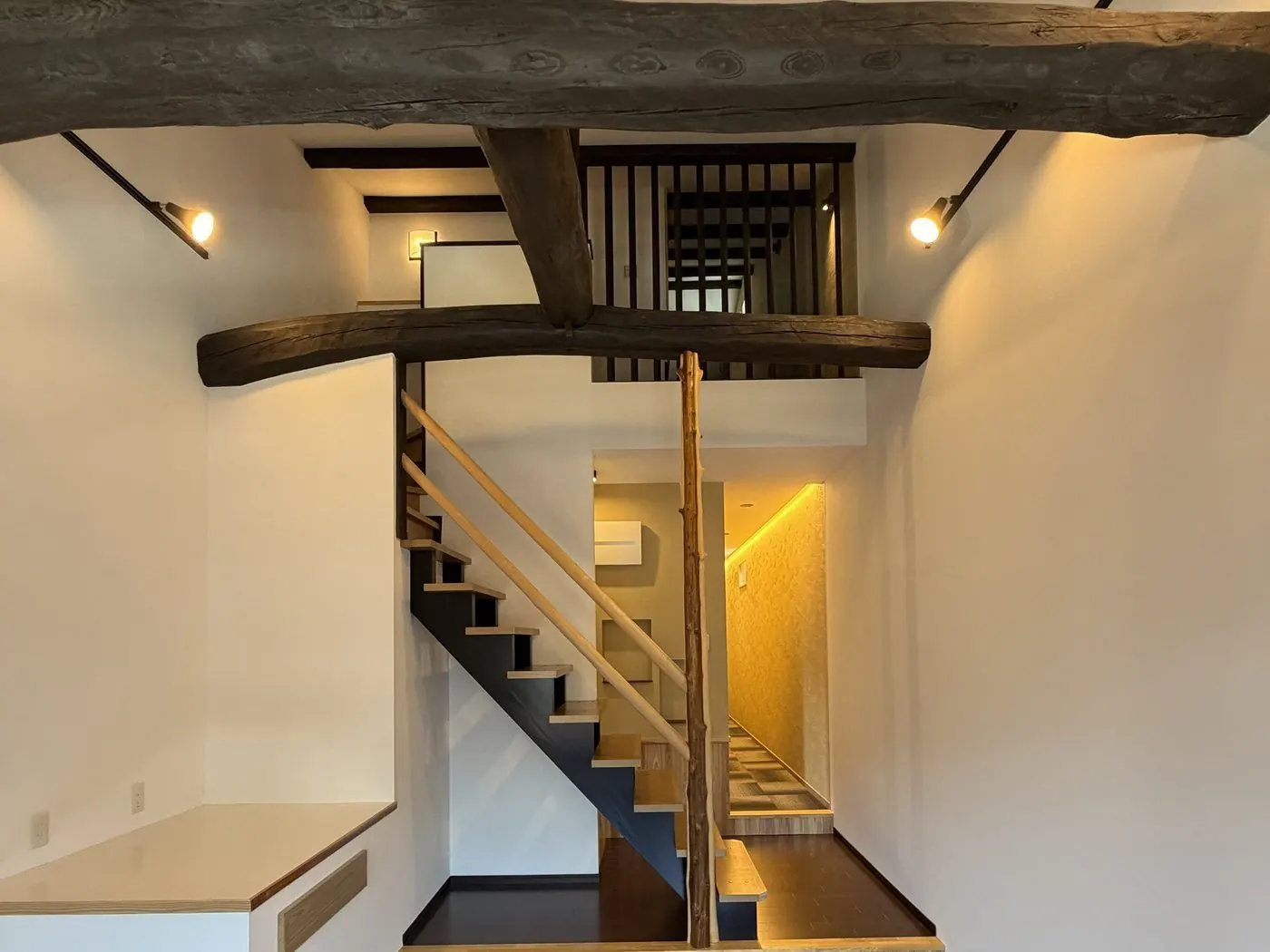
Kominka opened as a minpaku guesthouse: the stairwell with exposed beams (after)

Doing the insulation (keeping outside cold and heat from getting in) first is also about winter. The 90-year-old guesthouse we opened had its insulation done first. It is a precondition for operating through a Hokuriku winter: a cold guesthouse gets no winter bookings.

Besides insulation, this guesthouse got two new sets of shower room, toilet and washbasin, and work on the upstairs floors, walls and ceilings and the exterior walls. It took 4 months and ¥9 million in construction. The work and photos are in Project 01, and the full cost of opening is in The cost of starting a minpaku in Toyama.

  • Insulation (inner windows, underfloor, ceiling / whole house)¥2–5 million

* A construction-cost guide from our own projects. Varies with the condition of the building and the scope of work.

Winter costs are put in writing first, separately from the operating fee

Our operating fee has no fixed monthly charge and is paid only from revenue (you pay a commission only when there are sales). We take an agreed percentage of the lodging revenue, so when winter bookings are few the fee falls with the revenue. In a month with no revenue there is no operating fee.

Actual costs such as bedding, consumables and repair materials, and winter snow clearing and frost protection, are separate, and what is separate is written down before you start. How the percentage is set is in Minpaku operating costs (the fee), and everything we take on is in Minpaku operation in Toyama.

Snow and roads by area

How much snow falls and what the roads are like differ by area. In Toyama a guesthouse works best where people already pass: on the way to Tateyama and Kurobe, in Nanto with Gokayama, around Hida-Takayama. The snow and roads of each area are covered under "Snow, roads and the lie of the land" on each municipality's page, such as Tateyama, Kurobe, Nanto and Takayama.

FAQ

Where do I start with snow for a minpaku?+−

In October–November, before the snow, clean the gutters, put up the snow screens and decide how the water will be drained. Whether snow slides toward the neighbour's land and whether the eaves are damaged are checked on site before the guesthouse opens. Snow clearing and frost protection go into the operating plan from the start.

What should I do with the water on days with no guests?+−

Closing the stopcock is not enough. Any water left in the pipes freezes, expands and splits the pipes and joints. Close the stopcock, open every tap in the house to let the water out, and empty the water heater and the toilet tank. That is what draining means. If you leave the water on, wrap exposed pipes and taps in insulation and let a little water run from a tap on nights when a hard frost is forecast. On the day of the next booking, make sure the hot water works.

How much does it cost to hire roof snow clearing?+−

About ¥30,000–80,000 a time. How many times a year depends on that year's snow and where the house is. For guesthouses we manage, snow clearing and frost protection are budgeted separately from the operating fee and put in writing before you start.

If snow from the guesthouse roof falls on the neighbour's property, who is responsible?+−

If a roof that sheds snow toward the neighbour's land is left as it is, the owner is liable for the damage. Rearranging the snow guards or changing the roof shape and pitch can sometimes change where the snow falls. Which works depends on how the building is made and how it sits next to the neighbouring land, so we decide after seeing the site.

Bookings drop in winter. Does the management fee stay the same?+−

Our operating fee is an agreed percentage of the lodging revenue, so when winter bookings are few it falls with the revenue. In a month with no revenue there is no operating fee. Actual costs such as bedding, consumables and repair materials, and winter snow clearing and frost protection, are separate.

Shall we settle this winter's routine now?

Just photos and the location of the guesthouse are enough. We check the direction of sliding snow, the eaves and the plumbing on site and put the winter costs in writing. We run the guesthouse through our minpaku operation service in Toyama.

Message us on LINE Use the enquiry form
By phone (Japanese only) 9:00 - 17:00 After 17:00, site manager (Japanese only)

* All costs are guides and vary with the house, its location and that year's snow. For frozen pipes, treat the guidance from Toyama Prefecture and your municipal waterworks as authoritative.

Also read

What we manage and what it costs, the cost of opening, the filing steps, and roofs and snow.

Minpaku operation in Toyama → The cost of starting a minpaku → Filing to start a minpaku → Roofs and snow →

Written by Tatsumasa Nakamura, Hokuriku Homes Updated

Phone9:00–17:00 LINEChat Free adviceQuote after a site visit
LINEChat