All of Toyama Prefecture, Ishikawa and Hida / direct purchase of vacant houses and kominka
Vacant houses and kominka in Toyama: we buy them as they are, no clearing out.
We are the buyer, not an agent. A house with a sound frame is not demolished: we pass it on to someone who restores and lives in it, or a company that uses it. Repairs and disposal of any belongings left behind are on us.
Direct purchase as-is, contents included. We do the clearing and disposal
Appraised without assuming demolition. No demolition cost is deducted for a house with a usable frame
A written price within a week of the site survey. No charge if you decline
We judge a kominka by its frame, not by its age. If the frame is usable, we put a price on the building too
A house you can clear out without hurry suits brokerage; a damaged house or one still full of contents suits a direct purchase. We tell you which at the appraisal
We buy vacant and old houses in Toyama on the premise that they will not be demolished and discarded.
The vacant houses and kominka we buy in Toyama go to people who restore and live in them, or to companies that use them as staff housing. Thick beams and posts, a wide earthen floor: houses with qualities today's homes lack become someone's everyday life again. A timber-frame house too damaged to live in is carefully dismantled, and its beams and posts go on to the next house as reclaimed timber. Founded in Yatsuo, Toyama in 1970, our company handles purchase, design, construction and the upkeep after handover in one place.
We don't deduct demolition costs because we have no intention of demolishing and discarding a house with a sound frame. Whether we restore it or reclaim the timber is decided after seeing the house (a house whose frame is too damaged to repair is appraised on the assumption of clearing the site). We also wrote separately about why a house an agent called "worth zero" can still have a price when demolition is not assumed.
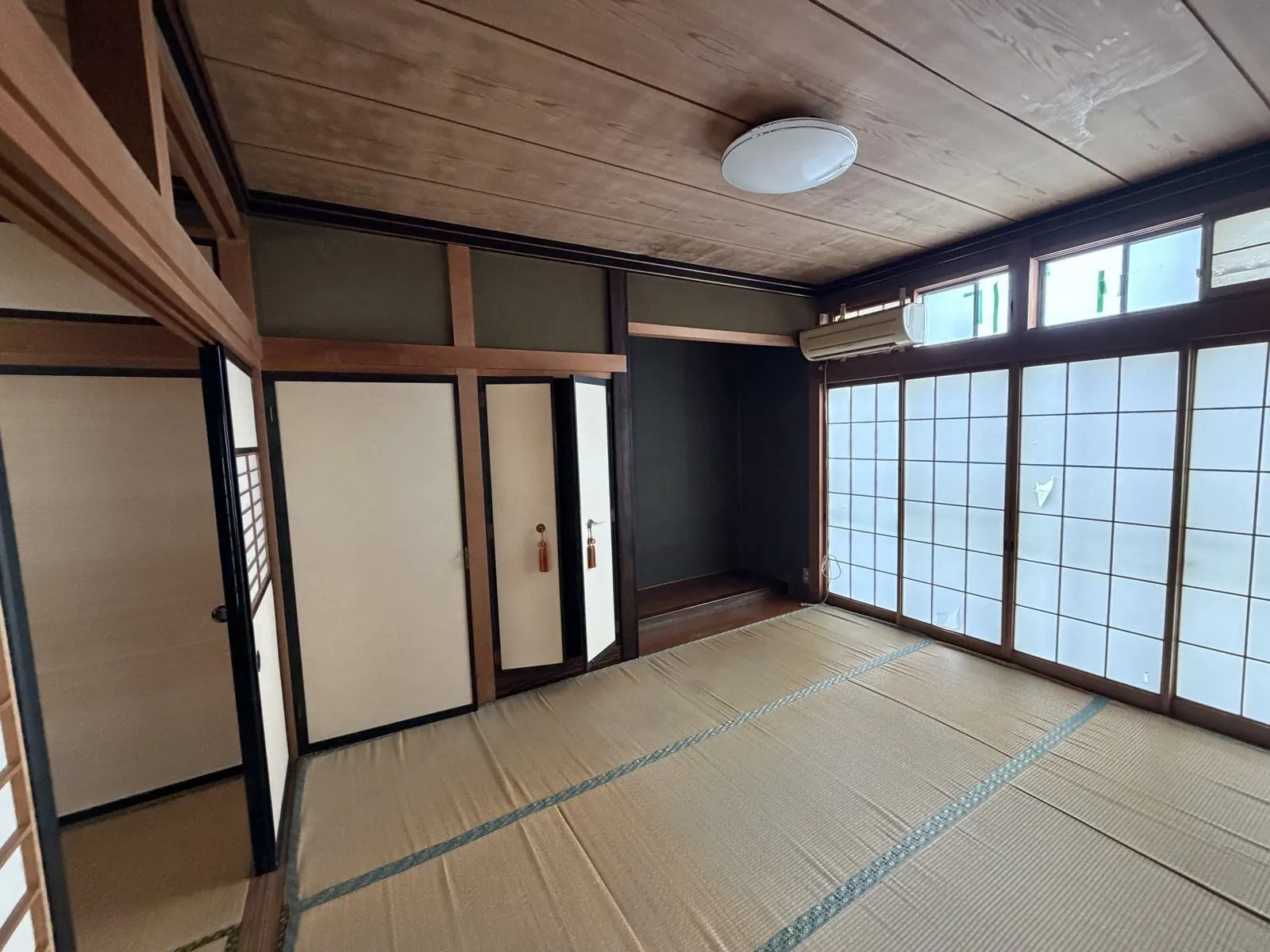
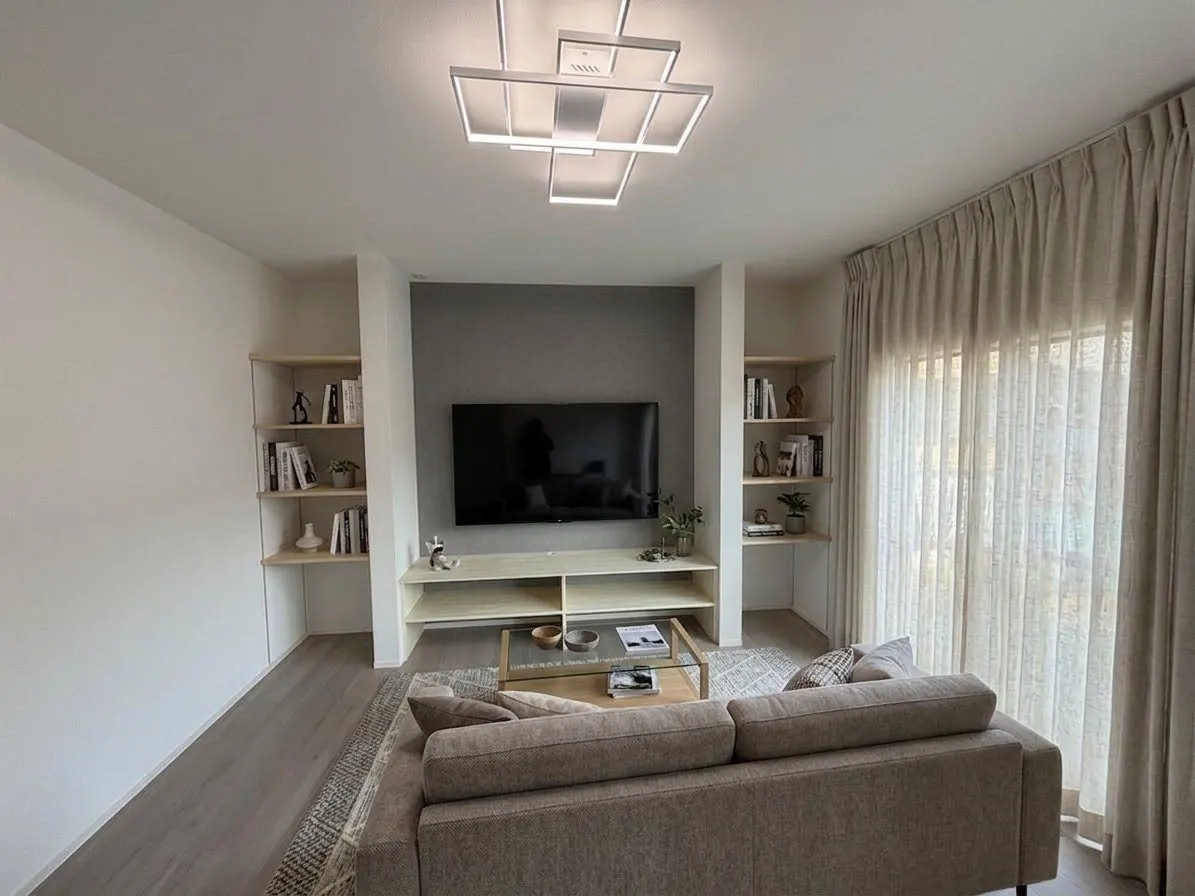
At purchase
→
After restoration
Just owning it costs money every year.
Still paying property tax on a house nobody lives in? Water and electricity standing charges, fire insurance, mowing and snow clearing: an unused house is a liability just to own. The longer it sits, the more it deteriorates and the less it sells for. If you are undecided, talk to us — including about the upkeep in the meantime.
What makes a kominka we buy: the frame, not the age
Three stages of damage, and the four places we check on site. This is the order we use to tell whether the frame can be used
What decides whether we buy a house as a “kominka” is not its age but its frame. Houses in Toyama are built with thick posts and beams to bear the weight of snow on the roof: the azumadachi farmhouses standing in the scattered settlements of the Tonami Plain, houses with a wakunouchi great room framed from thick posts and beams set like a well-curb, the gassho-style houses of Gokayama. Many are still structurally sound past 80 years old. Conversely, once the frame itself has rotted, the repair cost exceeds the cost of rebuilding.
We look at damage in three stages. Damage to the interior finishes and fittings — wallpaper, tatami, the kitchen, the bathroom — barely affects the building's value. Damage to components — roofing, outer walls, floorboards, gutters — we simply deduct the repair cost from the offer. And damage to the structure — posts, beams, the sill, footing stones, roof framing, the parts that hold the house up — decides whether it has a price at all. What makes a house look “damaged” is usually the interior: wallpaper, the kitchen and so on. A company that prices a house on a demolition basis doesn't separate out these three stages.
The site survey takes about an hour, and there's a set order for what we check: the roof framing, the base of the posts, the sill and footing stones, dryness underfloor. These four places decide the frame's value almost entirely; the wallpaper and kitchen come afterwards, as a question of how much it costs to redo them. Even if the base of a post has rotted a little, it can be spliced with new timber. Resetting footing stones or replacing the sill are jobs we do routinely too. We're a builder holding both a construction licence and a real estate licence, so we can repair the houses we buy ourselves.
Carved transoms, kumiko screens and a wakunouchi beam frame count in the appraisal, because they decide the value of the restored house. A kura storehouse has thick walls and can usually be kept as long as the roof holds; we take the kura with the house. How to tell the stages of damage apart is in Can a damaged house be repaired or not, and what to do with a collapsing storehouse in A collapsing kura or barn.
Direct purchase vs. an agent: why a house valued at "zero" in Toyama gets a price
Two kinds of appraisal. A different formula gives the same house a different answer
An agent's appraisal first treats the building as if it were not there, prices the land, and then deducts demolition and clearance. Demolishing a wooden house in Toyama runs at roughly ¥30,000–50,000 per tsubo (3.3 ㎡), so a 132 ㎡ house starts at about ¥1.5–2 million, and a farmhouse with a kura, a barn and a windbreak grove can easily exceed ¥3 million in total. Demolition costs vary little from place to place, but land prices vary a lot. So in Toyama's old villages, scattered settlements and coastal hamlets, the same house comes out at zero or below zero.
Our appraisal uses a different formula. A house with a usable frame goes to someone who restores it or a company that uses it, or its beams and posts are reclaimed, so we don't deduct demolition costs. Instead we value the posts, beams and layout, and subtract the cost of repairs and the risk of not selling to arrive at a purchase price. The value as land and the value as a building are different things. Houses that got no price through an agent often do get one from us.
Demolish the house and leave just the land, and property tax on the land goes up from the following year, because the rule that lowers tax on land with a house standing (the residential land exception) no longer applies. Demolishing before you have anywhere to sell it is the most costly order to do things in. Our free appraisal can give you the figure for selling as it is, and, for comparison, a rough figure for the demolished case too. Demolish and sell; sell as it is; demolish and just hold the land. Please compare all three before deciding. The mechanism is explained in Seeing a house called ‘¥0’ or ‘negative’ on a no-demolition basis, and the demolition cost breakdown is in Demolition costs.
The discount is what we take on.Our price is lower than a sale through an agent, because we carry the repair cost, the risk of not selling, and the clearing out. If you are in no hurry, can clear the house, and road access and title are clean, an agent will leave you more. At the appraisal we tell you which suits you.
There are houses we can't take, too.If the damage reaches the frame and it can't be repaired, the appraisal may assume a cleared lot, or come back with no price at all. Most of the posts or beams rotted through, the roof framing collapsed, the whole thing leaning from the foundation up — in houses like that, the repair cost exceeds rebuilding. We never deliberately lowball a figure, and we never pretend a house is repairable, take it, and then demolish it. In that case we tell you so honestly and give you a demolition quote instead. Farmland or forest alone, or a house where we can't reach some of the heirs, also needs groundwork done first. Which one applies is something we can only answer after seeing the frame on site (How to tell a damaged house apart).
How it compares with an agent.See the table +Close −
Selling to us
Demolish and sell the land
Through an agent
The building
Restored for the next occupant, or its timber reclaimed
Demolished
The buyer decides
Demolition cost
None
About ¥1–2.5 million (paid by seller or buyer)
—
Value of the building
Beams, posts and layout are valued
None (land value only)
Depends on the buyer
Non-rebuildable lot
We use the building, so often possible
Cleared, it can't be built on: a disadvantage
Hard to sell
Storehouse, windbreak trees
We consider reuse or keeping them
More demolition and felling cost
Depends on the buyer
Disposal of contents
Not needed. We take them
Can be included in demolition
Usually the seller's cost
Brokerage fee
¥0
Depends how the land is sold
3% of price + ¥60,000 + tax
Liability after handover
For damage you told us about before the sale, we don't ask for money afterwards
Unlikely, no building
If a defect turns up after the sale, the seller is liable
Time to sell
As little as 2 weeks from the site visit
1–2 months demolition + sale
3 months to years
What you get
Below market
Land value minus demolition
Close to market, if it sells
You don't need to decide first whether to keep or demolish. Where the damage is deep and living on is not realistic, clearing the lot can be the better choice. Even then, we start by looking together at whether this house still has a future. If not, we help, including introducing a demolition contractor.
The easiest way: photos.
From your photos to a written offer. You get our first view and the next steps before we visit.
A few of the exterior and anything that worries you. Send them on LINE and we reply with our first view and how the appraisal will run. No name or full address needed yet.
Roads too narrow for machinery. By hand, sometimes over ¥3 million
Via an agent
Sells if cheap enough. But the building is valued at zero
Turned away as 'unsellable'
Hidden value
Location
The building. Thick beams, a zelkova central post, a wakunouchi beam frame, a wide earthen floor
The 2023 Housing and Land Survey counted 69,700 vacant houses in Toyama Prefecture, a record vacancy rate of 14.7%. Home ownership is 74.9%, third in Japan, and the average floor area per dwelling is 138.77 ㎡, the largest in Japan. Big, heavily framed houses are piling up unused. In Toyama it is common for a house to become vacant simply because it is too big to keep up.
Seventy percent of Toyama Prefecture's land is mountainous, and most of the family homes that become an inheritance problem stand somewhere between the edge of the plain and the hills. In the town centres of Toyama City, Takaoka, Imizu and Tonami, damp and condensation rot the sill and the base of the posts, and overhanging garden trees or falling roof tiles cause friction with neighbours. Through an agent, a cheap enough price will sell, but the building itself is valued at zero. A house fronting a road under 4 m wide, one with less than 2 m of road frontage so it can't be rebuilt, or one joined wall to wall with the house next door, will stay unsold even after demolishing it and clearing the lot. Areas like Yatsuo and Iwase in Toyama City, along the Uchikawa River in Imizu, and around Yamachosuji in Takaoka, have no shortage of lots like these.
In the mountain areas — Nanto, Yatsuo, Kamiichi, Tateyama, Osawano and the like — the weight of roof snow bends the beams and drags the eaves down. With narrow roads that heavy machinery can't get into, it's not unusual for a demolition quote to come in over ¥3 million even for the same floor area. An agent often turns a house like this away as “unsellable,” but what's sleeping there is the value of the building: thick beams, a zelkova central post, a wakunouchi beam frame, a wide earthen floor. Calculated on a demolition basis, a house in the hills tends to come out in the red. It turns into the black only when it's shown to someone who values the building itself. Figures for what's left in your pocket, in the plains and in the mountains, are set out in Family homes in Toyama: the right answer differs between the plains and the mountains.
Before you sell
Tax, registration, demolition. The order that doesn't lose you money, in one place.
In Toyama City the vacant houses differ greatly by district, from narrow-fronted townhouses in the centre to farmhouses in the hills of Yatsuo, Osawano, Oyama and Hosoiri. Takaoka has the earthen-walled storehouse buildings of Yamachosuji and the latticed townhouses of Kanayamachi, and large farmhouses ringed by windbreak groves in Fushiki and Fukuoka. The scattered villages of Tonami have azumadachi farmhouses inside their kainyo groves; Nanto has the gassho houses of Gokayama and the townhouses of Johana and Inami. The fishing towns of Himi have narrow lanes and high demolition costs, the classic case where a demolition-based appraisal gives no price. Snowfall, road conditions and farmland are covered on each municipality page. Our head office is in Yatsuo, Toyama City, and we drive to every part of the prefecture. In Ishikawa we cover Kanazawa and Noto and Kaga, and in northern Gifu Takayama, on the same terms.
What clients say
A family home too far to look after. They valued it without demolishing
Background. I inherited my parents' house but live in the Tokyo area. Mowing and snow were beyond me, and other firms said it couldn't be sold without demolishing.
Read moreClose
What decided it. They looked properly at the beams and posts on site and valued them. "It can be repaired and used" — that settled it. Everything left inside was taken care of.
Afterwards. Letting it go without demolishing gave me closure. And I'm free of the property tax and the worry of looking after it.
85-year-old two-storey house (inherited family home, about 400 ㎡ lot)Toyama / Mr T (50s, lives in Tokyo)
A worn vacant house, belongings and all. We didn't clear a thing
Background. Empty for ten years, with leaks and damaged floors. It was full of belongings and we had no idea where to start.
Read moreClose
What decided it. Being told "as it is, belongings and all". No jargon in the explanation, and the reasoning behind the price was set out in writing.
Afterwards. They took the furniture and tools we couldn't get rid of. We should have asked sooner.
90-year-old former farmhouse with storehouse (vacant 10 years)Takaoka, Toyama / Mr and Mrs S (60s)
The ancestral house. The one thing I didn't want was a cleared lot
Background. Getting older, I decided to move out of a house that was too big. But the one thing I wanted to avoid was demolishing the house I had inherited and selling the land.
Read moreClose
What decided it. They said outright, "We won't demolish it; we'll pass it on to the next user." They even talked about how the house might be used.
Afterwards. It felt as if they took on the feelings along with the house. Knowing the house would survive was more reassuring than I expected.
100-year-old azumadachi-style kominkaTonami, Toyama / Mr H (70s)
← swipe
Selling a vacant house or kominka in Toyama: frequently asked questions
The house is co-owned with my siblings. Can it be sold?+−
Selling requires the consent and signature of every co-owner. But it's fine to consult us before that's settled — in fact, that's exactly where most people get stuck. We can even help put together material to explain things to your siblings. If you like, we'll join and explain the terms in person.
The inheritance registration isn't done yet.+−
We can still appraise. Registration must be completed before handover, though (it has been compulsory since April 2024). We can introduce a judicial scrivener and give you a cost guide with the appraisal.
The contents and the family altar are still there.+−
Leave them. We buy the house with the contents and dispose of them ourselves, so no clearing is needed. For a Buddhist or Shinto altar, we may ask you to arrange only the closing rite (the "removal of the spirit" before an altar is disposed of). If you don't know how, please ask us about that too.
Farmland needs the agricultural committee's permission and follows different procedures from a house lot. Sometimes we can take it, sometimes not; we check the registered land category and give you a clear answer. If you don't know it, we look it up.
Will you buy a non-rebuildable lot without road access?+−
Sometimes. Because we repair and pass the house on rather than demolish and clear, land that cannot be rebuilt on can still be worth something to us. We judge after seeing it.
Can I decline if I don't like the offer?+−
Of course. There is no charge at all. We contact you once; say "no thanks" and you won't hear from us again.
I live outside the prefecture and can't be there.+−
We hold the key, check the house and report with photos and video. The contract can be done by post or online. Many of our clients are far away.
What does it cost?+−
Consultation, site survey and appraisal are all free, and there is no brokerage fee when we buy. If a survey or boundary confirmation is needed, we set out who pays what in writing before the contract. No extra charges afterwards.
I don't want the neighbours to know.+−
A sale to us is not advertised, so no listing goes out and no sign goes up. If the neighbours need to be told, we decide when and how with you.
Will you buy in any municipality in Toyama Prefecture?+−
Yes. We buy vacant houses in all 14 municipalities of Toyama Prefecture (the whole prefecture, Funahashi included). We are a builder in Yatsuo, Toyama City, and drive to every part of the prefecture. All of Ishikawa and northern Gifu (the Hida region) are on the same terms. Our terms and the way we set the price are the same in every municipality. But snowfall, whether there is a windbreak grove, and whether water and sewer reach the house differ by area. So what we check on site changes from area to area. Each municipality has its own page above.
What counts as a kominka you would buy? Does the age matter?+−
We look at the frame, not the age. Houses in Hokuriku are built with thick posts and beams to bear the snow, so many are still structurally sound past 80 years old. On site we check four places: the roof framing, the base of the posts, the sill and footing stones, and dryness underfloor. If only the base of a post has rotted a little, we can repair it by splicing in new wood there. But if the sill and the base of the posts have rotted extensively, with the roof framing itself collapsed, the repair cost comes to about the same as rebuilding. In that case we may not be able to put a price on it — and if so, we say so honestly and give you a demolition quote instead.
How is the purchase price decided?+−
An agent's appraisal is a formula that subtracts demolition and clearing costs from the land price. We don't demolish the houses we buy, so where the frame can be used, we don't deduct a demolition cost. We value the posts, beams and layout, and arrive at a figure by subtracting the repair cost and the risk of not selling. Within a week of the site survey, we give you the amount, and the reasons for it, in writing. Our price is lower than a sale through an agent, because we carry the repair cost, the risk of it going unsold, and the clearing out. For comparison, we can also give you a rough figure for the demolished case.
The house is listed on a vacant house bank. Can I consult you at the same time?+−
Yes. You can consult us while it stays listed on the bank, and decide whether to keep it listed after seeing our offer. In most municipalities, only a house that's “ready to live in” or “livable with minor repairs” can register on the vacant house bank (the scheme where a municipality introduces vacant houses to buyers). In practice, a house that's still full of belongings, or damaged, rarely finds a buyer there.
Can the family home be sold without estate clearance?+−
Yes, you can. We buy the house as it is, contents included, so you do not need to finish estate clearance first. If you get an appraisal first, you can tell whether it is better than paying for clearance. If you are considering renouncing the inheritance, consult a lawyer or judicial scrivener before disposing of any belongings. For details, see Before estate clearance, sell the family home with its contents.
Should I sell a kominka by direct purchase or through an agent?+−
If you are in no hurry, can clear the house, and it faces a road with no problems with ownership, an agent sale usually leaves you with more money. A kominka with damage, belongings still inside, or one an agent valued at 0 yen may still get a price from a purchase that does not involve demolition. We will tell you which suits you at the appraisal.
How long does it take from the first consultation to completing the sale?+−
We check the house on site for about an hour and give you the amount in writing within a week. If you agree, we sign the contract. In quick cases, everything from the on-site survey to the sale is done in about two weeks. We buy the contents too, so there is no waiting for you to clear the house. A house where inheritance registration is not done takes longer by the time that procedure needs.
What should I check when choosing a company to buy a vacant house in Toyama?+−
Ask five things. Do they buy as it is, contents included? Do they subtract demolition costs from the price? Do they give the reasons for the price in writing? Does saying no cost nothing? If damage is found after the sale, will they ask you for money? We buy with the contents, do not subtract demolition when the frame is usable, and give you a price in writing within a week.
Is there a quick way to let go of a vacant house that will not sell through an agent?+−
There are three: relist at a lower price, also list it on an akiya bank, or switch to a direct purchase. Even a house an agent called worth nothing, or less than nothing, can get a price from a buyer who does not plan to demolish. A direct purchase pays less than a brokered sale, but needs no clearing out and no repairs, and the sale can be done in as little as two weeks from the site survey.
Rather call? (Japanese only)9:00 - 17:00After 17:00, site manager (Japanese only)
On LINE you can send photos of the house as they are.
Faster than typing. A few of the exterior and anything that worries you — that is enough for a rough view.