Using the family home / Toyama, Ishikawa, Hida

The family home in Toyama: how to choose.

There is more than one way to use a family home in Toyama instead of selling it. Renting, a guesthouse, a shop, company housing, living in it: each differs in upfront cost and whether it brings income. Here are the seven, measured the same way.

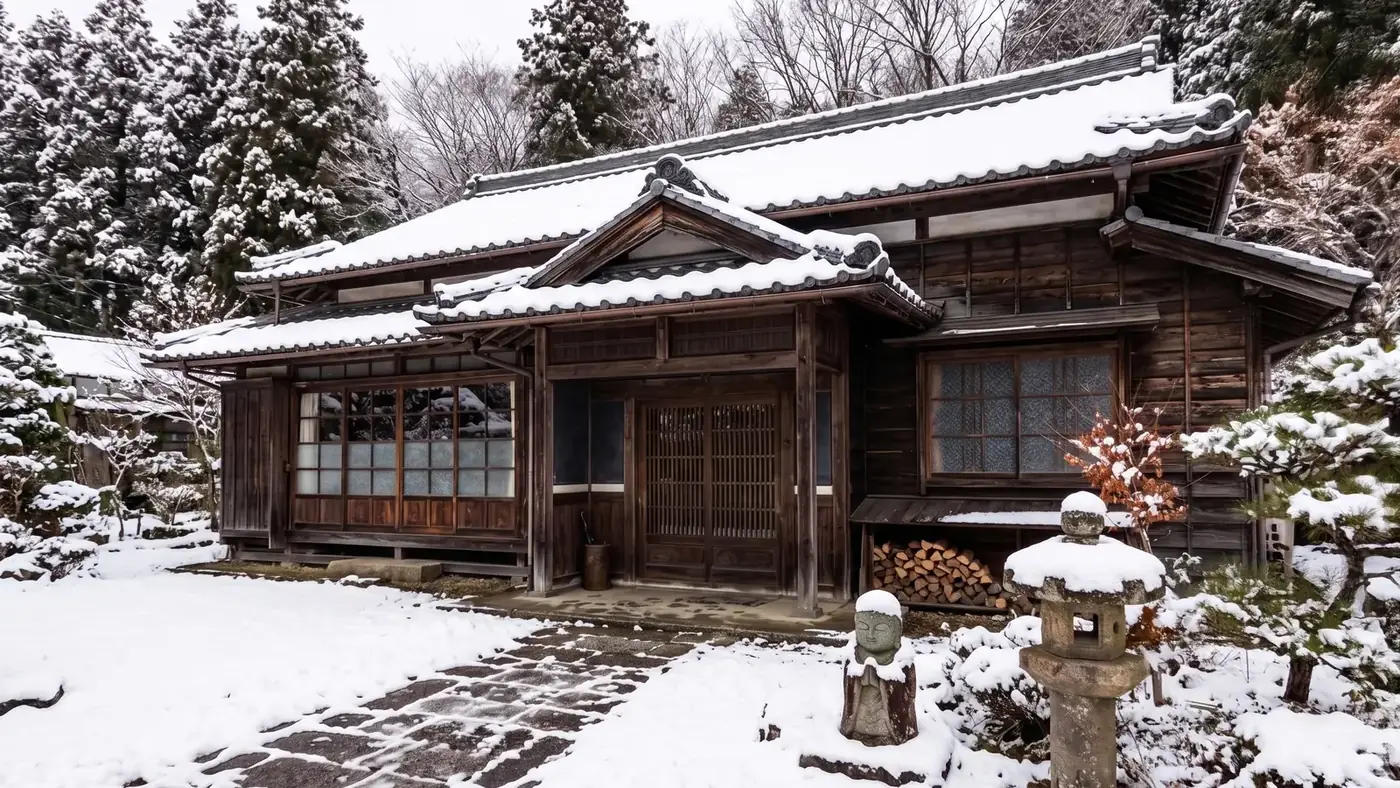
A vacant house in snowA vacant wooden house under snow
1 Photos and a location: we tell you the route that fits, with rough figuresFree chat on LINE 2 9:00–17:00, Japanese only / after 17:00: Call us
1970Founded / Yatsuo, Toyama City
Real estate + constructionRent, repair or sell, one company
Site survey ¥0No charge if you decline
Registered minpaku operatorManagement after the filing too

Seven ways to use the family home

You pay upfront You don't Income No income DIY lease Company housing Restore and rent as a home Guesthouse (minpaku, whole house) Shop or café Sell as-is (once) Repair and live in it Do nothing (¥150,000–400,000 a year goes out)
Arranged on two axes: whether you pay upfront and whether it earns. The two in green earn without upfront cost. For the three that need upfront cost, we handle business plan, design, construction and operation end to end.

Seven ways to use a family home in Toyama. Arranged by whether you pay upfront and whether there is income, the fit becomes clear.

You don't need to pick one before you ask. We hold both a real estate licence and a construction permit and handle renting, repairing and selling through the same person. After seeing the house and its location, we lay out in numbers which routes work and which don't.

In Toyama the winning move is different

The 2023 Housing and Land Survey put Toyama Prefecture's vacant houses at a record 69,700, a vacancy rate of 14.7% — higher than the national 13.8%. Yet Toyama's home ownership rate is 74.9%, third in Japan, and the average floor area per dwelling is 138.77 ㎡, the largest in Japan. In Toyama, most large houses are lived in by their owners. As a result, the prefecture has comparatively few detached houses available to rent for a family.

That structure decides who the family home is for. There is no need to compete with studio flats. The winning move in Toyama is to rent to people looking for a big detached house: families with children, companies housing transferees and foreign workers, newcomers who want to fix a house themselves. As a guesthouse too, people come not for a city hotel but for "a house you can only stay in here" — Yatsuo, Gokayama, the scattered villages of Tonami.

Snow, on the other hand, changes the premises. Roof snow and frozen pipes wreck an empty house over winter. Looking at insulation and the roof first, and arranging pipe draining and snow clearing until the house is in use, are conditions particular to Toyama.

Rent it out. Restore it and rent it as a home

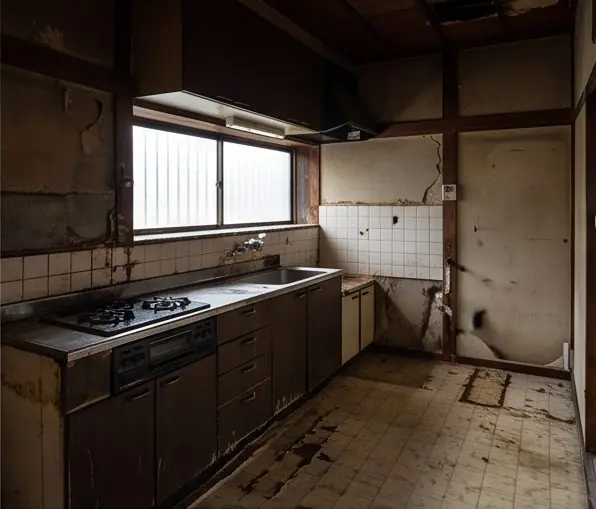
BeforeThe kitchen before (Toyama City, rental)
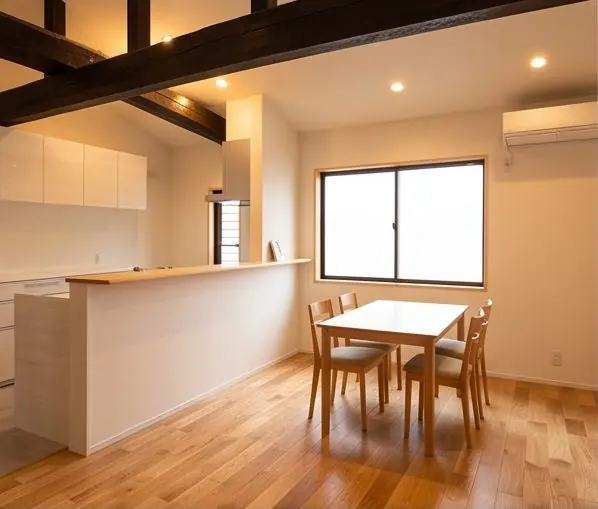
AfterThe living space after (Toyama City, rental)

A house in Toyama City repaired for renting out. The old kitchen and tatami room became a living space tenants could move into. A renovation for renting puts function first and looks second.

There are five steps. Business plan consultation, drawings and change of use, design and construction, handover, and then advice on tenants, management and repairs after handover. Renovation costs are borne by the owner, and all of the rent comes to the owner. Because we handle it end to end, there is one window even after handover (put a vacant house to use without selling).

A DIY lease rents the house as it is to someone who wants to fix it with their own hands. The tenant pays for the work; the owner pays nothing upfront. We take free registrations from people who want to rent and fix and match them with houses.

Company housing is also a realistic exit in Toyama. In a prefecture of homeowners, family rentals are scarce, so companies look for large detached houses as staff dormitories or accommodation for technical intern trainees. From the owner's side, only the occupant changes, from a family to company staff; restoring and renting works the same way. What the company checks (bedroom size, rent ceiling, winter preparation) is in company housing and staff dormitories in Toyama. How it proceeds when the company hires an agent is in choosing a company-housing agent in Toyama.

A guesthouse: from filing to management, one contact

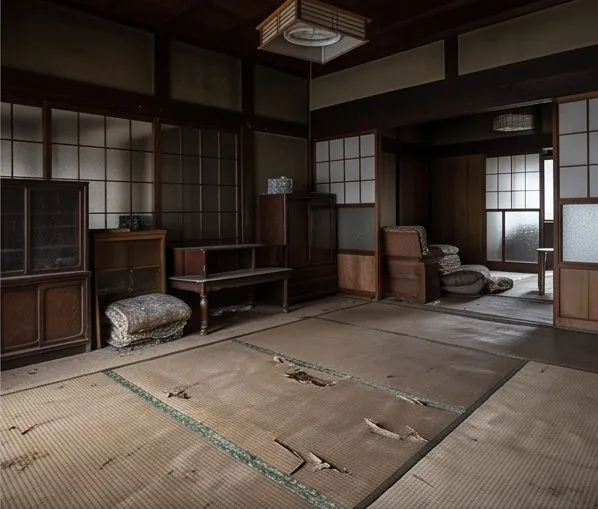
BeforeThe tatami room before (Nanto, whole-house guesthouse)
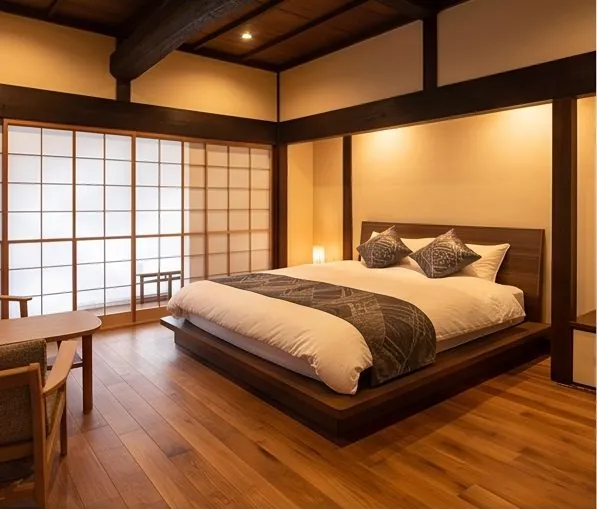
AfterThe bedroom after (Nanto, whole-house guesthouse)

In Nanto, the family home's tatami room became a bedroom in a whole-house guesthouse. Beams and fittings were kept as far as possible; bedding, lighting and plumbing were brought up to guesthouse standard.

Our minpaku project in Toyama took a 90-year-old kominka through the Minpaku Law filing: four months, ¥9 million. The building stays a residence but may operate only 180 nights a year; exit signs, smoke detectors and extinguishers were installed. As a registered private-lodging management operator (国土交通大臣(01)第F06163号) we can manage it after the filing too.

To say it first: not every house works as a guesthouse. Location, the building's character and the operating set-up change the outlook enormously, and where it doesn't add up, we say so. The five steps to opening and what makes a house viable are in Turn a kominka into a guesthouse and Minpaku.

A shop: change of use and fire safety before design

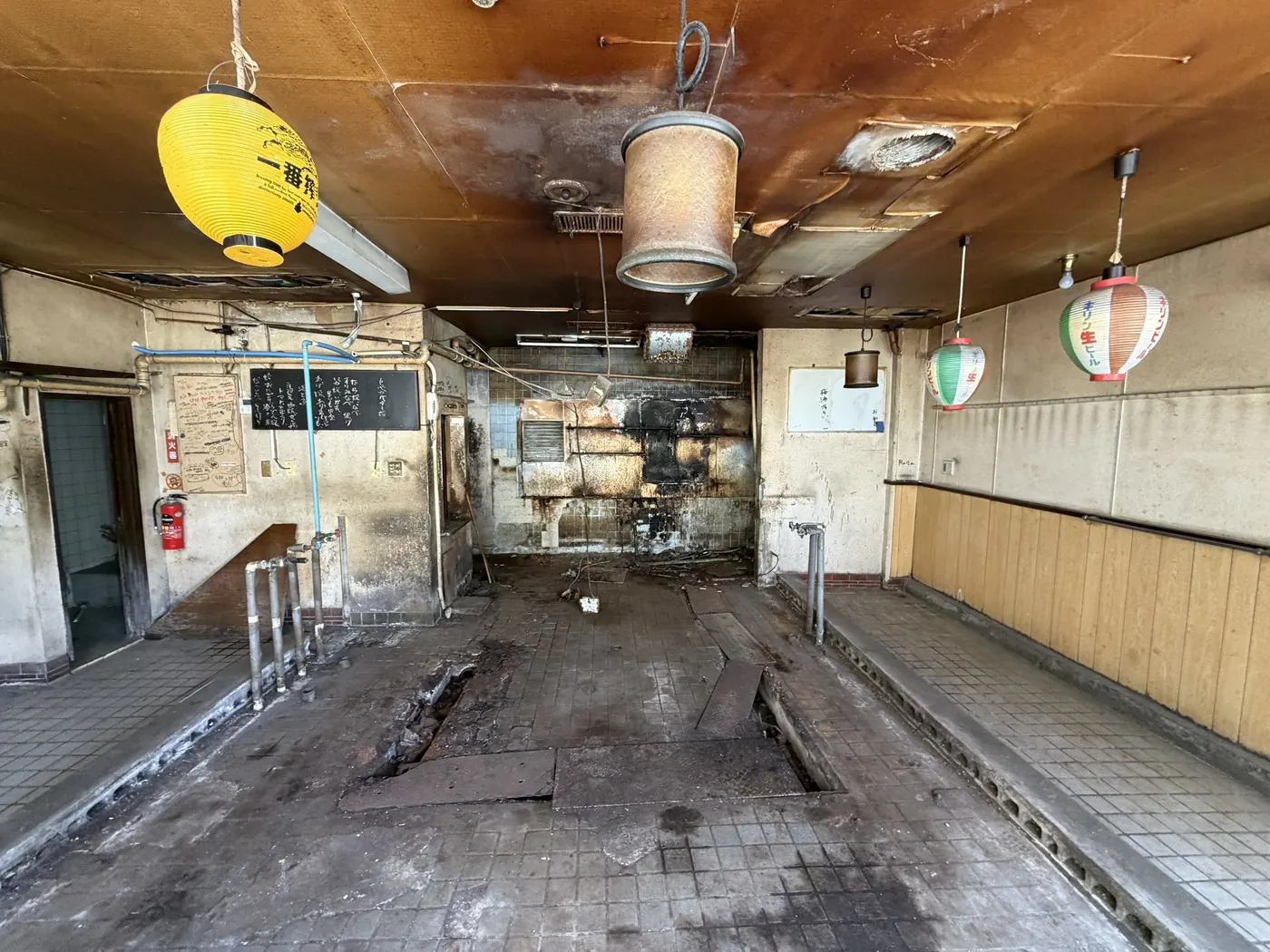
BeforeThe disused, worn shop interior (before)
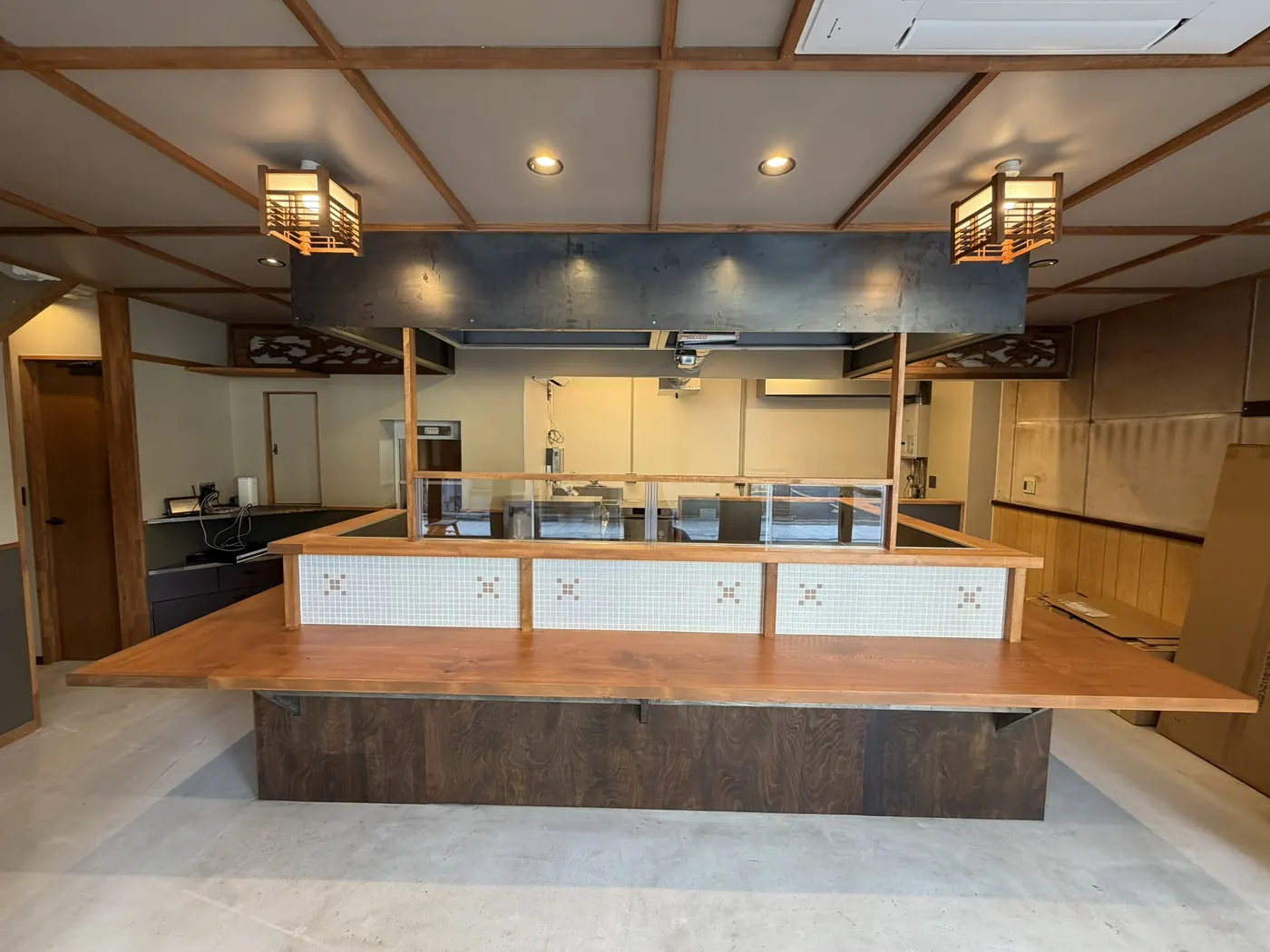
AfterThe yakitori bar rebuilt around a solid cypress counter (after)

A long-closed shop reborn as a yakitori bar with a solid cypress counter. The hard part was charcoal-smoke extraction and air conditioning; we also added a dumbwaiter from the ground-floor kitchen to the upstairs tatami room. Two months, ¥20 million. → More on this project

Turning the family home into a shop means checking things before design: whether a change of use is needed, what fire equipment, the health office requirements, parking. Learn them afterwards and the work has to be redone. We check whether a house can be a shop as soon as we see it. See Turning a kominka into a café or shop.

Repair it and live in it, or make it a second home

No income, but the commonest use. A full renovation of both floors in Toyama City for a family of four, including insulation and plumbing, took two months and ¥8 million. Against ¥20–40 million for a new build, a full renovation of an old house or family home runs ¥6–20 million — keeping the foundation, roof and sound posts and beams holds the total down.

For a family home that is too big, shrinking to the part you live in gives the best value. Insulation and seismic first, fittings and finishes later. Nothing has to be done at once; spot repairs start from a few hundred thousand yen. The order and costs are in the restoration guide and Costs. For a second home, check the off-season pipe draining and snow arrangements in the year-round calendar.

Houses that suit it, houses that don't

Whichever route you choose, we look at the same things first.

  • The frame. Hokuriku farmhouses are framed with thick posts and beams and the structure is usually sound. Damaged members can be replaced. If the bones are alive, the house can be rented, a guesthouse or a home
  • Roof and snow. Tiles on earth weigh tonnes, and snow adds to the load. Re-roofing serves both snow and seismic safety
  • Road access. Even a non-rebuildable lot can be repaired and used. Because it cannot be rebuilt, using it or selling as-is is the realistic choice
  • Farmland or forest attached? Farmland needs the agricultural committee's permission and follows different procedures from a house lot. We treat the house, farmland and forest as separate exits
  • Tilting. Sloping floors, doors that won't close. Whether the cause is the ground, the footing stones or the frame changes the fix and the cost

The site survey takes one to two hours and is free. Posts and beams, foundation, underfloor, roof, plumbing — and we tell you on the spot whether it can be repaired and roughly what it costs. No charge if you decline. No drawings needed; with old houses, none is the norm.

Four things to settle first

1 Registration 2 Agreement 3 Survey 4 Exit compulsory since April 2024with co-owners and siblingsframe, roof, road accessapply for subsidies before starting
Get the order wrong and you go back and start again. Subsidies especially: sign or start first and you are disqualified.
1. Complete the inheritance registrationA lease or a sale both require the house to be in your name. Inheritance registration has been compulsory since April 2024. We can introduce a judicial scrivener. Inheritance procedures and taxes: Selling an inherited house.
2. Get the co-owners' agreementA house inherited by siblings needs every co-owner's agreement to rent or sell. Laying out the options with numbers — share the rent, one buys the others out — moves the conversation along.
3. Look at the houseFrame, roof, foundation, road access, farmland. This decides whether it is a house to rent, a guesthouse, or a home to repair. Checked in the free site survey.
4. Decide the exit, and apply for subsidies before startingToyama Prefecture and the municipalities have schemes for renovating and using vacant houses and for relocation; they change every fiscal year, and most require applying before work starts. How to find them: Subsidies.

If not using it: keep looking after it, or let it go

Just owning it costs ¥150,000–400,000 a year in property tax, fire insurance, standing charges for water and electricity, mowing and snow clearing — ¥1.5–4 million over ten years. The breakdown is in What to do with the family home; what happens each month and who to ask is in the year-round calendar.

If you sell, we buy it directly as it is: contents included, no clearing out, no brokerage fee, handover in as little as two weeks from the survey. We restore the houses we buy rather than demolishing them, so the family home survives. The ¥30 million special deduction for inherited vacant houses (conditions apply, until the end of December 2027) can apply to a sale to us too. See We buy kominka and vacant houses and the ¥30 million deduction.

FAQ

I live outside Toyama. Can I still ask about using the family home?+−

Yes. Send photos and the location by LINE and we'll tell you which of renting, an inn or selling is realistic, with a rough figure. We carry out the site survey ourselves and you need not attend. Since we handle the work and, after handover, advice on tenants and management, you can proceed while living out of the prefecture. Whom to ask for snow removal and pipe draining while you keep managing the house is in our year-round calendar for managing a vacant house in Toyama from afar.

If I rent it out, do I get it back?+−

If you restore the house and rent it out, it stays yours. When the tenant's lease ends, you or your children can live in it. With a DIY lease (the tenant renovates and lives there), the contract sets out how restoration to original condition is handled. In both cases the term and conditions are put in writing first.

What does it cost to turn the family home into a guesthouse?+−

In our project in Toyama, a 90-year-old kominka opened as a minpaku under the Minpaku Law after four months and ¥9 million of construction. It may operate 180 nights a year, with exit signs, smoke detectors and extinguishers installed. The figure depends on the house and the scope, and is fixed after a free site survey. As a registered private-lodging management operator we can manage it after the filing too.

The inheritance registration isn't done yet. Can I still ask?+−

Yes. But the inheritance registration must be completed before a lease is signed or a sale is handed over. Registration has been compulsory since April 2024. We can introduce a judicial scrivener we work with and run the registration and the plan in parallel.

Are there subsidies?+−

Toyama Prefecture and the municipalities have schemes supporting vacant-house renovation, use and relocation. Conditions and windows differ by municipality and change every fiscal year, and most require applying before work starts. Tell us where and when and we check what applies and help with the paperwork.

Which is better, using it or selling?+−

There's no one-word answer. Simply owning it costs ¥150,000–400,000 a year in upkeep. Selling, on the other hand, may qualify you for the ¥30 million special deduction for an inherited vacant house (conditions apply, up to the end of December 2027). We handle both using the house and buying it through the same team, so we can set the projected return from renting it out alongside our offer to buy it as it is. You're welcome to decide after seeing the numbers.

→ All 49 questions on selling and renovation

Which route suits this house?

Photos and a location are enough. We tell you which of renting, a guesthouse, a shop, living in it or selling works, with rough figures. The site survey is free.

Send photos on LINE Ask via the form
By phone (Japanese only) 9:00 - 17:00 After 17:00, site manager (Japanese only)

* All figures are construction cost guides and real examples from the time of the work; they vary with condition and scope. Guesthouse and shop income depends heavily on location, building and operation and does not work for every house. Subsidies and tax reliefs change with the fiscal year and conditions — always check the official information.

Written by Kota Makimura, Hokuriku Homes Updated

Phone9:00–17:00 LINEChat Free adviceor the form
LINEChat