Read before you sell / The vacant-house owner's liability

The neighbour says snow is falling on them, or a tile flew over. The vacant-house owner's liability, and what to do that day

Liability for harm a vacant house does to the neighbours lies with the owner (Civil Code Article 717). Living in another prefecture changes nothing. There is a set order of things to do.

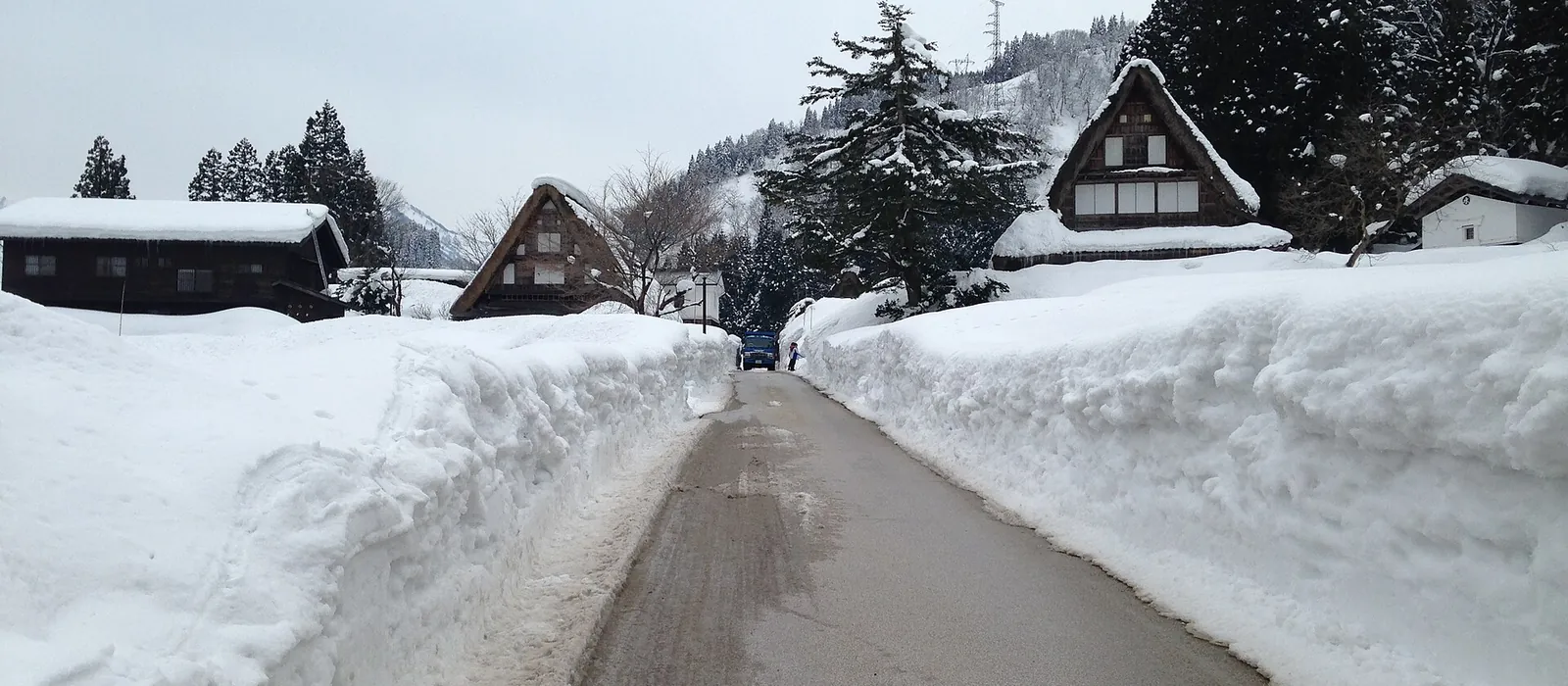
A village in snow (Ainokura, Gokayama, Nanto)A road walled with snow on both sides and a row of houses with snow on their roofs (Ainokura village, Gokayama, Nanto)
Photo: そらみみ "Road with thick snow in Ainokura"(CC BY-SA 4.0), cropped
1 Send photos of the house the neighbour called about. We reply with how dangerous it is and the way outFree consultation on LINE 2 9:00–17:00, Japanese only / after 17:00: Call us
1970Founded / Yatsuo, Toyama City
Real estate + constructionFrom emergency measures to purchase, one company
Appraisal and survey: ¥0No charge if you decline
Toyama, Ishikawa and HidaOwners living elsewhere welcome

What to do the day the neighbour calls. Five things you can do that same day, even from outside the prefecture

What the person who called wants is not a promise of compensation but a reply that says you will not leave it. Reply, record, emergency measures, insurance, a way out. Move in that order and most of these matters stay within ordinary neighbourly relations.

"Snow from your roof fell on our wall." "A tile flew off and hit our car." "The kura is leaning and it frightens us." Living outside the prefecture, you often first hear about the family home from a phone call from the neighbour or the neighbourhood chairman. In the moment it feels like an accusation, but the caller is simply in trouble. Not replying is what sours things most.

1. Reply that day, with an apology and your contact details"Thank you for letting me know. I am sorry for the trouble. I will look into it straight away." By phone or by letter, either is fine. Do not explain the cause or promise a sum at this stage, because the facts are not yet known. Instead, give them your address and phone number on paper, not just by word of mouth, so that next time something happens the call comes to you before it goes to the city.
2. Record it in photos. If you cannot go back, ask the neighbourWhat fell, from where, onto where. Which part of the neighbour's property was damaged, and how. A few photos with the date visible. If you cannot go back, ask the person who called whether they would mind sending photos. Send them to us and we will tell you the same day whether it is dangerous now and whether emergency measures are needed.
3. Arrange emergency measures to stop further damageRemove fallen tiles and roofing from the road and the neighbour's land. Cordon off the area under the eaves. Brace the neighbour's side of a leaning kura. "Before it falls again" is the aim of emergency measures; they are separate from repair work. Do not climb onto the roof yourself. What we can do ourselves is set out in a later section.
4. Contact the insurerFind the fire insurance policy for the family home and tell the insurer what happened at the unoccupied house. Damage to the building falls under the policy's wind and snow damage cover, and compensation to the neighbour under a personal liability rider; they are handled differently. If you cannot find the policy, the insurer can be identified from the direct debits in the bank book. The points to check are in a later section.
5. Decide the way out: repair, let someone live there, or let it goEmergency measures only buy time until next winter. As long as the same house stands, the same call comes every winter. Restore and keep it, restore it for someone to live in, or let it go as it is: put these three side by side at the same time as the estimate for emergency work. With photos and the location, we will return all three measured by the same yardstick.

If you are asked to pay for repairs, reply only after seeing the basis for the amount (a quote or receipt). Say neither "I'll pay it all" nor "nothing to do with us" on the spot. Whether you are liable, and for how much, is decided by law as the next section explains.

Even for a vacant house, the building's upkeep is the owner's responsibility. How Civil Code Article 717 works

Defect in construction or upkeep Building, wall, kura, trees Lacking normal safety Loss to another person Neighbour's wall or car Injury to a passer-by Occupier first The resident The tenant If they took necessary care occupier is excused Owner No defence (strict liability) A vacant house has no occupier. Liability goes to the owner from the start Civil Code Art. 717(1). (2): the same for garden trees and groves. (3): recovery from the contractor etc. who caused the defect
The occupier has an escape — "I took the necessary care" — but the owner has none. A vacant house has no occupier, so liability points at the owner from the start.

The basis is Civil Code Article 717 (liability of the possessor and owner of a structure on land). In short: if a defect in the construction or upkeep of a building, fence or similar structure causes damage to someone else, the person actually using it is liable first. But if that person had taken the necessary care, the owner must pay instead. You can read the original text in the Civil Code on e-Gov Japanese Law Search.

In plain words: a "structure on land" is anything fixed to the land — a building, wall, gate, kura, barn, retaining wall. A "defect" is a lack of the safety the thing should normally have; for a house in snow country, that means a roof without snow guards facing the neighbour, rotten eave timbers, slipped tiles, a kura wall bulging and leaning. The "occupier" is whoever is actually using the building, such as the resident or the tenant.

Liability falls first on the occupier, then on the owner. If the occupier can show they took the necessary care, the occupier is excused and the owner bears it. The important point is that the owner has no such "I took care" escape route. Unlike the occupier, the owner must pay compensation even without any fault of their own. This is called strict liability.

In other words, "I live outside the prefecture and didn't know", "I only just inherited it and haven't been to see it", "I hired a management company to check on it" are not grounds for escaping liability. Hiring someone to check does not change who the owner is. Paragraph 2 of the same article applies the same treatment to defects in the planting or support of trees and bamboo: if a dead garden tree or a branch from a windbreak grove breaks the neighbour's roof, the mechanism is the same as for a building. Complaints about trees are covered in The neighbours have complained about an overgrown grove or garden trees. Paragraph 3 provides that where someone else caused the defect (such as the contractor who did the work), the owner who paid compensation can recover it from them.

What you owe is the damage suffered by the other party. In practice this is mostly property damage — a fence, guttering, a car repair bill — priced from a quote. But if someone is hurt, the figures change by an order of magnitude. Materials on vacant-house compensation cases published by Hino City, Tokyo, cite an estimate from the Japan Housing Finance Public Interest Foundation: ¥208.6 million where a vacant house collapsed onto a neighbouring house, destroying it and killing two occupants, and ¥56.3 million where falling exterior cladding killed a passer-by. These are not court awards; they are estimates prepared to show municipal staff the scale of damages involved. In short, the owner of a vacant house must pay compensation even without any fault of their own, and there is no upper limit on the amount.

"It was the heavy snow", "it was the typhoon" only holds where the damage could not have been prevented even with the safety the building should normally have. For a roof not cleared for years, or rotten eaves left as they were, expect it to be hard to argue. Beyond this, individual judgements are for a lawyer; we cannot draw that line. What we can do, as a building contractor, is see how dangerous the house is now and what would make it safe.
The three forms it takes in Hokuriku: falling snow and snow load, flying roofing, kura and trees

Falling snow, snow load Wind-blown roofing, gutters Kura or barn collapse, dead trees When Warm days, Dec–Feb Winter winds, spring gales Spring, after the thaw After heavy rain What is hit Neighbour's wall, gutters, eaves Carport Neighbour's windows, car Passers-by on the road Neighbour's wall, roof Falls onto their land Act first Add snow guards Change where it sheds Fix or remove slipped tiles, sheeting and gutters Brace the lean, keep people out Fell dead trees What all three share: the damage happens in winter and is noticed in spring
What actually happens most in Toyama is these three, short of collapse. Flying roofing can hit a person in any season, so we act on it before falling snow.

Damage to the neighbours brings collapse to mind, but what actually happens most in Toyama is three things well short of that.

The first is falling snow and the weight of snow. Snow piled on a roof comes down all at once on a warm day. When it does, it breaks eaves and gutters, and the neighbour's wall or carport. Nobody clears the snow from a vacant roof, so it is deeper and heavier than next door, and more of it comes down. And because the direction it falls is fixed by the roof's slope, a roof facing the neighbour drops it on the same spot every year. The weight itself is also a problem: after several winters without clearing, the eave timbers break and sag towards the neighbour. Year-round management is in A year-round calendar for managing a Toyama vacant house from afar, and how to read a house damaged by snow is in A collapsed roof or a house about to fall.

The second is roofing and gutters carried off by wind. Slipped tiles, lifting corrugated metal or sheeting on a lean-to roof, a gutter hanging loose, snow screens put up one autumn and left to rot. The winter monsoon winds and spring gales strip these off and send them flying — into the neighbour's window, a parked car, the road. Unlike falling snow this happens in any season and can hit a person, which is why we consider it the symptom to act on before falling snow. A photo of a single slipped tile is reason enough for emergency measures.

The third is a collapsing kura or barn, and dead garden trees. The kura and barn give way before the main house: their roofs are small and hold snow easily, nobody notices a leak, and the earthen walls soak up water and bulge. A kura that has started to lean often stands close to the boundary, so it falls onto the neighbour's wall or roof. Dead trees in a windbreak grove are the same; branches snapped by snow land on the neighbour's roof. How each type of kura fails is in What to do with a crumbling kura or barn, and garden trees are in Complaints about groves and garden trees.

What the three have in common is that the damage happens in winter and is noticed in spring. The neighbour's call comes in winter, right after the damage. Your reply and the emergency measures at that moment decide whether the same call comes next winter.

In case of fire: the Fire Liability Act rule and the "gross negligence" exception

Fire works differently from falling snow or tiles. The basis is the Act on Liability for Fires (Act No. 40 of 1899), which has just one article: “Article 709 of the Civil Code does not apply to a fire, unless the person who caused it was grossly negligent.” In other words, the ordinary rule on compensation (Civil Code Article 709) does not apply to a fire started by accident, unless the person who started it was seriously careless. You can read the original text at e-Gov Japanese Law Search.

What it means is this. In Japan, where wooden houses stand close together, a fire spreads easily to the neighbours, and making the household where it started pay for the neighbours' losses too would ruin them. So for an accidental fire, there is no liability to compensate the neighbours unless there was gross negligence. If a fire from a vacant house spreads to the neighbour's house, as a rule the owner does not compensate the neighbour's loss. The reverse also holds: if a fire from the neighbour's house burns your family home, as a rule you cannot claim against the neighbour. This law is why fire insurance in Japan works as "each household insures its own house".

The exception is "gross negligence". Generally this means carelessly leaving a dangerous state in place when the slightest care would have prevented it. For a vacant house the issues are things like: leaving it unlocked so anyone could enter, leaving the power connected to ageing wiring, leaving dry grass, cardboard and other combustibles piled around it, or doing nothing after neighbours or the city pointed out the problem. Arson is a crime by a third party, and as a rule the owner is not liable for the arson itself. Commentaries do note, however, cases where leaving the house open to anyone for a long time was held to be gross negligence and liability was found. Individual cases are for a lawyer; here it is enough to remember two things, locks and combustibles.

There are fire-prevention rules too. The Fire and Disaster Management Agency's model Fire Prevention Ordinance has a clause on managing vacant houses: the owner or manager must do what's needed to prevent fire — for example, keeping people from entering freely and clearing away flammable items around the house. The Toyama City Fire Prevention Ordinance has a clause with the same purpose. Each municipality's ordinance is revised year to year, so check the current wording on its official website.

There are four things to do. Lock the front and back doors and board up broken windows. If the pipes have been drained, cancel the electricity contract, and the gas too. Clear dry grass, cardboard, old newspapers and wood scraps from around the house, and remove any kerosene or petrol. Tell the neighbourhood association the house is vacant and give them your contact details. All four can be arranged from outside the prefecture, and they matter not only for fire but for the insurance disclosure described later.

Fire insurance and liability cover: does a policy in the deceased's name still work?

Compensating the neighbour and repairing your own house are separate matters as far as insurance goes. Once you have the policy document, check the following five points in order. Eligibility, premiums and the scope of cover differ by insurer and by contract. All we can give here is the order in which to check; the answers lie with your insurer.

  • Is the policy still in your late parent's name? The contract generally passes to the heirs when the policyholder dies, but unless the name and contact details are changed, the renewal notice goes to the family home unseen and the policy lapses at expiry. Contact the insurer and ask for the change of name and for the contact address to be updated to your current one
  • Have you told the insurer the house is unoccupied? Fire insurance treats occupied and unoccupied buildings differently, and an empty house may be underwritten as general property rather than as a dwelling. If an incident happens before you have declared it unoccupied, the claim may be refused. A vacant house costs more; the figure we use as a guide is ¥20,000–50,000 a year
  • Is wind and snow damage covered, and is it excluded for a vacant house? Your own eaves and gutters broken by falling snow, or a roof stripped by wind, can sometimes be repaired under the fire policy's wind and snow damage cover. But some contracts exclude this cover, and cover for contents, once the house is vacant. Have the insurer go through the policy's list of cover with you
  • Compensation to the neighbour comes from a personal liability rider, not the main fire policy. Paying the neighbour for a wall, a car or medical treatment is covered not by the fire policy itself but by a personal liability rider, or the liability cover of a mutual scheme. It sometimes comes attached to car insurance or a credit card. Whether an incident at a vacant house is covered depends on the contract, so state the facts plainly — snow from an unoccupied house broke the neighbour's wall — and ask
  • If it has lapsed, ask whether you can take out a policy now. Whether an insurer will cover a vacant house differs from company to company, and some refuse. Ask two or more. If the answer is that you cannot get cover, or the premium is not worth it, that is a fact: the cost of keeping this house is high even in the insurer's eyes. The paths in that case are in a later section

One note on order. Contact the insurer before clearing up and before repairing. Without photos of the damage, both the insurance claim and the conversation with the neighbour lose their basis. Photograph, contact the insurer, then emergency measures. This is the same order we recommend in recovering from flood and heavy-rain damage.

If insurance covers both the compensation and the repair, keeping and repairing the house becomes realistic. If neither applies, repair costs and compensation are out of your own pocket, and the sum repeats every winter. The cost of keeping a vacant house is roughly ¥150,000–400,000 a year, but that figure does not include repairing broken eaves or compensating the neighbour.

What emergency measures can and cannot do. A blue tarpaulin does not work

Emergency measures we carry out ourselves Clearing fallen tiles, roofing and snow from the road and neighbour's land Removing a fallen lean-to or eaves and protecting the main house's wall Temporary propping of broken roof framing Closing openings with boards and roofing felt Bracing a leaning kura or barn on the neighbour's side, keeping people out Adding snow guards (proper work, not emergency) What emergency measures do not solve Wintering under a blue tarpaulin Cannot bear snow, lifts in the wind Climbing onto the roof yourself Asking the neighbours to clear roof snow Felling and uprooting (we are not landscapers) Next year the same house is still standing there Scale of cost Just stopping a leak From a few ¥100,000 Re-roofing ¥2–4.5 million Snow clearing (contractor) ¥30–80,000 a time Emergency measures cost less than these; repeated yearly, they catch up with proper work
The aim of emergency measures is not repair but removing whatever will fall next, or turning it so it cannot fall, before it does. A blue tarpaulin is no winter emergency measure.

The aim of emergency measures is not repair but removing whatever will fall next, or turning it so it cannot fall, before it does. As a builder with a construction permit we carry out the following work ourselves.

Clearing fallen tiles, roofing and snowWe first remove whatever has landed on the road and the neighbour's land. This is what troubles the neighbour most, and being able to say "it's been cleared" on the day it is done makes everything that follows easier.
Fixing or removing slipped tiles, lifting metal sheets and loose guttersWe take down or fasten whatever the wind could carry off, before it does. This is the symptom to act on before falling snow. Parts that cannot be repaired are removed and the opening closed with boards and roofing felt.
Removing a fallen lean-to or eaves and protecting the main house's wall. Temporary propping of broken roof framingWe remove the crushed part, close up the main house's outer wall and prop the broken timbers. This is not a full repair; it is work to stop further collapse. Details are in emergency measures for a house whose roof has fallen.
Bracing a leaning kura or barn on the neighbour's side, and keeping people outWhere it would fall onto the neighbour's house, we brace the leaning side and cordon it off so nobody comes near. Whether to demolish just the kura is covered on the kura and barn page.
Adding snow guards, changing where the snow shedsAdding snow guards to a roof that sheds onto the neighbour's side, or changing the roof's shape. This is proper work rather than an emergency measure, decided after a site visit in autumn before the snow. See the roofs and snow page.

Here too is what cannot be done, and what we would ask you not to do. Getting through winter under a blue tarpaulin: a tarp cannot bear the weight of snow, it freezes and grows heavy, and the Hokuriku wind lifts it onto the neighbour's house or the power lines. It works for a summer leak, but not as a winter emergency measure. Climbing onto the roof yourself. Asking the neighbours to clear the roof snow: good manners is to ask them only to look and let you know, never to do the work. Felling and uprooting trees: we are not a landscaping firm and do not take on tree work. And there is one thing emergency measures do not solve. Next year, the same house will still be standing in the same place.

Just the order of magnitude of the costs. Work that only stops a leak starts at a few hundred thousand yen. Re-roofing (tiles, snow measures) has cost ¥2–4.5 million in our own projects. Hiring a contractor to clear roof snow is ¥30,000–80,000 a time. Demolishing to an empty lot costs ¥30,000–50,000 per tsubo for a wooden house in Toyama, from about ¥1.5–2 million for 40 tsubo (about 132 m²) of floor area, and commonly over ¥3 million once a kura and windbreak grove are included (demolition cost guide). Emergency measures come in below these figures, but repeated every year they catch up with the cost of proper work.

If you have decided to sell to us, you need not do emergency measures first. We buy the house as it stands and do the work after taking it over. Money spent on emergency measures cannot always be added to the price, so send photos first and we will tell you in advance where the line falls: not needed if you sell, needed if you keep.

How the neighbourhood association and the city act. Nobody is blamed for reporting

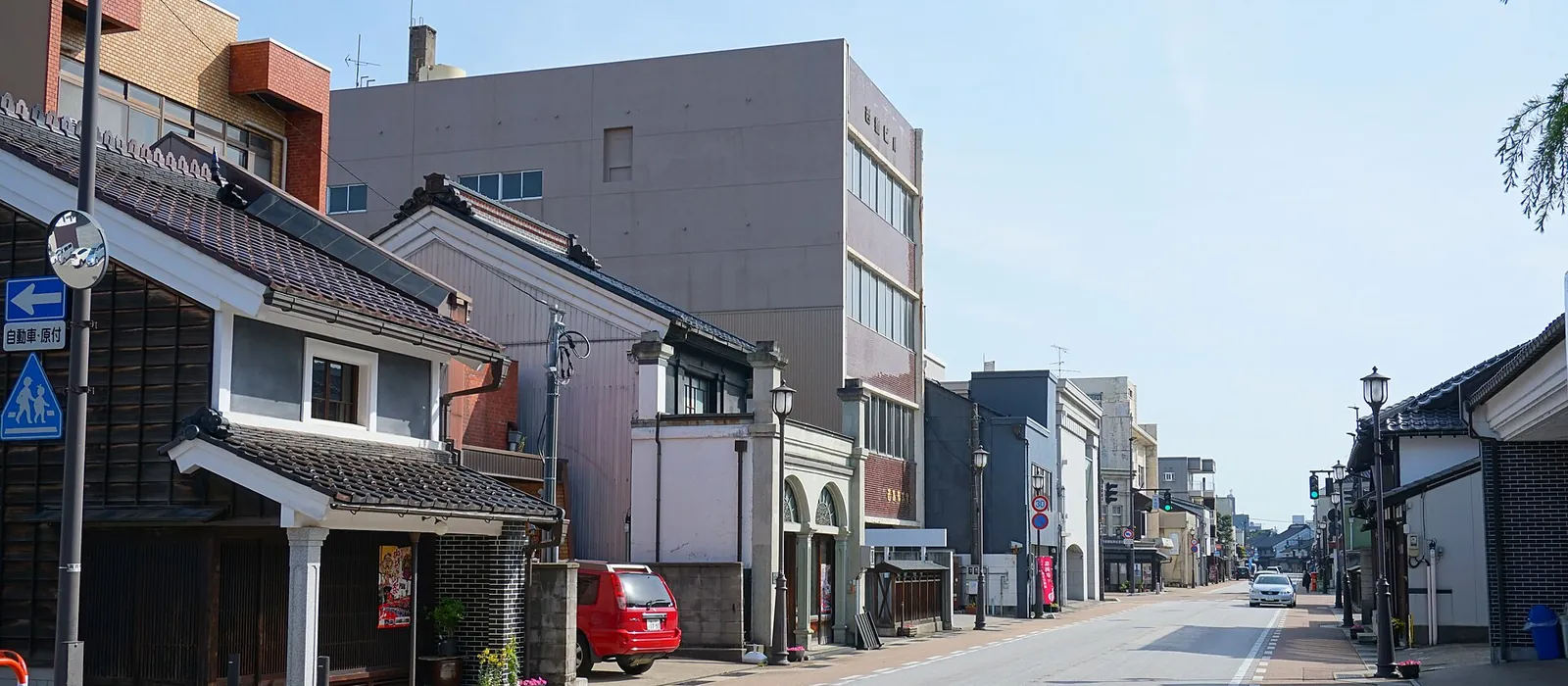
Yamachosuji, TakaokaYamachosuji street in Takaoka, where earthen-walled machiya stand eave to eave
Photo: 掬茶 "Yamachosuji Street in Takaoka City"(CC BY-SA 4.0), cropped

Going to the city or the neighbourhood association is a legitimate step for a neighbour. If the owner is far away, not replying, and the snow keeps falling, there is nowhere else to turn. The one thing not to do is to reproach them for going to the city. The moment you blame them, a conversation about repair costs becomes one about liability.

Some cities also have a scheme that lets the residents' association act. Takaoka has the Takaoka community vacant-house hazard prevention support scheme, under which the residents' association of a district with a poorly kept vacant house can get support for measures to prevent danger. The thing to note is that this is not a scheme for the association to intervene on its own; it is based on authorisation from the owner or heirs. If the neighbourhood chairman contacts you to say they would like your consent to deal with the dangerous part using the city's scheme, that is an offer to reduce the danger at no cost or effort to you as owner, and there is little reason to refuse. The scheme's content and conditions change each fiscal year, so check Takaoka City's official page. For windbreak groves, the support available in Tonami and Nanto is on the windbreak grove page.

When the city acts directly, it follows the stages of the Act on Special Measures for Promoting Countermeasures against Vacant Houses (the Vacant Houses Act): request, advice and guidance, recommendation, order, enforced demolition. After a recommendation the lot loses the residential-land relief on its property tax from the next fiscal year; breaching an order carries a fine of up to ¥500,000; and if you still do nothing, the city demolishes in your place and bills you. How to tell the stage and the time left when a letter arrives is covered separately in A notice from the city about your vacant house.

This section has one point. The neighbour, the residents' association and the city are all mechanisms that act in the owner's place when the owner does not act; if the owner acts first, they are not needed. An owner who has replied, taken photos and arranged emergency measures can safely assume the city will almost never issue an order.

Three ways to end the liability for good

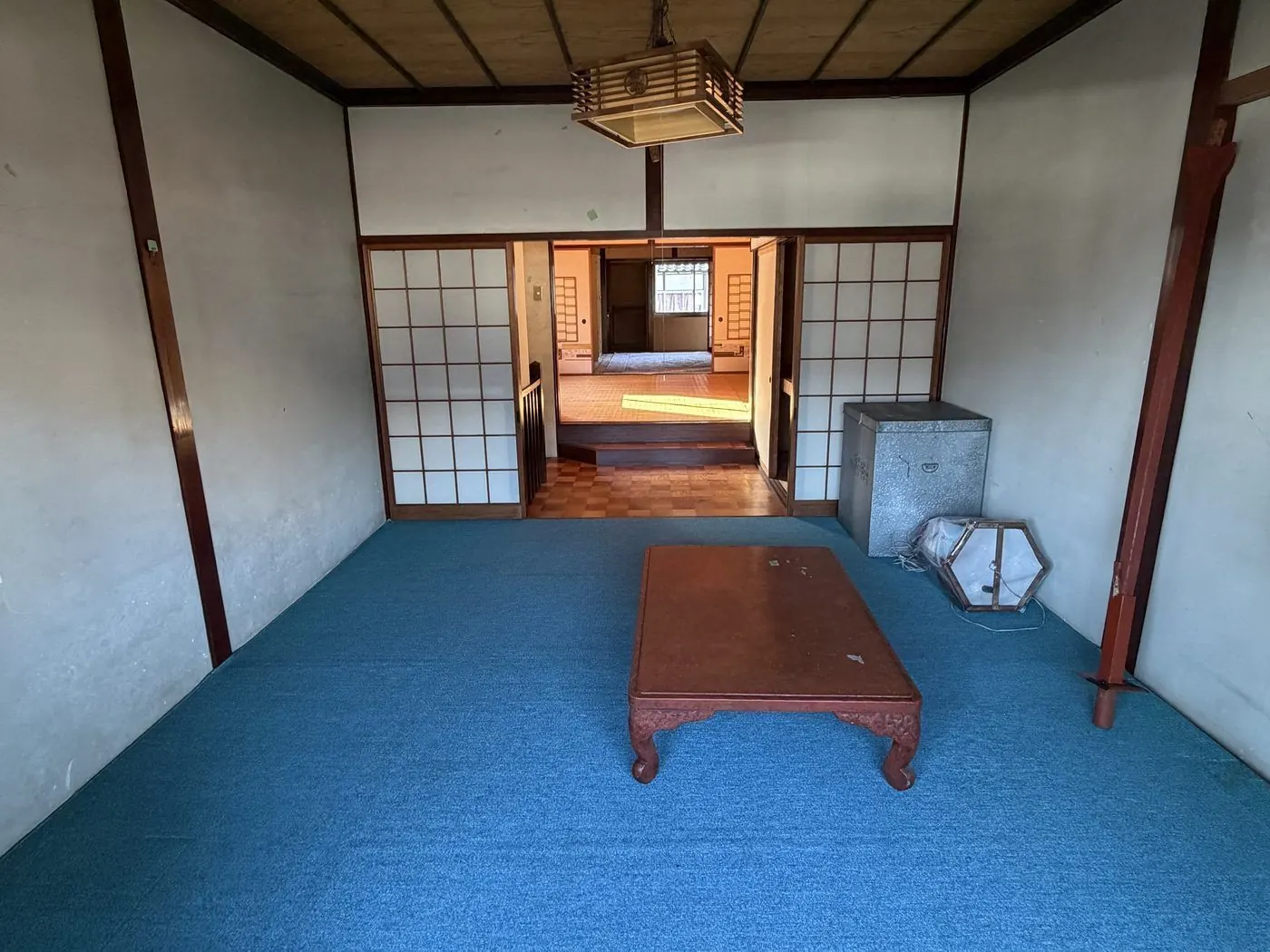
Tatami room before renovation (our project)Kominka turned into a guesthouse: the tatami room before renovation
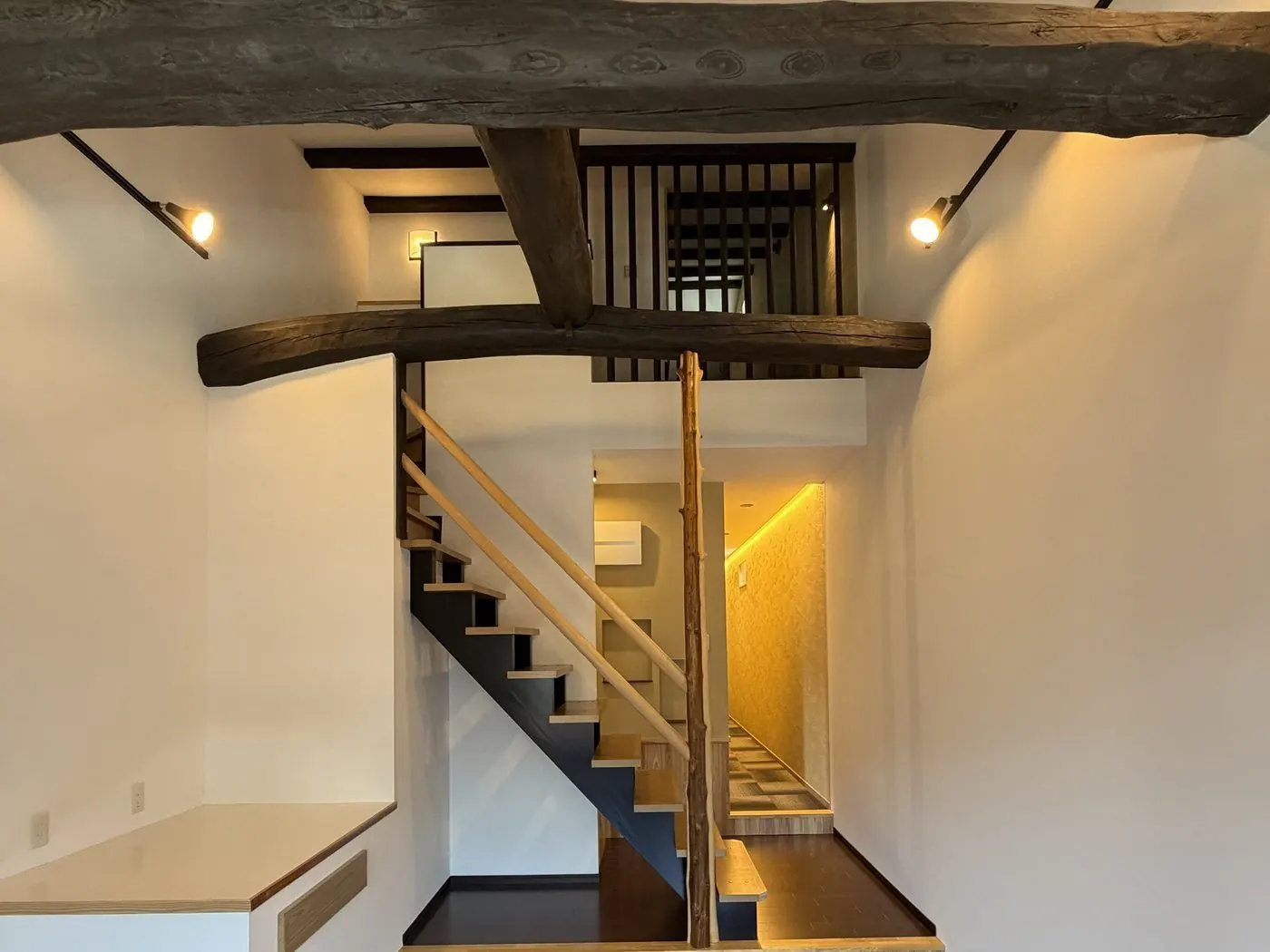
Repaired for the next occupantKominka opened as a minpaku guesthouse: the stairwell with exposed beams (after)

One of our kominka restorations. Even a tired Japanese-style room can go to the next user if the frame of posts and beams is sound. We removed the ceiling to expose the beams as a stairwell and opened it as a minpaku (private lodging). Four months of work, construction cost ¥9 million. → See this project in detail

Emergency measures and insurance will get you through this winter. But the liability under Article 717 continues next year and the year after, for as long as you own the building. Hiring someone to look after it does not change who the owner is. There are three ways to end the liability for good, and only one of them moves the liability itself to someone else.

1. Repair and keep. A roof that does not shed, roofing that does not flyAn option for a house whose frame is sound. From our own projects, the guide to building costs is ¥2–4.5 million for re-roofing (tiles, snow measures) and ¥2.5–7 million for seismic reinforcement. Replacing tiles with lighter roofing gives more margin against the weight of snow and helps seismically at the same time. Where the snow sheds can be changed with snow guards and the roof's shape. The repaired house remains your asset, but so do the owner's liability and the upkeep costs.
2. Restore it for someone to live inRestore it and rent it out as a home. Renovation costs are borne by the owner, and we handle everything from business plan to design, construction and advice on finding tenants (putting a vacant house to use without selling). Once someone lives there, snow removal, ventilation and everyday attention happen as part of their life. An occupier in the sense of Civil Code Article 717 comes into being, and the neighbour's point of contact becomes the person living there. You remain the owner, though, so responsibility does not leave you entirely. The location and frame must be such that a tenant can be found.
3. Sell to us as it standsThe only path where the liability itself moves. A direct purchase with us as the buyer: no brokerage fee, contents left inside, no emergency measures or clearing out needed, handover in as little as two weeks from the site survey. No liability for defects after handover, and after handover the snow and the neighbours are ours to deal with as the new owner. The price is lower than a sale through an agent, because we take on the repair costs and the risk of not reselling. But we do not assume demolition, so for a house that can be repaired we do not deduct demolition cost from the price.

If you plan to move back, that's option 1; if you won't move back but don't want to let go, option 2; if you won't move back, option 3. Send us photos and the location, and we'll lay out all three on the same scale — the money involved, next to the responsibility that remains. If you sell, the inheritance registration must be completed by handover (compulsory since April 2024), and we can introduce a partner judicial scrivener. The ¥30 million special deduction for an inherited vacant house applies to transfers up to the end of December 2027, and it can apply to our direct purchase too if the conditions are met (the ¥30 million deduction).

One word on order. Reply to the neighbour and arrange emergency measures before deciding whether to sell. The snow until handover remains your responsibility. Send photos at the start of November and we can aim to hand over before serious snow reaches the plains.

FAQ

The neighbour has asked me to pay for repairing their wall. Do I have to?+−

If snow or tiles from a vacant house break the neighbour's wall, then under Civil Code Article 717 the owner is liable for compensation where there is a defect in the building's construction or upkeep, and the owner has no "I took due care" defence. First check the basis for the amount with a quote or receipt, then ask your insurer whether a personal liability rider applies. If you cannot agree on the amount or on fault, consult a lawyer. Avoid both promising the full amount on the spot and brushing it off as nothing to do with you.

The inheritance registration isn't done yet. Am I still liable?+−

Yes. The house became the heirs' property the moment the inheritance opened; registration is the procedure that makes this public. Even while the register still shows your parent's name, the duty of upkeep lies with the heirs. Inheritance registration has been compulsory since April 2024, and if you sell it must be done before handover. We can appraise before registration and introduce a judicial scrivener we work with.

The house is co-owned with my siblings. Who pays the compensation?+−

Every co-owner is an owner, so the injured party can claim against any of you. The rule is that whoever pays then asks the other co-owners for their share in proportion to their holdings. "My share is small" is no answer to the neighbour. The houses where siblings cannot agree are the ones where upkeep stops and the same call comes again next winter. Numbers move the conversation on, so we suggest getting an appraisal while it is still co-owned.

The fire insurance had lapsed. Can I take out a policy now?+−

Whether you can and what it costs differ by insurer; a vacant house costs more and can be refused. Ask two or more insurers, telling them it is an unoccupied house. The figure we use as a guide for fire insurance on a vacant house is ¥20,000–50,000 a year. If you cannot get cover, or the premium is not worth it, that tells you the cost of keeping the house is high even in the insurer's eyes, and it is time to weigh the three options side by side: repair and use it, repair and let it, or an as-is sale.

The neighbour seems to have reported it to the city. Can I complain to them?+−

Please don't. When the owner is far away and not replying, going to the city is a legitimate step for a neighbour, and blaming them turns a conversation about repair costs into one about liability. The city's letters come in stages — request, advice and guidance, recommendation, order, enforced demolition — and if you reply at the first letter and arrange emergency measures, it almost never reaches an order. Send us a photo of the letter and we will give you our reading of the stage and the time left.

It was broken by heavy snow or a typhoon, a natural disaster. Surely I am not liable?+−

A natural disaster is only a defence where the damage could not have been prevented even if the building had the safety it should normally have. For a roof not cleared of snow for years, rotten eaves, or slipped tiles left as they were, expect this to be hard to argue. Individual cases are for a lawyer, but a roof facing the neighbour with no snow guards, or a leaning kura, is the kind of state likely to be seen as a defect from before the disaster.

If I decide to sell to you, what happens about the neighbour and the snow before handover?+−

After handover, the snow and the neighbour are ours to deal with as the new owner. Until handover you are still the owner, so please reply to the neighbour and arrange emergency measures first. Handover can be as little as two weeks after the site survey, so if you send photos at the start of November we can aim to hand over before serious snow reaches the plains. If you live outside the prefecture, we can stand in for most site checks and attendance, and the contract can be exchanged by post.

→ All 49 questions on selling and renovation

This page is a general explanation of the law and the schemes; it does not decide liability or the amount of compensation in any individual case. The scope of liability, the presence of fault and the application of insurance depend on the individual circumstances and the terms of the contract. Ask a lawyer on legal questions and your insurer on cover. The schemes are described as of September 2026 and change each fiscal year. Each municipality's official guidance takes precedence.

First, send us photos of the house.

What the neighbour told you and photos of the house are all we need. Is it dangerous now, are emergency measures needed, can it be sold. From outside the prefecture, with the contents still inside, before registration — all fine. The appraisal is free, and there is no charge if you decline.

Send photos on LINE Ask us by form
By phone (Japanese only) 9:00 - 17:00 After 17:00, site manager (Japanese only)

More detail, by symptom.

The roof has fallen, the kura is crumbling, garden trees have spread next door, a letter has come from the city. Each has its own page of steps.

A collapsed roof or a house about to fall → A crumbling kura or barn → Complaints about groves and garden trees → A notice from the city → A year-round calendar for managing from afar →

Written by Kota Makimura, Hokuriku Homes Updated

Phone9:00–17:00 LINEAppraisal from photos Free appraisalTakes 1 minute
LINEChat