Before you sell / a cluttered family home

A cluttered family home can be sold as it is, contents and all. What to decide before calling a clearance company

You went into your parents' house and could not see the floor for things. The clearance quote was more than you imagined, and you cannot keep coming from another prefecture. Here is how to sell without clearing, and what to stop and think about first.

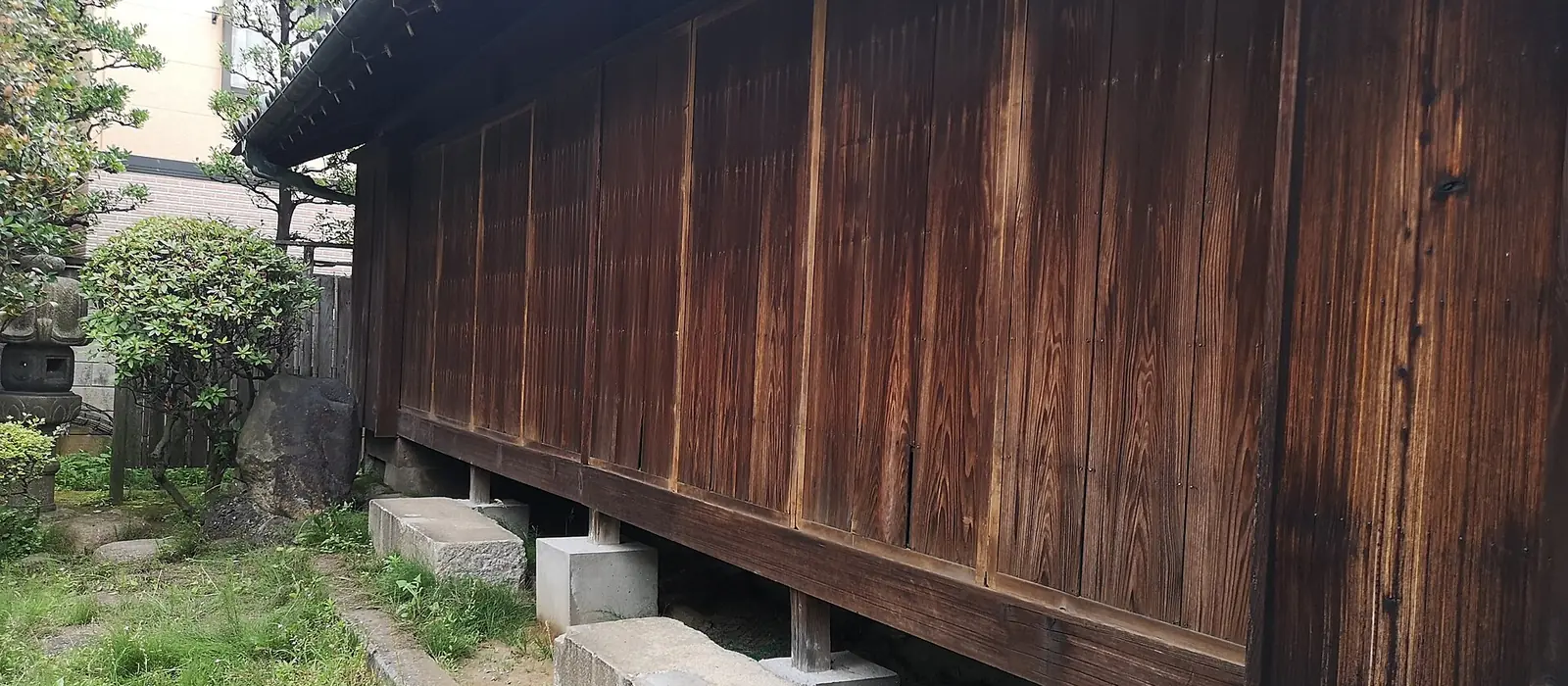
The veranda of a kominka (former Koyama residence, Sumida, Tokyo)The veranda and garden of a kominka with its storm shutters closed (former Koyama residence, Sumida, Tokyo)
Photo: 漱石の猫 "旧小山家住宅 縁側"(CC BY-SA 4.0), cropped
1 Before you clear anything, just find out the price with the contents includedFree appraisal on LINE 2 9:00–17:00, Japanese only / after 17:00: Call us
1970Founded / Yatsuo, Toyama City
Real estate + constructionA builder with both a real estate licence and a construction permit
Appraisal and survey: ¥0No charge if you decline
Toyama, Ishikawa and HidaOwners living elsewhere welcome

Clear first, or sell as it is? Which pays depends on who is buying

Selling to a private buyer through an agent (after clearing) Call a clearance company Cost borne by the seller Clean, then list No listing photos with the contents in place Viewings. Wait for a buyer Property tax, insurance, mowing, snow clearing: ¥150,000–400,000 a year Sale Clearing and upkeep already paid Our as-is purchase (contents as they are) Send photos and the address Contents as they are. If you can't get in, outside photos only On-site survey (free) Contents in place, from outside the prefecture. No need to attend Contract and handover Contract by post. As soon as 2 weeks after the survey We remove the contents Same schedule, trucks and crew as the strip-out Paying for clearing first does not raise the price by the same amount
Selling to a private buyer through an agent, the seller pays for clearing and upkeep continues until the sale. Selling to us proceeds with the contents in place, and removal is done with the building work after handover.

Whether clearing is needed depends not on the state of the house but on who is buying.

If you sell through an agent to a private buyer, clearing is effectively compulsory. The buyer is someone who will live there, and a house where the floor cannot be seen at a viewing drops off the list. The agent cannot take listing photos with the contents in place either. So the brokerage route is: call a clearance company, clean, then list. The seller pays for clearing, and upkeep until it sells (property tax, fire insurance, mowing, roof-snow clearing: about ¥150,000–400,000 a year) continues until it does.

Selling to us starts from a different premise. We buy directly, as the buyer ourselves, and as a builder we repair the house and hand it to the next occupant instead of demolishing it. What is inside the house can stay as it is. Household goods, the altar, the farm machinery in the barn, the contents of the kura: we buy with all of it in place and dispose of it ourselves.

Here is where many people hesitate: "If I clear it first, surely you will pay that much more?" The answer is that paying for clearing in advance does not raise the price by the same amount. The reason is simple: we appraise on the assumption that we will repair the house. Repair work strips the interior, takes out the tatami and fittings and hauls away the waste. The contents go out on the same schedule, the same trucks, the same crew. So our appraisal does not deduct much for disposing of the contents, and equally, what you paid a clearance company in advance is not added to the price.

So the order is this. First get our appraisal with the contents as they are. Look at that figure and decide whether clearing to sell through an agent, or selling to us as it is, leaves you more. Get a clearance quote first, pay it, and then ask for an appraisal, and you may end up paying twice. Appraisal is free, with the contents in place, from outside the prefecture. How direct purchase works, and how it compares with an agent, is on Selling a vacant house or kominka in Toyama.

What clearing it yourself costs

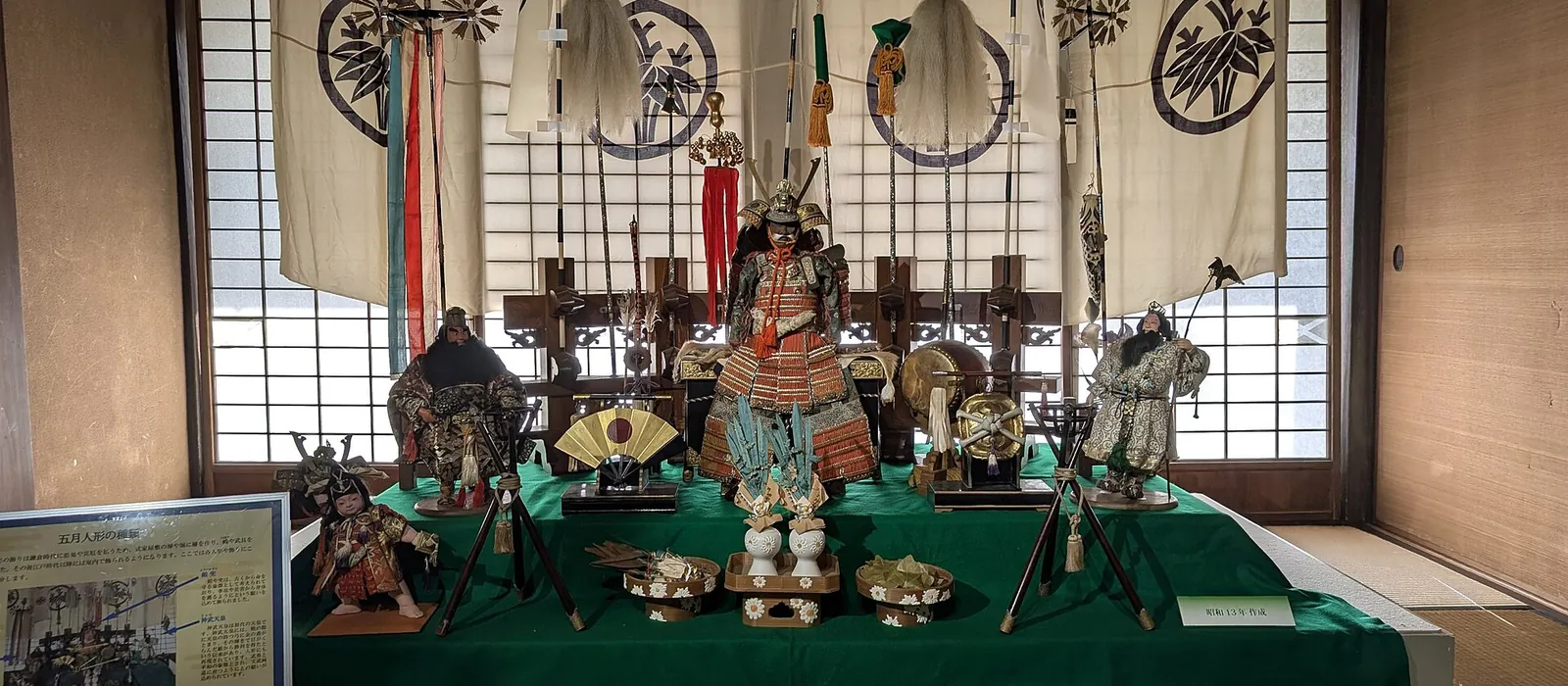
Ornaments left in the tatami roomWarrior dolls, a suit of armour and a curtain dyed with the family crest displayed in a kominka tatami room
Photo: Souka Kinmei "Old folk house 古民家の座敷"(CC BY 4.0), cropped

You still want to clear it yourself before selling, or a sibling says so. For you, here is who to hire and how the cost is set. The going rate itself varies widely with the size of the house and the volume of things, and as we are not a clearance company we do not put a figure on it. When choosing a company, check that the quote breaks down by the following.

There are broadly three kinds of company. Junk removal carries out furniture and appliances in bulk, priced by volume and truckloads. Estate clearance sorts what to keep from what to dispose of as it goes, and because of the sorting is priced by workers and days. Specialist cleaning disinfects and deodorises what ordinary cleaning cannot fix (smell, bodily fluids, pests, rotted food waste) and is quoted separately from clearing.

What moves the cost: the volume (number of truckloads), the number of workers and days, disposal fees (tipping charges and item-by-item costs such as appliance recycling), the building (an upper floor, stair width, how close a truck can get, parking), whether specialist cleaning is needed, and offsets for anything they can buy. A Toyama farmhouse has a large floor area plus a barn and kura, so city-flat rates do not transfer. Always check whether the quote covers the main house only or the barn and kura too.

One point of law when choosing a company. Waste from a household is "general waste", and collecting and transporting it as a business needs a permit from the mayor (Waste Management Act, Article 7). The Ministry of the Environment warns that an industrial-waste permit or a second-hand dealer's licence alone does not allow carrying household waste, and that operators touring with "free collection" offers have been involved in inflated bills and illegal dumping. Toyama City collects household waste itself or through contractors, and says it does not currently issue permits for collecting household waste. For a house in Toyama City, ask the company where and how the removed contents will be taken, and check with the city's waste section too. The National Consumer Affairs Centre has also published complaints about estate-clearance services adding charges on the day and disposing of items that were meant to be kept. The things to check are whether the quote states the work date, the scope, the conditions for extra charges and a list of items to keep.

There is one more cost that never appears on a quote: travel from outside the prefecture, and days off work. Even with a clearance company, you need to be there for the quote, to sort what to keep, on the day of the work and to check the result, which means at least several trips home. Turn those trips and days of leave into money and, on top of the quote, it is an outlay you cannot ignore.
What is left in a Toyama family home, barn and kura included

Someone living in another prefecture hearing "clearing the family home" probably pictures the furniture and clothes in the living room and bedrooms. What actually remains in a Toyama farmhouse is several times that. Here is what we see on site, building by building. Count how many apply to your own family home.

  • The main house. Futon and chests, one set per room. Trays, tableware and floor cushions for guests, bought for memorial services and hoonko gatherings, fill the closets and high cupboards with enough for dozens. Clothes, books, appliances, the Buddhist altar and Shinto shelf, photo albums. In the kitchen, food and seasonings and the contents of the fridge. Kerosene heaters and cans. The bundle of papers (title deed, bankbooks, insurance policies, pension, farmland and irrigation-association documents) is usually gathered around the altar or in one drawer of a chest
  • The barn and sheds. A tiller, rice transplanter, combine, strimmer, sprayer. Bags of fertiliser and bottles and cans of pesticide. A light truck or bicycles. Winter gear: a snow blower, snow scoop, boards and stakes for snow fencing, ladders. Tools, rope, old tyres, empty drums. Outside there is a kerosene home tank, sometimes with kerosene still in it
  • The kura. Wicker trunks and chests, lacquered trays, hanging scrolls and framed pictures, gifts still in paulownia boxes, kimono, old farm tools (winnowers, threshing combs, straw-bale tools), jars and pots, old family documents. Often even the family does not know what is in the kura, and sometimes the key cannot be found. The kura and barn as buildings are covered separately in What to do with a collapsing kura or barn
  • The grounds. Garden stones and lanterns, plant pots, washing poles, the remains of a chicken coop or kennel, leaves and branches from the windbreak grove

None of this is "rubbish". All of it is things your parents used, or kept because they might one day. But in a clearance quote almost all of it is converted into truckloads to sort and dispose of. We see it differently. Some farm machinery and kura tools have value, fittings and old timber go into the repair work, and the rest goes out with the building waste. Sorting it is our job. Sending photos is enough.

Stop before you clear: renunciation, valuables, fittings and old timber

Three checks before you start clearing 1 Considering renouncing the inheritance? One sibling wants to renounce, or there may be debts Yes Touch nothing; see a judicial scrivener Disposal bars renunciation (Civil Code Art. 921) No 2 Find valuables and papers before calling anyone Around the altar, a chest drawer, high cupboard, paulownia boxes, bedside, safe Look for: title deed, bankbooks and seals, insurance policies pension book, securities, cash, jewellery, photographs 3 Do not throw away fittings, old timber or tools Transoms, lattice doors, board doors, paulownia chests, pot hook, beam timber Send one photo before throwing anything away We tell you from the photo whether it has value On to our appraisal, contents included Free, contents in place, from outside the prefecture The deadline to renounce is 3 months. Appraisal fits within it Whether it counts as disposal is judged case by case. Check with a scrivener
If you are considering renouncing, touch nothing (Civil Code Article 921). Check for valuables, fittings and old timber before calling a company. Then on to an appraisal with the contents included.

Check three things before you start clearing. Get the order wrong and some things cannot be undone.

First: if you are considering renouncing the inheritance, do not touch the contents. An heir who "disposes of" all or part of the estate is deemed to have accepted it unconditionally and can no longer renounce (Civil Code Article 921). Handing contents to a clearance company, selling them, withdrawing savings to pay for clearing: whether such acts count as disposal is judged case by case, and acts of preservation or sharing out keepsakes of little economic value are generally considered fine, but we cannot draw that line for you. If a parent may have had debts, or only one sibling wants to renounce, talk to a judicial scrivener before a clearance company. The deadline to renounce is three months from learning of the inheritance, and our appraisal can be done within that time with the contents in place. See "When only one sibling wants to renounce: does clearing the contents make it impossible?" in Renouncing the inheritance does not make the vacant house disappear.

Second: look for valuables and papers before calling a clearance company. Clearance crews work fast, and anything in a bag is carried out unopened. The places to look are always the same: the drawers and lower cabinet of the altar, the top or bottom drawer of the chest, the high cupboard above the closet, inside paulownia boxes, tins and jars in the kitchen, beside the bed, desk drawers, a locking cash box. What to look for: the title deed (registration identification information), bankbooks and seals, pension book, insurance policies, securities, cash, jewellery, and photographs. The house can be sold even if the deed is not found; the judicial scrivener uses an alternative identity procedure, so do not worry. Bankbooks and insurance policies, though, are needed for the inheritance procedure itself.

Third: do not throw away fittings, old timber or tools. Transoms, lattice doors, the frames of shoji and fusuma, board doors, paulownia chests, the pot hook over the hearth, old beam timber. A kura, fittings and old timber can have value, and since we repair and use the houses we buy, a house's own fittings suit its own renovation best. In a clearance quote these are almost always counted as "wooden items" for disposal. Before throwing anything away, send us one photo. We tell you from the photo whether it has value.

The Buddhist altar, memorial tablets and photos: we always ask what you want

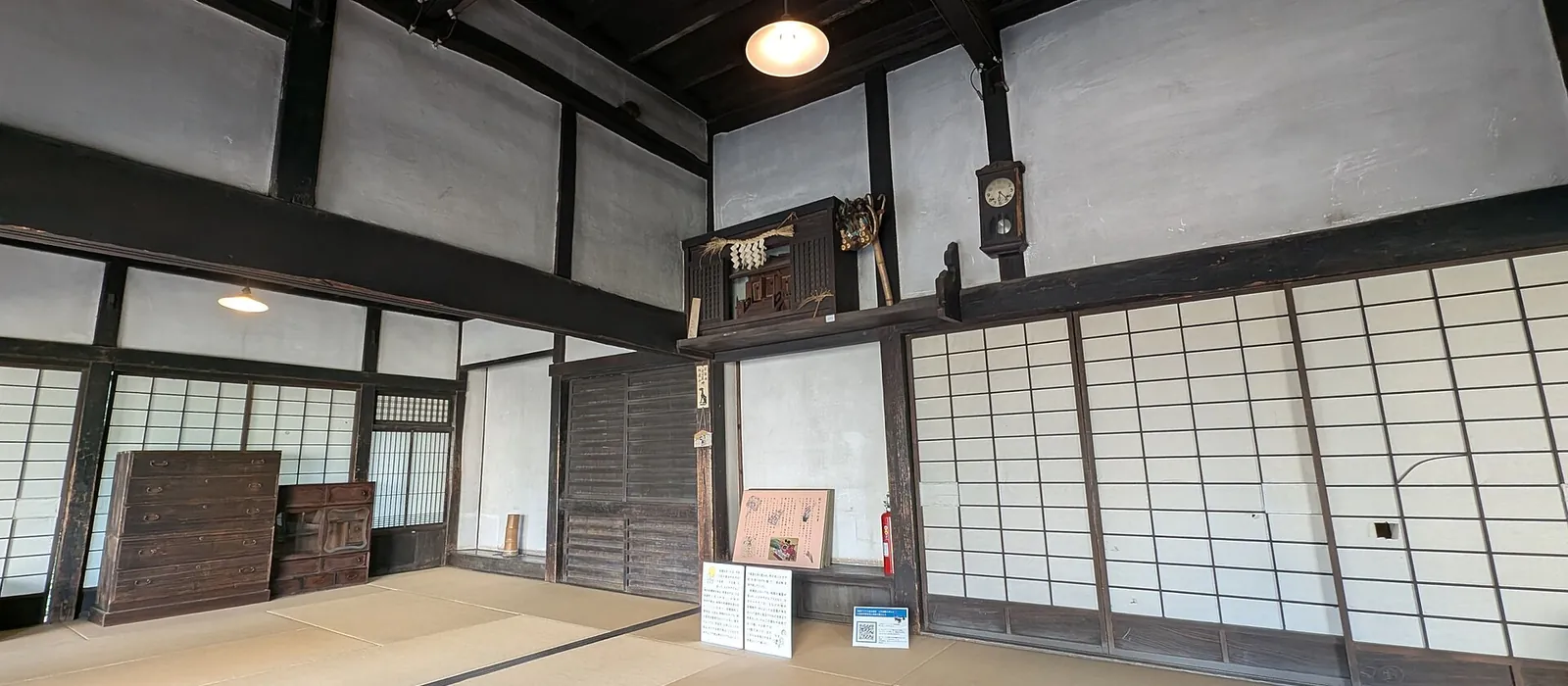
The front and inner tatami rooms of a kominkaThe front and inner tatami rooms of a kominka, divided by shoji and a transom
Photo: Souka Kinmei "古民家の表座敷・奥座敷"(CC BY 4.0), cropped

In enquiries about a cluttered house, the most common question is about the family altar. What happens to the altar? Who does the closing rite? I can't keep the memorial tablets in my own home. Our answer is one thing: for the Buddhist altar, memorial tablets, Shinto shelf, photographs and keepsakes, we always ask your wishes before anything is disposed of. However far away you are, you decide where the important things go.

For the Buddhist altar and Shinto shelf, we may ask you only to arrange the closing rite (tamashii-nuki or oshone-nuki). Its name and whether it is needed differ by sect, and every family's relationship with its temple is different, so we do not decide on your behalf. First phone the family temple and tell them you are letting the house go and moving the altar. Ask the temple directly about the offering and the date. If you do not know the family temple, or it is too far away to ask, tell us and we work out an approach together. Once the rite is done, we carry out and dispose of the altar.

Memorial tablets go different ways: to your own home, into the temple's keeping, remade as smaller tablets, or entrusted for perpetual memorial. The family temple can tell you the practice in your sect. Many people let the house go without time to look through the photo albums one by one, so when we go in we set the albums and boxes of photographs aside and either send them to you or keep them, never disposing of them. Choose at leisure once they arrive.

Many people feel guilty about carrying out a parent's belongings as "rubbish". We are a builder that repairs houses rather than demolishing them. We carry out the contents so that someone can live in the house next. You keep the memorial tablets, and the house lives on with the next occupant. We think that, too, is a way of honouring the dead.

Our procedure for buying with the contents: key, site, photos, what to keep, handover

A little more time is spent here 1 Photos 2 Key 3 Inventory 4 What to keep 5 Contract 6 Removal Photos and address on LINE Contents as they are Post the key No need to attend We visit the site Photo inventory of the contents Mark the photos and reply Altar, tablets, keepsakes Contract by post As soon as 2 weeks Handover in as little as 2 weeks After handover, removed with the strip-out Usually no trip home, or one. No need to attend
Six steps: photos, key, inventory, what to keep, contract, removal. For a cluttered house the procedure is the same; only steps 3 and 4 take a little longer.

This is how we buy a house with its contents. Cluttered or tidy, the procedure is the same. The only difference is that steps 3 and 4 take a little longer.

1. Send photos and the locationSend photos of the house and its address on LINE: one from the front door, one of the fullest room, one of the roof and outside. If the house cannot be entered, outside photos are enough. We reply with a rough price range.
2. Post the keyWe do the site check. If the key cannot be found, or only the kura key is missing, tell us. There is no need to attend.
3. On site, a photo inventory of the contentsAlong with the building's condition, we photograph the volume and kind of contents room by room. Anything that looks like valuables or papers, the altar and tablets, albums, and tools or fittings that may have value are photographed separately and sent to you. We also check the kerosene tank level, bags of pesticide or fertiliser, gas cylinders and any vehicles at this point.
4. Mark what to keep and replyLooking at the photos, you mark "keep this", "send this to my brother", "this can go". We can also join your siblings' LINE group and show everyone the same photos at once.
5. Contract and handoverThe contract is exchanged by post (signed in turn). If inheritance registration is not done, we introduce a partner judicial scrivener and complete it by handover. Handover is as soon as two weeks after the survey. What you decide to keep is sent to you before handover or held by us.
6. After handover, we remove the contentsThe contents are carried out after handover, on the same schedule as our strip-out. We also cancel the electricity and water. You need not be there.

A word first about hazardous items. Kerosene left in the home tank, pesticide bottles and cans, fertiliser, propane cylinders, fire extinguishers, batteries and old tyres cannot go out as household waste and each has its own disposal route. Cylinders go back to the gas company, pesticide is disposed of as the maker or the municipality directs, and kerosene is pumped out depending on how much is left. We check the type and quantity on site and agree the handling with you. Telling us at the start that there is a shelf of pesticide in the barn or kerosene in the tank speeds things up. The one thing to avoid is trying to dispose of it yourself by pouring it down the drain or into the garden.

How a house full of contents is appraised

How the price is built: what is added, what is deducted Buyer who will clear the lot + Land value − Demolition, around ¥30,000–50,000 per tsubo   from about ¥1.5–2 million for 40 tsubo   over ¥3 million with kura and grove − Disposing of contents (on top of demolition)   more things, more days to remove Clear, then sell through an agent + Brokered sale price − Clearing (seller pays up front) − Upkeep until it sells   about ¥150,000–400,000 a year − Travel home and days off   not on any quote Our purchase, assuming repair + Land value + Building value (posts, beams, layout) − Repair cost and risk of not selling ○ No demolition deduction (we don't demolish) ○ Little deduction for disposing of contents   extreme volume or specialist cleaning goes to repair cost Compare what is left after clearing and upkeep are deducted Demolition figures are a guide for a wooden house in Toyama. The amount of contents does not lower our price by much
A buyer who will clear the lot deducts demolition and disposal of the contents; with brokerage the seller pays clearing and upkeep up front. We assume repair, so we deduct no demolition cost and little for disposing of the contents.

People often ask, "With this much stuff, will the appraisal go negative?" An honest answer: the amount of contents does not lower our price by much. But it is not zero either.

A buyer who will clear the lot and sell it as land deducts demolition from the land value: around ¥30,000–50,000 per tsubo (3.3 m²) for a wooden house in Toyama, from about ¥1.5–2 million for 40 tsubo (about 132 m²) of floor area, and for a farmhouse with a kura and windbreak grove the total often passes ¥3 million. The cost of disposing of the contents sits on top of that, because the more there is inside, the more days of removal are needed before demolition.

Our appraisal assumes repair. To the land value we add the value of the building, meaning its posts, beams and layout, and deduct the repair cost and the risk of not selling. We do not deduct demolition cost, because we do not demolish. Nor do we deduct much for disposing of the contents. As the first section explains, clearing out the contents is part of the same stage as the opening-up for repair.

Where it is "not zero" is extreme volume and specialist cleaning. If things are piled so high that the house cannot be entered, removal before the strip-out takes more days. Rotted food, bodily fluids or a pest infestation add a disinfection and deodorising step. In such cases we allow for it on the repair-cost side. But that is a different calculation from what you would pay a clearance company, and because we do it as part of the building work, you pay nothing up front.

Our price is lower than a brokered sale would fetch, because we as the buyer take on the repair cost, the risk of not selling and the work of clearing. In return you neither pay for clearing up front nor keep paying upkeep until it sells. Compare what is left after those two are deducted. How a badly damaged house is priced, stage by stage, is in Can a damaged house be sold?.

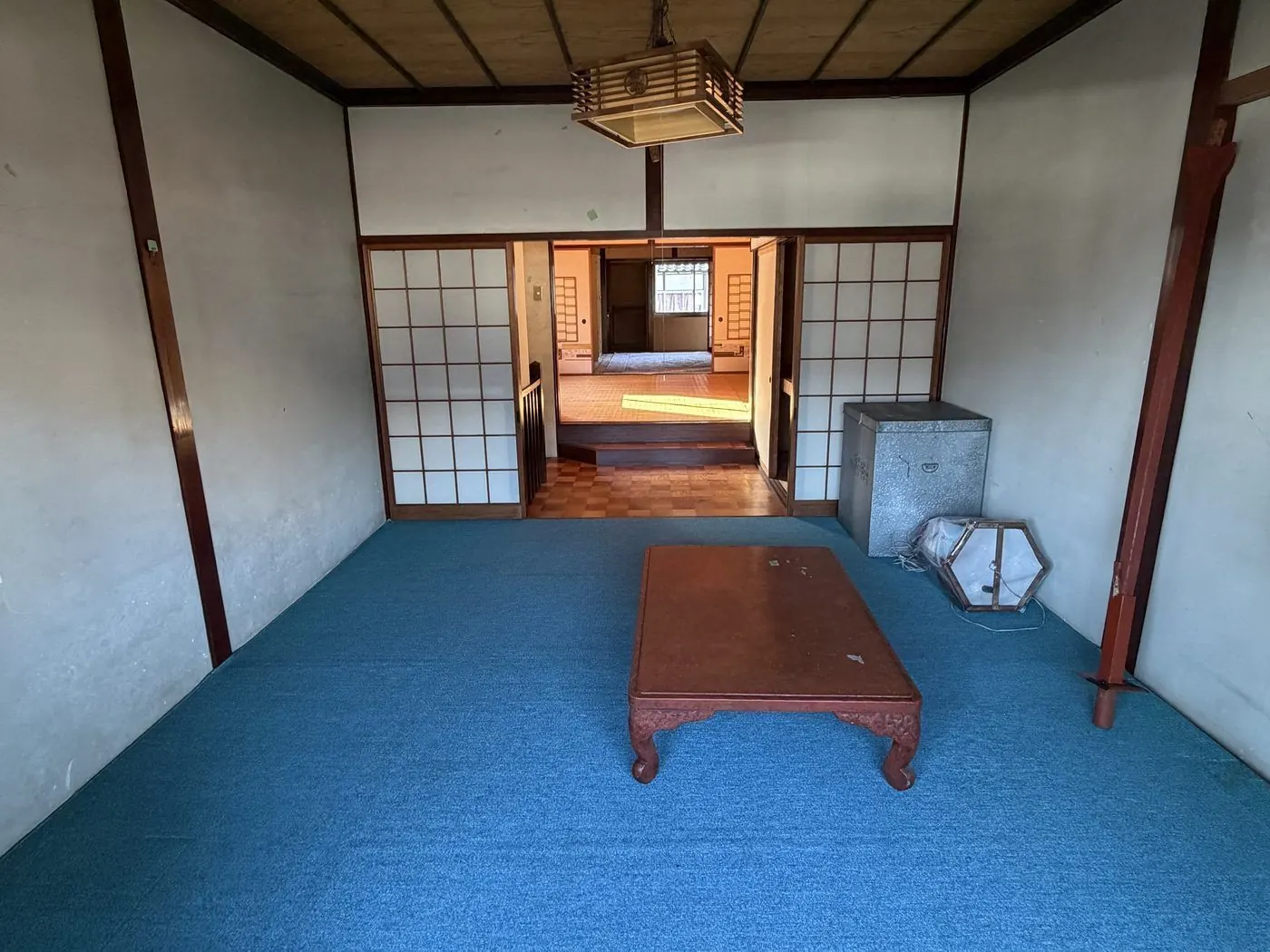
Tatami room before renovation (our project)Kominka turned into a guesthouse: the tatami room before renovation
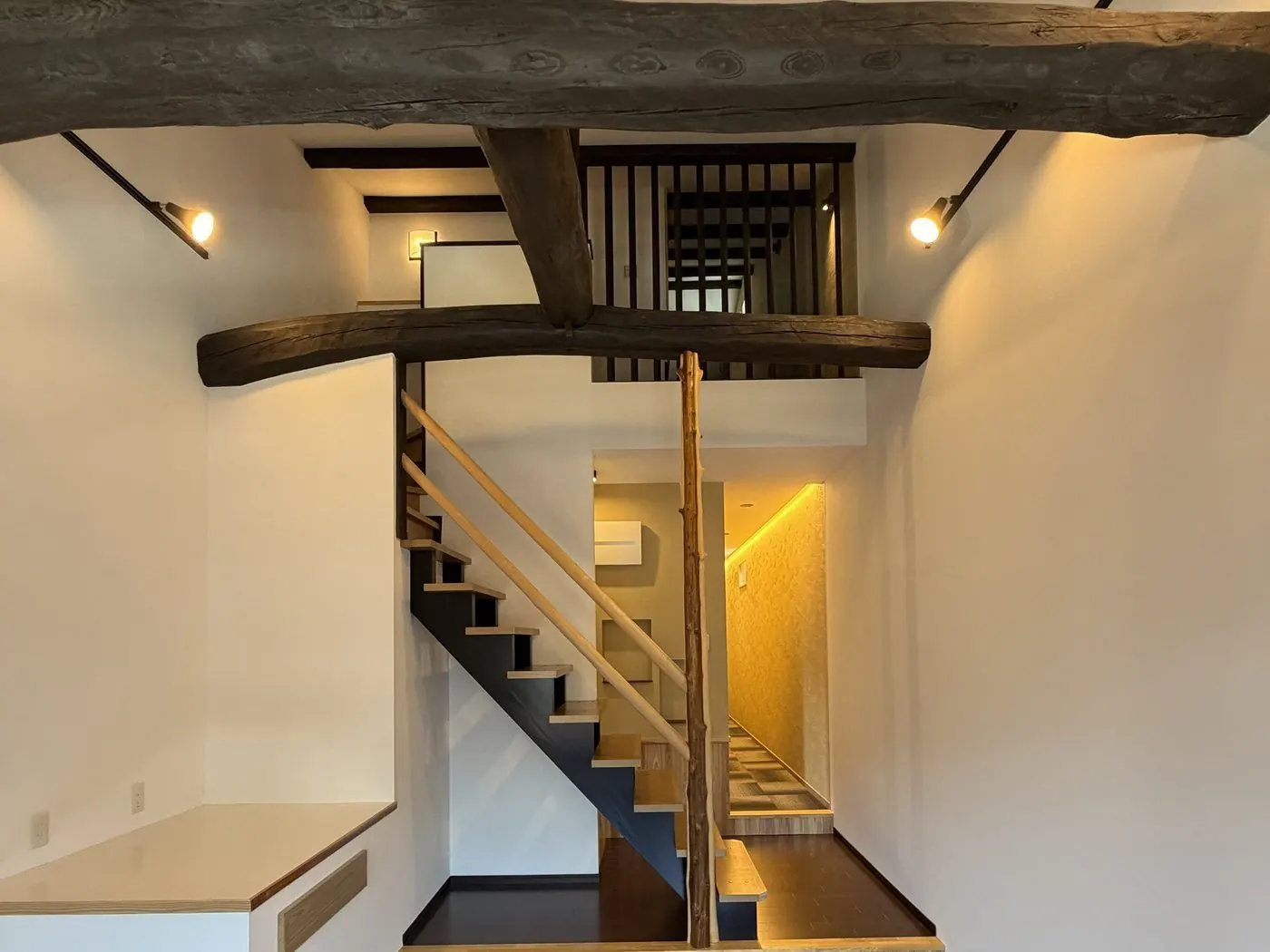
Repaired, and on to the next userKominka opened as a minpaku guesthouse: the stairwell with exposed beams (after)

A kominka we repaired. Work on the tatami room began by taking out the mats and fittings and removing the ceiling. The contents go out on the same schedule as this strip-out. The ceiling came out to expose the beams over the stairwell, and it opened as a minpaku. Four months, ¥9 million in construction cost. → More on this project

Proceeding without the neighbours knowing, and without coming back

The other worry when letting go of a cluttered house is the neighbours. In the village where your parents lived for so long, you do not want the state of the house known. You do not want a clearance truck parked for days and bags piling up in view. That feeling is entirely reasonable.

When we buy, no for-sale sign goes up. It is not brokerage, so there is no advertising either. We come to the on-site survey in an ordinary car and do nothing visible from outside. The contents go out after handover as part of our building work, so what the neighbours see is a builder doing a renovation. No separate clearance truck ever comes. We can also time the removal to your wishes, avoiding the snow season or the days around Obon or the local festival.

You can go through the whole process from another prefecture without coming back once. With the steps above, a trip home is usually unnecessary or needed only once; if we do ask for one, we tell you why and when beforehand. We never proceed on a "we won't know until we go" basis. Inheritance registration, the judicial scrivener's identity check and the steps to selling a house inherited jointly with your siblings (including introductions to the judicial scriveners and tax accountants we work with) are set out in How to sell your family home without returning to Toyama.

How to keep a house full of contents until it sells, or while you have not yet decided to sell. Roof snow, burst pipes from freezing, mowing, and responding to a notice about a poorly managed vacant house are set out month by month in A year-round calendar for managing a Toyama vacant house from afar. A house full of things traps damp and lets in mice and insects, so we recommend arranging to air it at least once before winter.

FAQ

Will you buy it even with food waste and the contents of the fridge still there?+−

Yes. The contents of the fridge, food and kitchen waste can stay. If decay is advanced we allow for disinfection and deodorising on the repair-cost side, but you need not clear anything first. If the fridge has no power, leave it closed.

The smell is terrible and I can't go inside. Can you still appraise it?+−

Yes. Even if the house cannot be entered, the roof, the base and the underfloor vents seen from outside give a fair idea of the frame. For the on-site survey we go in with the right equipment, so you need not go in yourself. If specialist cleaning is needed, we show that as an item in the appraisal.

There is a car, a motorbike and a light truck left behind. What happens to them?+−

Unlike household goods, vehicles need the owner to transfer the registration or deregister them. We explain the documents needed (vehicle inspection certificate, seal certificate and so on) and the procedure, and can arrange a dealer. Farm machinery is treated like household goods and can stay.

My brother says there are things he wants to collect. Can they be taken out after handover?+−

As a rule, what to keep is decided before handover. We share the inventory photos with your siblings too, and if they mark items we either send them in one batch or store them until handover. After handover our work starts, so please talk to us in advance about anything to be taken out.

Can I discuss clearing and selling while my parent is still alive?+−

Yes. While the owner is alive, the decision to sell rests with the owner. Many families ask us, together with the owner, for a rough figure with the contents included and an outline of the procedure in advance. Once there are doubts about mental capacity the process gets complicated, so the earlier you start, the more options you have.

I have already asked a clearance company for a quote. What should I do?+−

If you have not signed, keep that quote and get our appraisal with the contents included. Put the two side by side and you can see which leaves you more: clearing and then selling through an agent, or selling to us as it is. If you have signed, check the cancellation terms on the quote before talking to us.

Is the cost of disposing of the contents deducted from the price?+−

Not by much. We buy in order to repair and use the house, and the contents go out in the same step as the strip-out. If there is so much that the house cannot be entered, or specialist cleaning is needed, we allow for that as repair cost and show you the breakdown. Paying for clearing in advance does not add that amount to the price.

Can the family home be sold without estate clearance?+−

Yes. We buy with the contents still inside, so you do not need to finish estate clearance first. Get an appraisal first and you will know whether it is better than paying for clearance. If you are thinking of renouncing the inheritance, consult a lawyer or judicial scrivener before disposing of anything. For details, see Before estate clearance, sell the family home with its contents.

→ All 49 questions on selling and renovation

This page is a general explanation. The line between renunciation and unconditional acceptance, the memorial rites, and the handling of waste vary with individual circumstances, the municipality and the sect. Check legal questions with a judicial scrivener or lawyer, rites with the family temple, and waste categories with the municipality. Rules are as of September 2026, and official guidance takes precedence.

Before you clear anything, just send photos.

One from the front door, one of the fullest room, one of the roof and outside. From those we reply with a rough figure, contents included. Appraisal is free, and declining costs nothing.

Send photos on LINE Ask via the form
By phone (Japanese only) 9:00 - 17:00 After 17:00, site manager (Japanese only)

More on the family home.

Selling without going back, how renunciation fits in, how a damaged house is priced, the kura and barn. The worries of a cluttered house usually connect to the one next to it.

Selling the family home without going back to Toyama → Renouncing the inheritance does not make the house disappear → Can a damaged house be sold? → What to do with a collapsing kura or barn → What to do with the family home: three roads →

Written by Kota Makimura, Hokuriku Homes Updated

Phone9:00–17:00 LINEAppraisal from photos Free appraisalTakes 1 minute
LINEChat